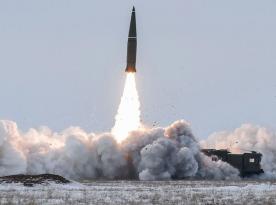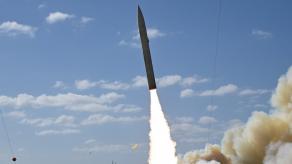
The unique Hyunmoo-5 ballistic missile has begun entering service with South Korea's armed forces, giving Seoul an entirely new non-nuclear means of deterring north Korea. The missile is equipped with a massive 8-ton warhead and is designed to destroy the most heavily fortified underground bunkers of its northern neighbor, including shelters used by Kim Jong Un.
According to The Korea Herald, citing its own sources, the deployment of the missile has already begun. The exact number of missiles entering operational service has not been disclosed. What is known is that the process started in late 2025 and is expected to be completed by 2030.
Read more: South Korea Moves the Hyunmoo-5 Ballistic Missile into Mass Production, a Strategic Answer to North Korea's Nuclear Arsenal
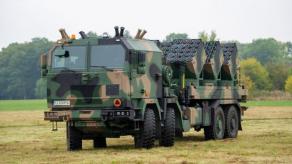
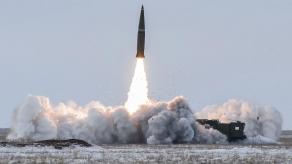
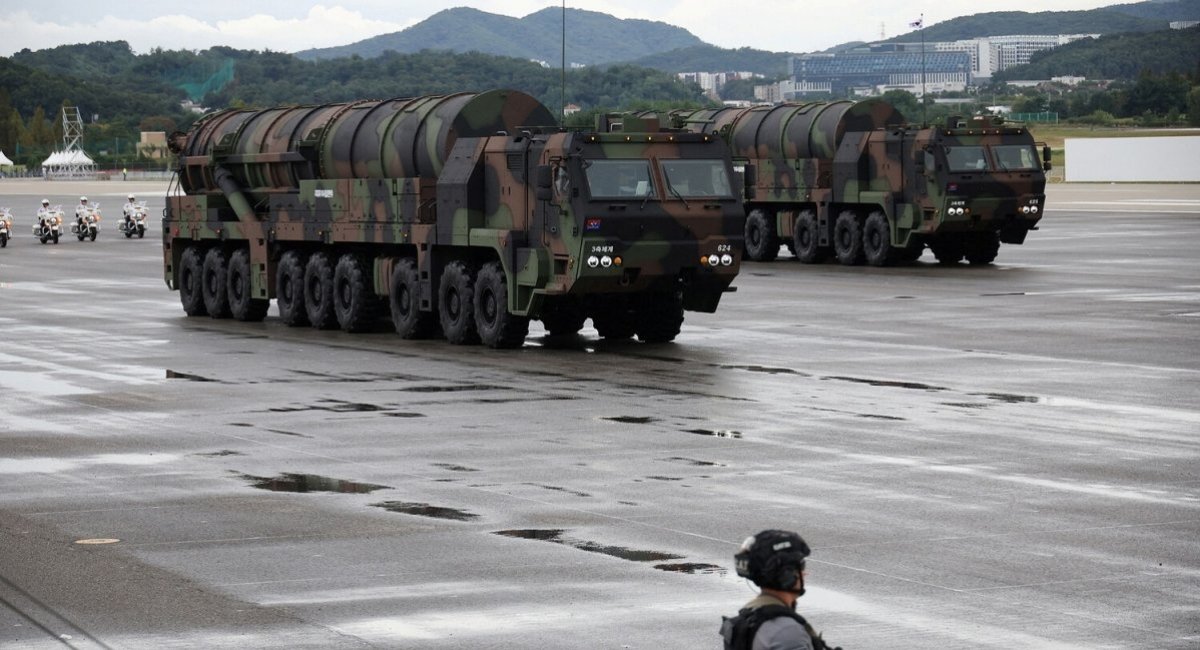
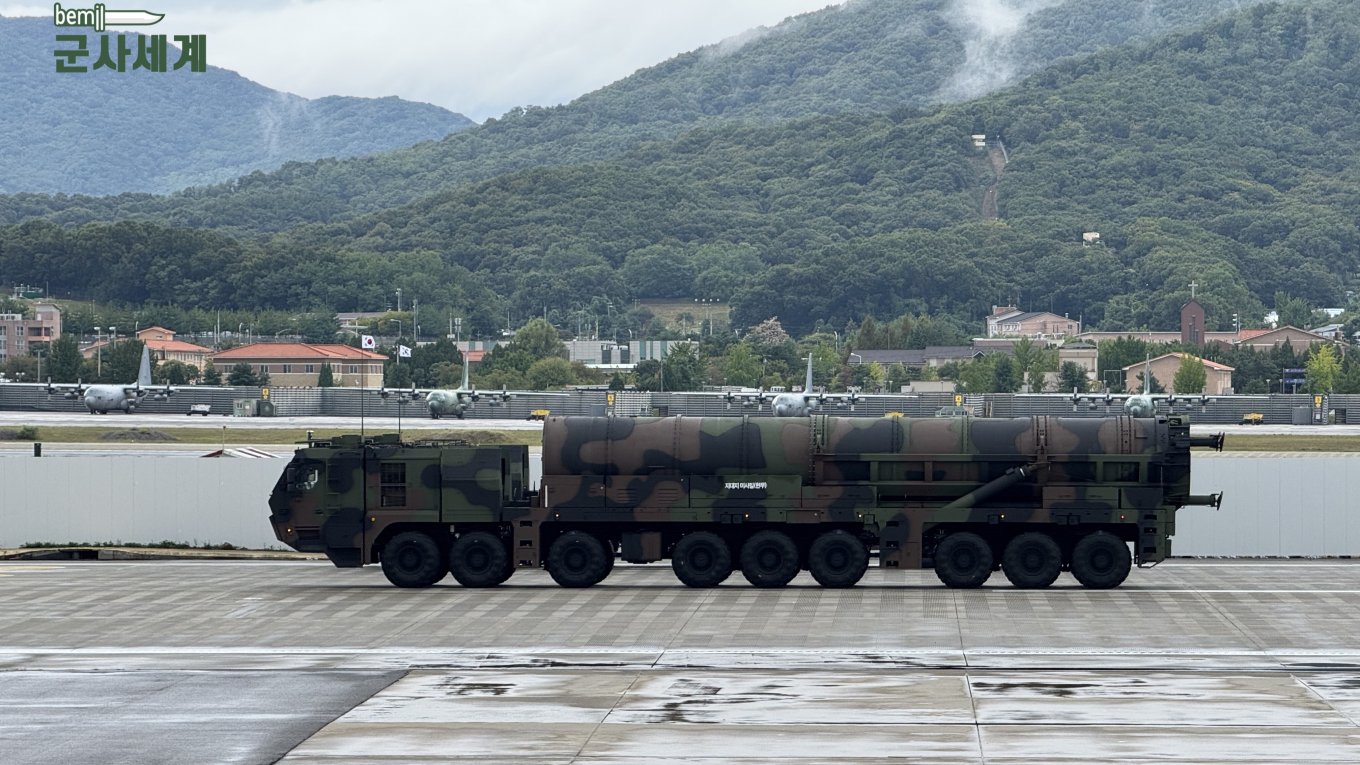
Defense Express notes that Hyunmoo-5 was first publicly demonstrated in October 2024 during events marking the 76th anniversary of South Korea's national armed forces. At that time, two launchers were shown simultaneously, mounted on 9×9 wheeled chassis with all-wheel steering, enabling lateral movement.
The missile's first tests reportedly took place earlier that same summer, while its first official public mention dates back to October 2022. At that time, a transcript of a parliamentary defense committee meeting referenced the development of a missile with an 8-ton payload and a total launch weight of 36 tons.
This suggests that Hyunmoo-5's development lasted more than four years, building on experience gained from earlier ballistic missile programs. However, South Korea's work on ballistic weapons stretches much further back, beginning in the 1970s with the conversion of U.S. Nike Hercules surface-to-air missiles into improvised ballistic missiles under the Hyunmoo-1 program. Fully indigenous development efforts only took shape in the 1990s.
In particular, Seoul significantly intensified ballistic missile development in the 2000s, creating an entire family of Hyunmoo-2 and Hyunmoo-3 missiles in multiple variants, with ranges starting at 300 km and 500 km. As a result, the actual technological and conceptual groundwork behind Hyunmoo-5 likely spans far more than just four years.
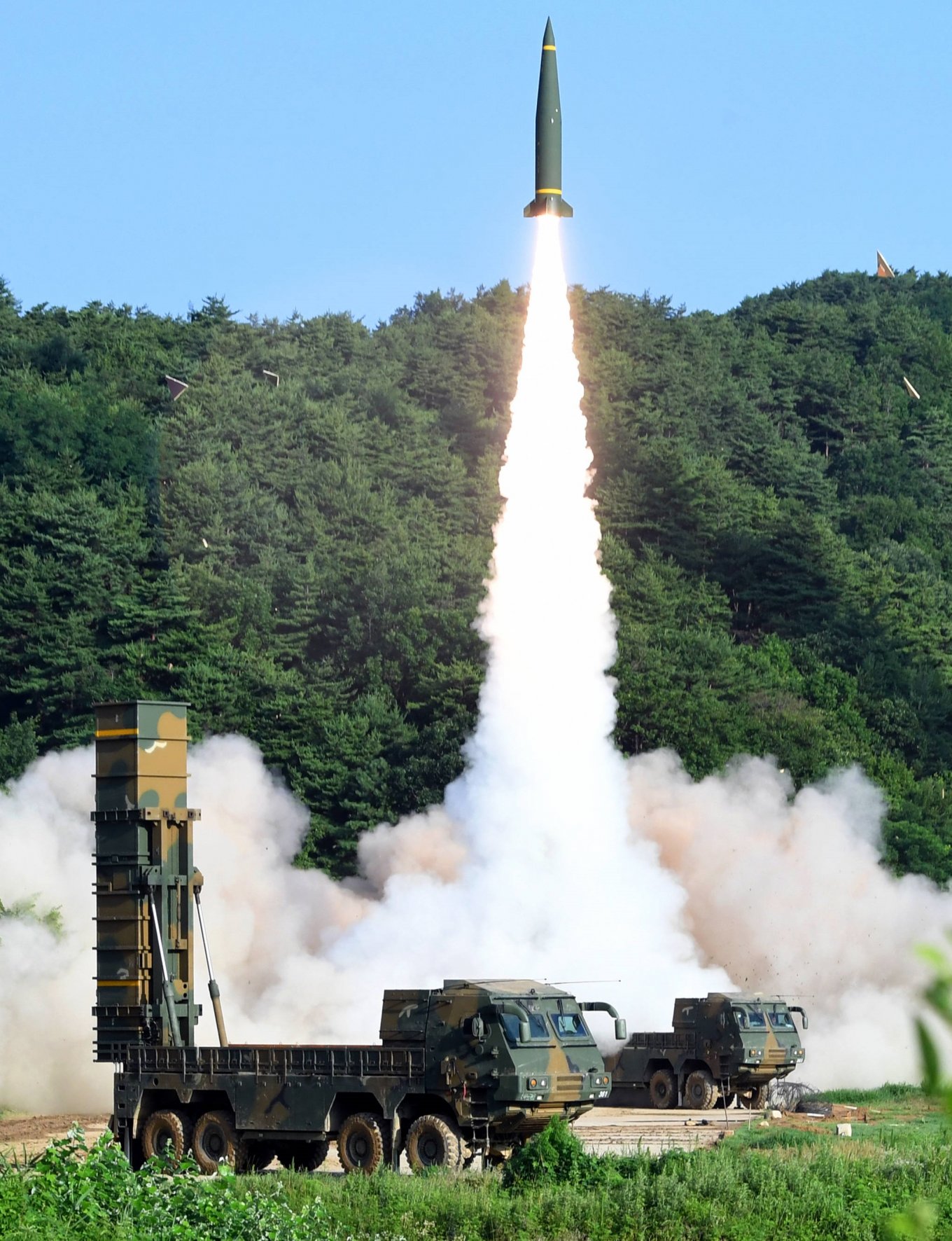
The missile's range remains a matter of debate, as widely differing estimates exist. Some sources cite a range of only 600 km, others suggest up to 3,500 km, while some claim that with a reduced warhead weight of 1 ton, the missile could reach distances of up to 5,500 km.
It should be noted that until 2021, South Korea was constrained by agreements with the United States that limited its ballistic missile development. Before that year, the maximum permitted range was 800 km, itself a relaxation of the earlier 300 km limit imposed in 2012. For Hyunmoo-5's primary mission of striking north Korean bunkers, a range of 600 km fully satisfies operational requirements.
The extreme weight of the warhead is dictated by the need to penetrate dozens, or even more than a hundred, meters of soil and multiple layers of reinforced concrete before detonating inside underground facilities. For comparison, the U.S. GBU-57 Massive Ordnance Penetrator weighs 13.6 tons, of which only 2.7 tons constitute the actual warhead. These bombs have been used by the United States against Iranian nuclear facilities.
However, the GBU-57 is delivered by a B-2 Spirit bomber flying at altitudes of up to 15 km. By contrast, the penetrator warhead of Hyunmoo-5 will descend from tens of kilometers in altitude. While its exact flight profile remains unknown, a ballistic trajectory implies an apogee well above 50 km. This translates into significantly higher impact velocity and kinetic energy, substantially increasing penetration capability.
Overall, Hyunmoo-5 represents a key element of South Korea's non-nuclear deterrence doctrine toward the DPRK, known as "massive punishment and retaliation." This doctrine envisages devastating retaliatory strikes using precision conventional weapons against North Korea's leadership and strategic assets in response to aggression. Ensuring the ability to eliminate the north Korean dictator is one of its central objectives, which requires the capability to reach him even in the deepest bunker.
At the same time, should Seoul ever decide to pursue nuclear weapons, mastering technology that is more than 80 years old would hardly pose an insurmountable challenge for the world's tenth-largest economy. In such a scenario, South Korea would already possess a medium-range ballistic missile platform, since nuclear warheads are orders of magnitude lighter. Notably, the distance from Seoul to Beijing is approximately 950 km.
Read more: russia Claims Ukraine May Seek South Korea’s Hyunmoo-5 Missile with 3,500 km Range