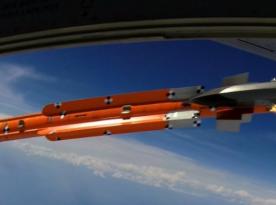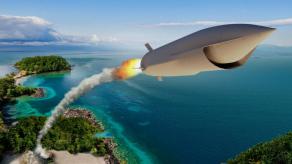
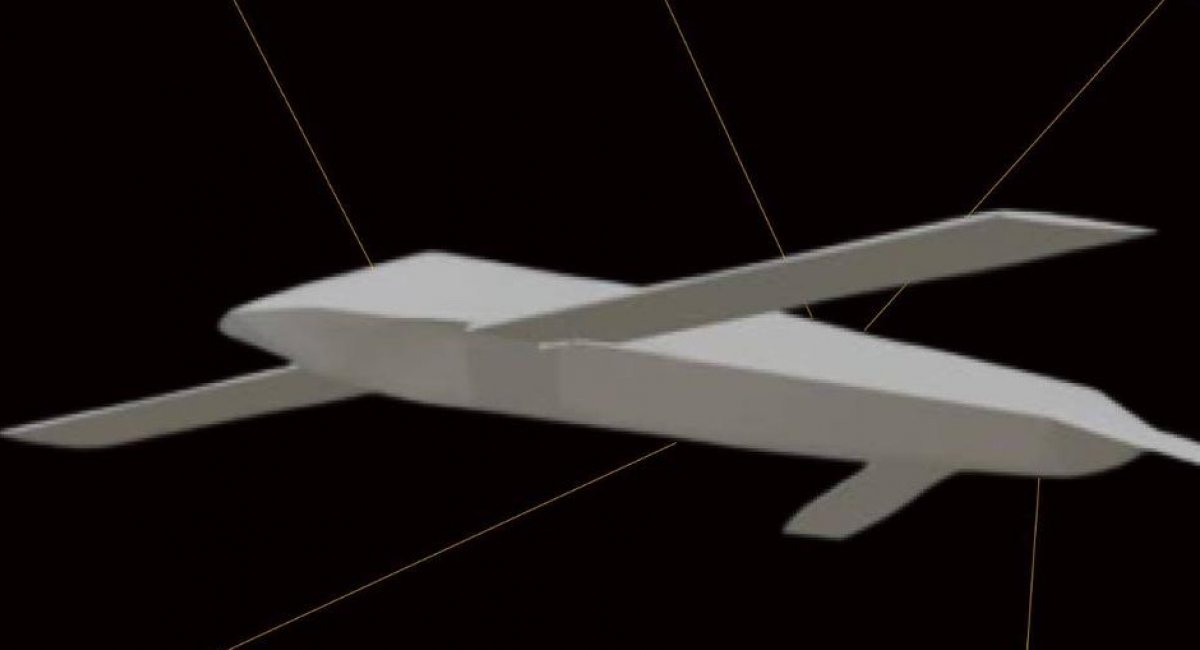
Ukraine's Defense Intelligence has unveiled a detailed look at a new russian air-launched cruise missile, designated the S-71K Kovyor, exposing both its design features and its reliance on foreign technology. The disclosure was made through the War&Sanctions portal, where the Defense Intelligence published an interactive 3D model alongside a breakdown of the missile's components and electronic architecture.
According to the report, the S-71K missile was developed by russia's United Aircraft Corporation (UAC) specifically for integration with Su-57 fighter jet.
Read more: Why Air Launch Could Make Estonia's Tiny Mark I Missile Effective Against Jet-Powered Shaheds
The missile was first used in combat toward the end of last year, indicating that it has already moved beyond the prototype stage into operational deployment. Its design reflects a hybrid approach, combining elements of guided munitions with relatively simple engineering solutions, suggesting an attempt to balance cost, scalability, and effectiveness.
One of the most notable features is its warhead configuration. Instead of a purpose-built payload, S-71K missile uses a modified OFAB-250-270 high-explosive fragmentation bomb weighing 250 kg, integrated into the missile's forward section. This adaptation points to a pragmatic design philosophy, leveraging existing stockpiles to accelerate production.
Structurally, the missile uses a multilayer composite body based on fiberglass materials, reinforced for durability, while internal components are made from aluminum alloys. Its onboard systems include a flight controller, a basic inertial navigation system, and a power supply unit, components that are relatively unsophisticated compared to more advanced Western cruise missiles.
However, the most critical aspect highlighted by Ukrainian intelligence is the missile's heavy dependence on foreign-made electronics. Components sourced from the United States, China, Switzerland, Japan, Germany, Taiwan, and Ireland were identified, underscoring ongoing gaps in sanctions enforcement and russia's continued access to global supply chains.
S-71K missile is powered by an R500 turbojet engine and is estimated to have a range of up to 300 kilometers, aided by a configuration that includes a main fuel tank and two auxiliary tanks. Future integration with S-70 Okhotnik unmanned combat aerial vehicle is also being considered, which could expand its deployment flexibility and complicate air defense efforts.
Ukraine's Defense Intelligence emphasizes that russia's ability to procure foreign technologies remains a key enabler in the development and scaling of new strike systems. By publicly exposing the missile's technological base, Ukrainian intelligence aims to tighten international sanctions and disrupt the supply chains that continue to sustain russia's war machine.
Read more: Large-Scale SSU Strike in Crimea Damages Three russian Warships, MiG-31, Key Air Defense Facilities