The Rubin Design Bureau continues work on a comprehensive family of large underwater drones, including the Argus-D, Argus-I, and Octavia platforms. Officially, these systems are described as tools for civilian and scientific applications.
However, these underwater vehicles evidently have a secondary purpose: targeting undersea infrastructure. This includes damaging cables, destroying pipelines, and laying mines on the seabed. This assessment has been reported by OSINT analyst H. I. Sutton.
Read more: russia Adds Second Layer of Harbor Defenses After Submarine Hit in Novorossiysk
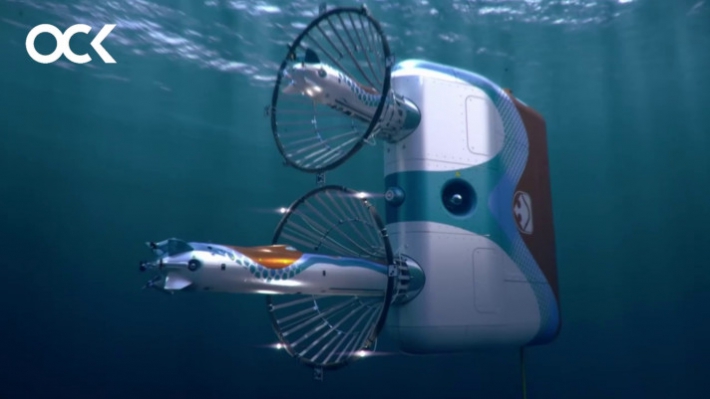
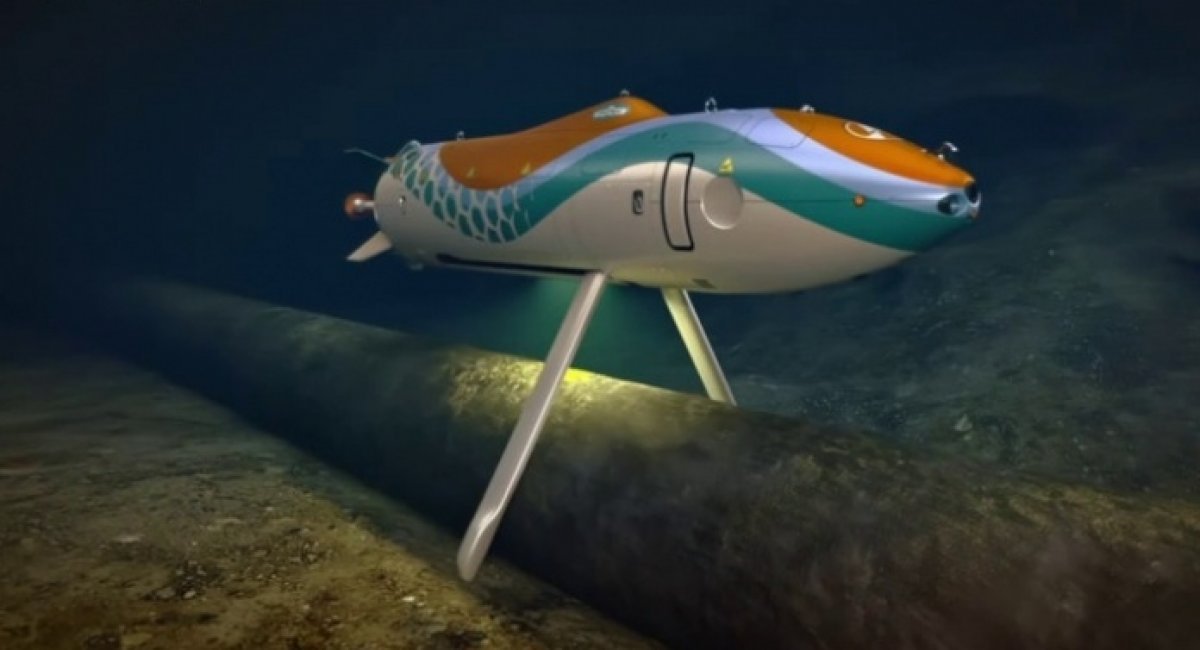
To better understand this capability, it is worth examining the individual components of the ecosystem. The first is Octavia, which functions as a stationary underwater docking station. Once deployed, it is designed either to anchor itself or rest on the seabed. It features two docking ports for other unmanned underwater vehicles, enabling their storage, recharging, data transfer, and the upload of new mission commands.
Another component is Argus-I, a reconnaissance platform equipped with various sensors. The letter I stands for Inspector. Officially, the vehicle is intended to inspect pipelines for leaks. It is fitted with two extendable sensor booms, between which a pipeline is meant to pass during inspection.
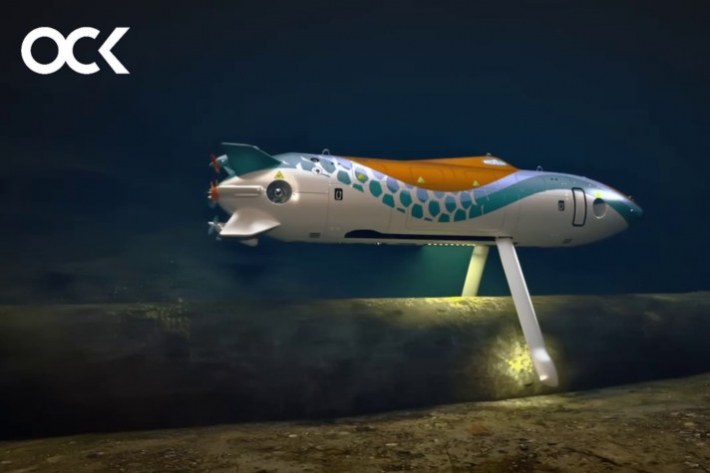
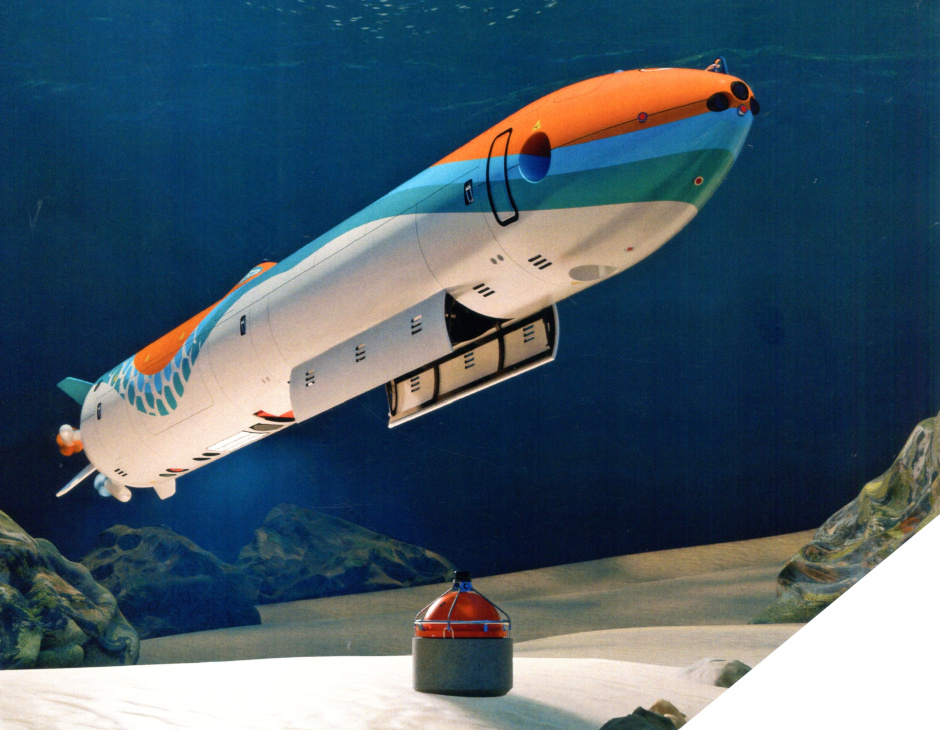
Argus-I is designed to operate in conjunction with a larger vehicle, Argus-D, where the D stands for Delivery. This platform is intended to transport and place payloads on the seabed. Its payload capacity is estimated at up to 300 kg, with a total vehicle mass of approximately 5.5 tons.
Officially, the payload is described as scientific equipment, including sensors for monitoring ocean acoustics, seismic activity, and biological processes. At the same time, Argus-D would also be well suited for deploying naval mines or explosive devices on undersea cables or pipelines, particularly in the Baltic Sea.
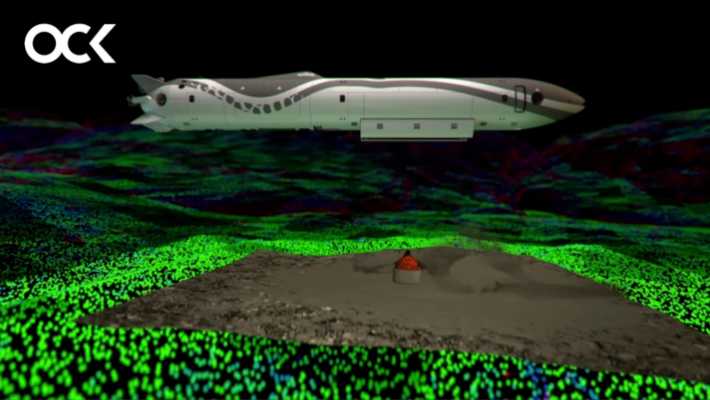
For russia, the issue of damaging undersea cables remains relevant. Just days ago, another cable connecting Finland and Estonia was damaged. As a result, Moscow would benefit from an underwater capability that allows undersea infrastructure to be sabotaged more conveniently, safely, and efficiently, especially in the context of a potential future conflict involving the Baltic states and NATO.
That said, Argus-D does not yet appear to be a fully mature solution for such missions. These drones have relatively limited autonomy, allowing them to operate at distances of up to roughly 100 km. The amount of undersea infrastructure located within a 100 km radius of russia's coastline is limited.
To reach a broader range of targets in the Baltic Sea, deployment from a surface vessel or possibly a submarine would be required. This would significantly complicate operations, as the carrier platform would likely be detected quickly. As seen in previous incidents involving damaged cables, a commercial vessel used for such purposes could be boarded and seized.
Argus-D is also unable to rapidly leave an operational area. Its maximum speed is up to 6 knots, with an endurance of up to 20 hours. However, this endurance applies at a cruising speed of only 3 knots. Its current maximum diving depth is 1,000 meters, although future versions may reach depths of up to 3,000 meters. Even the current depth capability is more than sufficient for operations in the Baltic Sea, whose deepest point is approximately 459 meters.
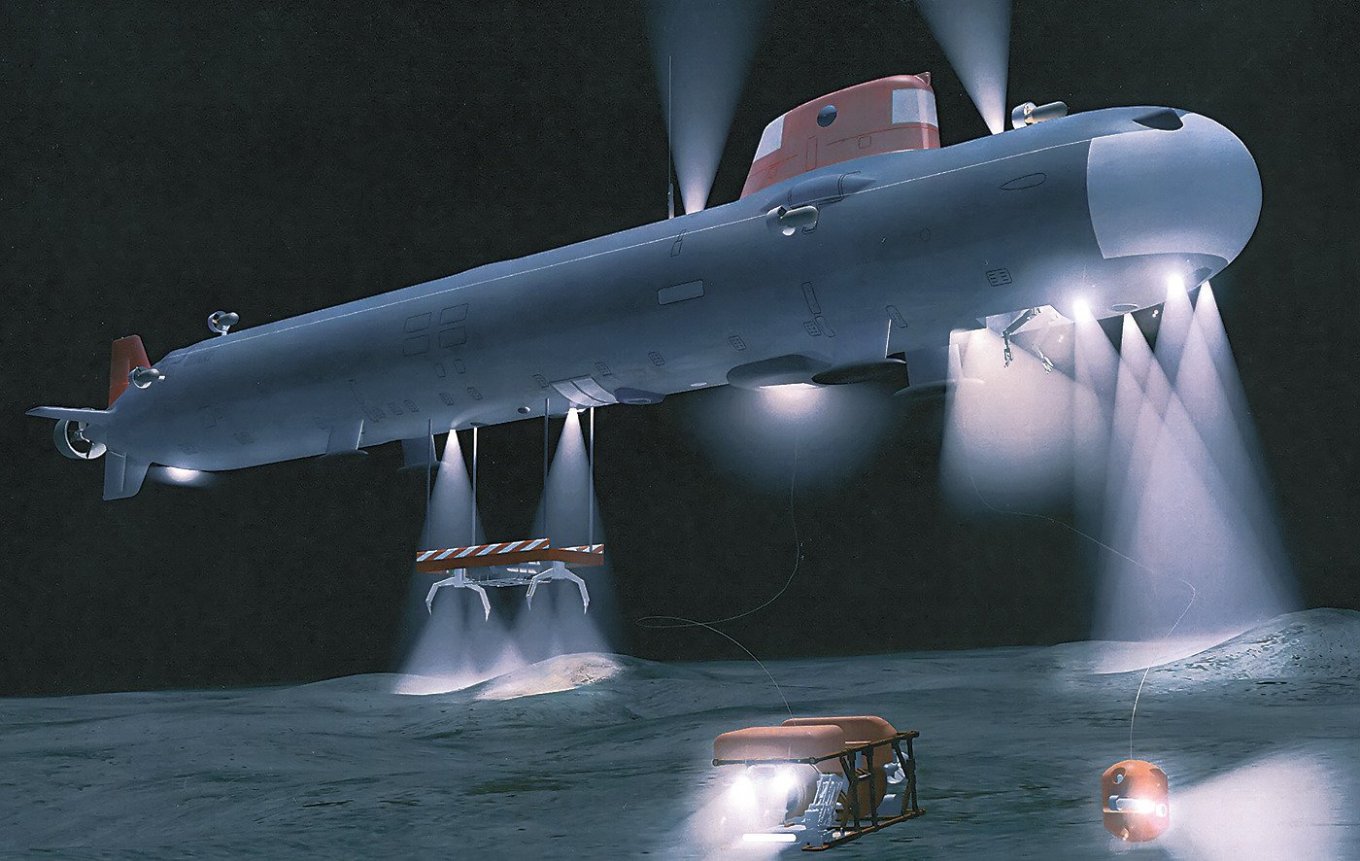
At the same time, russia possesses other tools for such missions, ranging from additional large underwater drones to specialized submarines. One example is the nuclear-powered Losharik deep-sea submarine, which was intended to target undersea infrastructure in oceans and seas. However, it was severely damaged by a fire in port in 2019 and has since been undergoing repairs for seven years.
Read more: First Time Ever AC-130J Ghostrider Uses All Guns To Sink Narco-Submarine