


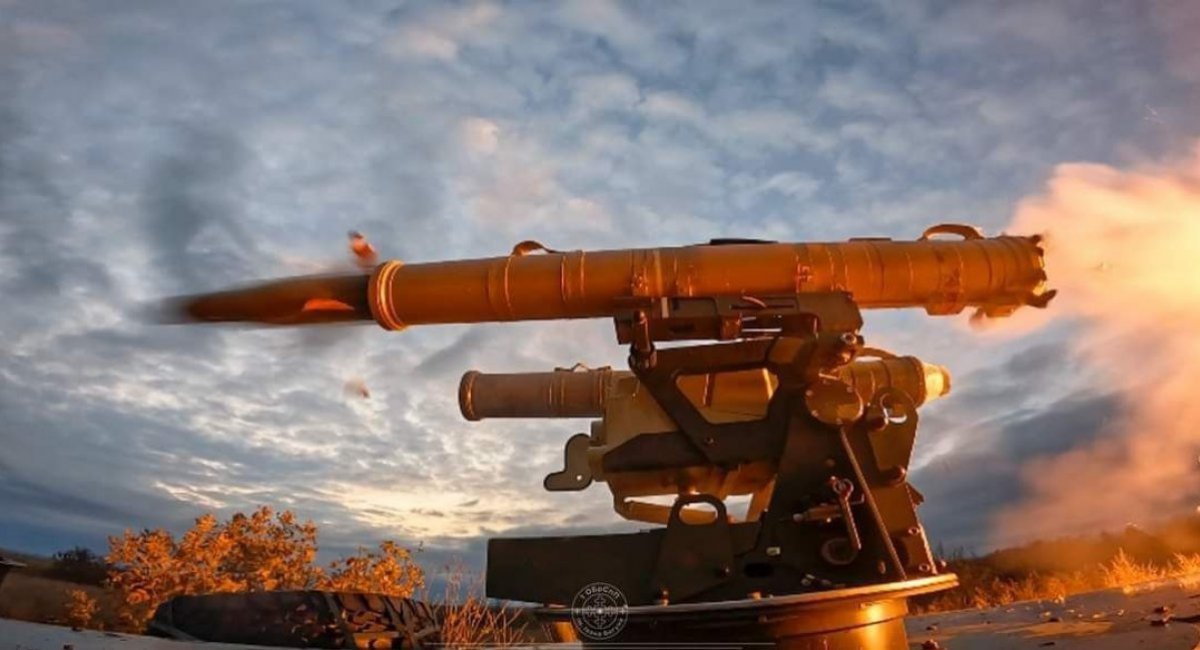
Ukraine's Stugna-P ATGM could gain a second life in the era of drone dominance, primarily through integration with modern unmanned ground platforms. Such systems are becoming increasingly widespread, particularly in logistics roles, but are now also seeing growing combat use.
This issue is especially relevant given that strike UAVs currently dominate the battlefield's anti-armor mission. At the same time, russian forces are actively experimenting with improvised additional protection measures, such as bundles of metal rods, which significantly increase the number of drones required to neutralize a single target.
Read more: Ukraine's Largest Protector UGV May Be Armed With Laser Weapons
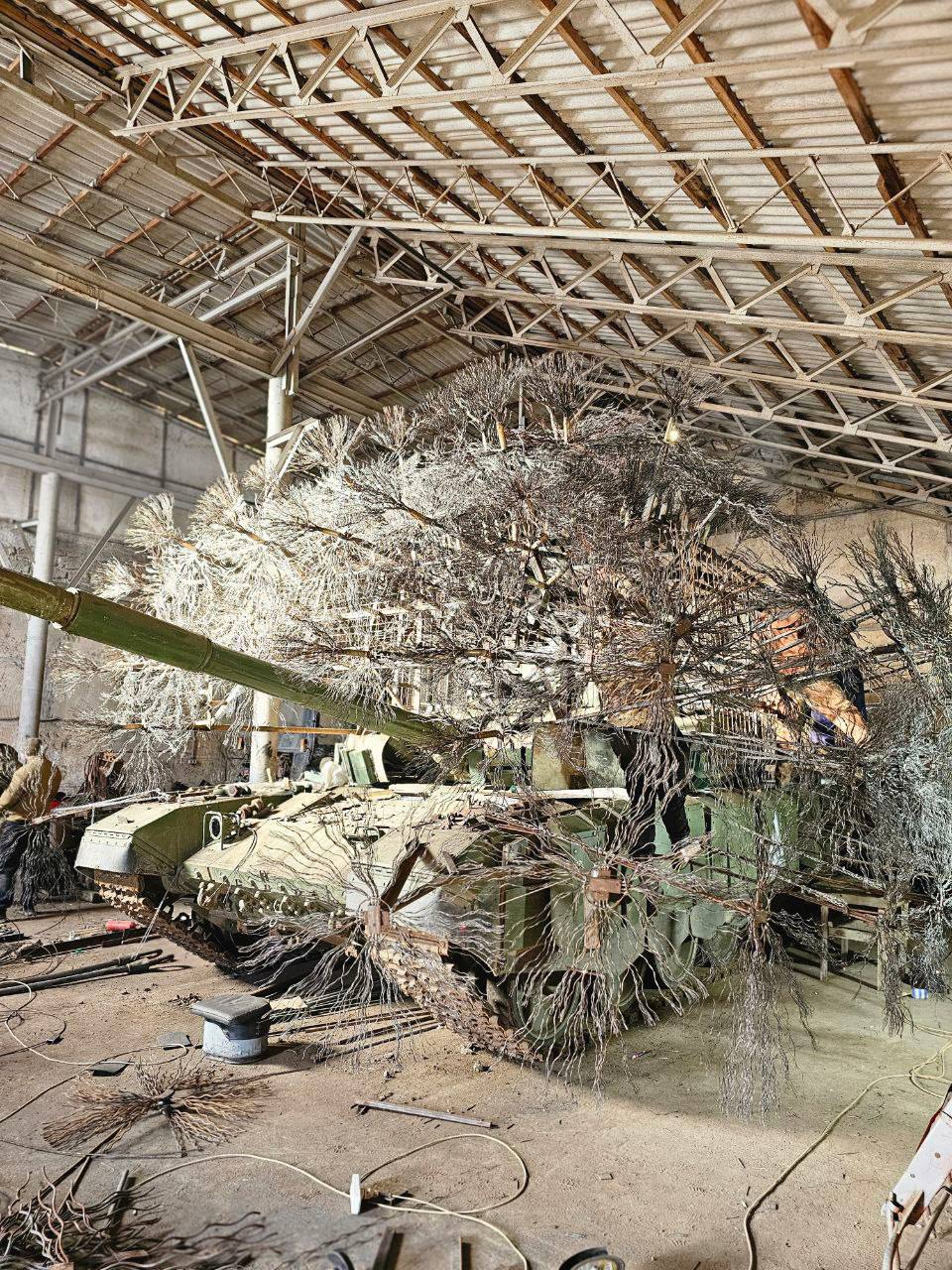
A full-fledged ATGM could address this challenge more effectively. However, ATGMs have seen reduced battlefield use due to their high cost, limited mobility, and the elevated risk they pose to personnel.
These drawbacks are even more pronounced for second-generation systems that rely on semi-automatic command to line-of-sight (SACLOS) guidance, which requires the operator to keep the sight on the target until impact. This category includes Ukrainian systems such as Stugna-P, Barrier, and Korsar.
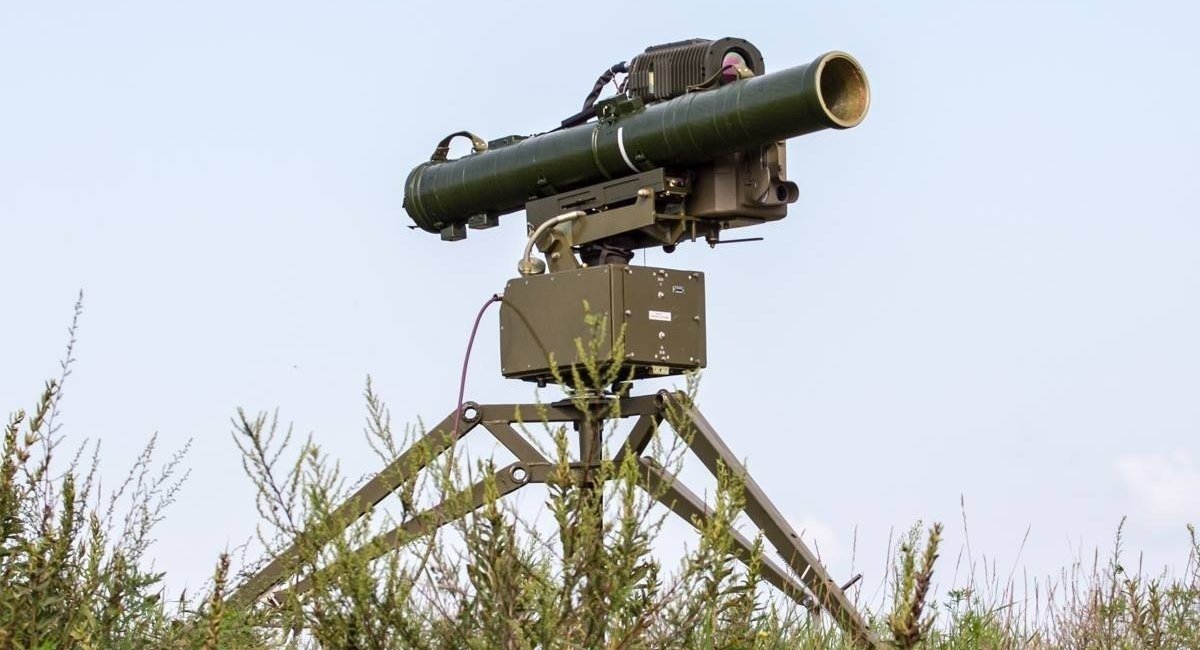
Nevertheless, the mobility issue could be partially mitigated by mounting ATGMs on unmanned ground platforms. This would significantly reduce risks to personnel while allowing the weapon system to operate closer to the front line. Notably, russian forces themselves are experimenting with similar concepts, including the installation of laser systems on ground robotic platforms.
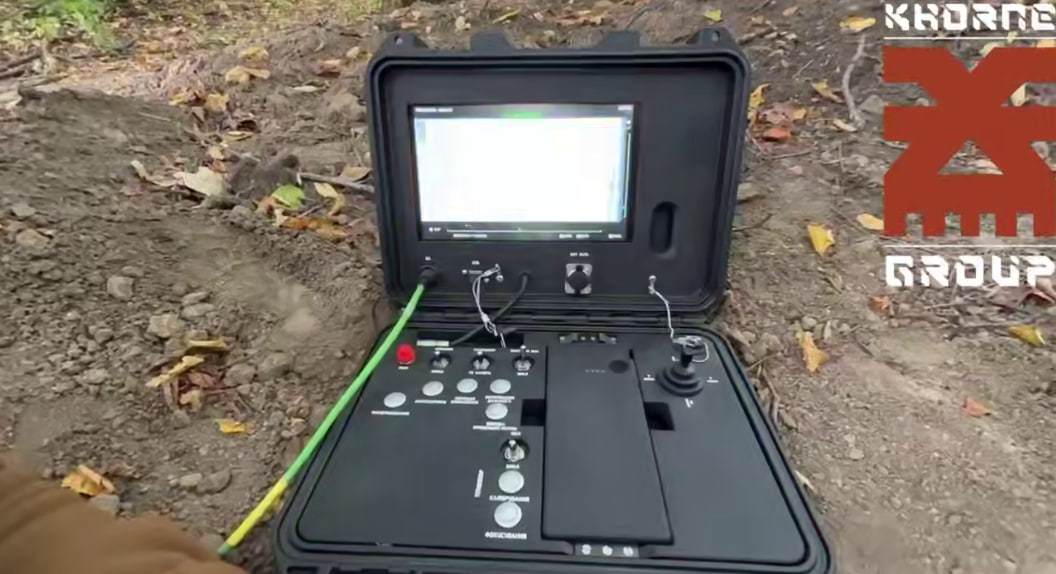
Remote control is not a major technical obstacle in this case. The Stugna-P already uses an external remote control console, while the Barrier system is designed for integration into remotely operated combat modules on armored vehicles. Provided that reliable communications with the robotic platform are available, remote firing is technically feasible.
The primary drawback remains cost. An ATGM system, not to mention a full combat module, may be more expensive than the unmanned ground vehicle carrying it. According to the Brave1 Market, UGV platforms suitable for such integration may cost approximately USD 15,000–18,000, while more advanced options can reach USD 40,000–60,000.
At the same time, the export price of a single Stugna-P missile has been estimated at around USD 20,000. This inevitably raises questions about cost-effectiveness, a metric frequently cited in discussions of unmanned systems.
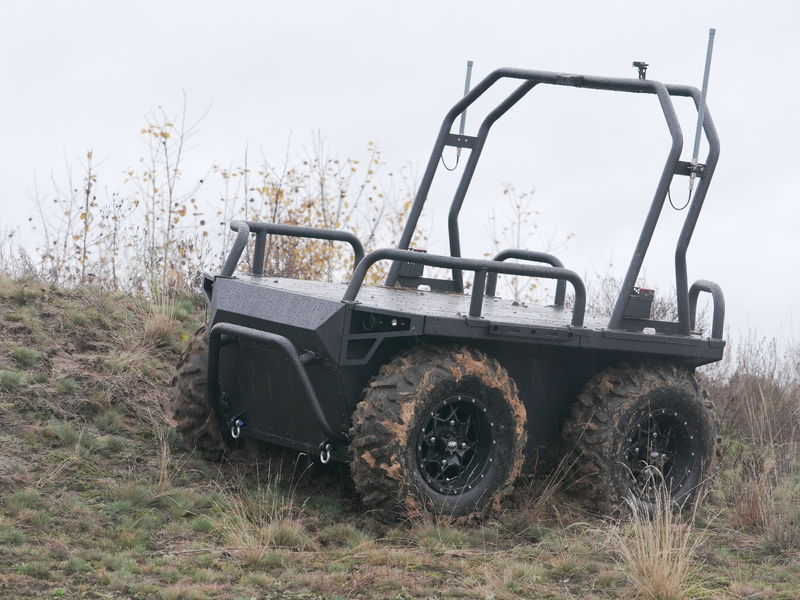
Another challenge is that most ground drones currently used at the front are relatively low-profile, which helps them remain concealed. However, this may complicate targeting at ranges of one kilometer or more, requiring operators to seek elevated firing positions. Larger platforms, while offering better firing geometry, may be easier to detect and destroy before even reaching a suitable firing position.
It is also worth noting that the concept of mounting ATGMs on unmanned ground vehicles is not new and has existed for years. In Ukraine, various configurations were previously considered, including options involving the Barrier system. However, these projects never progressed beyond the experimental stage and failed to attract customers.
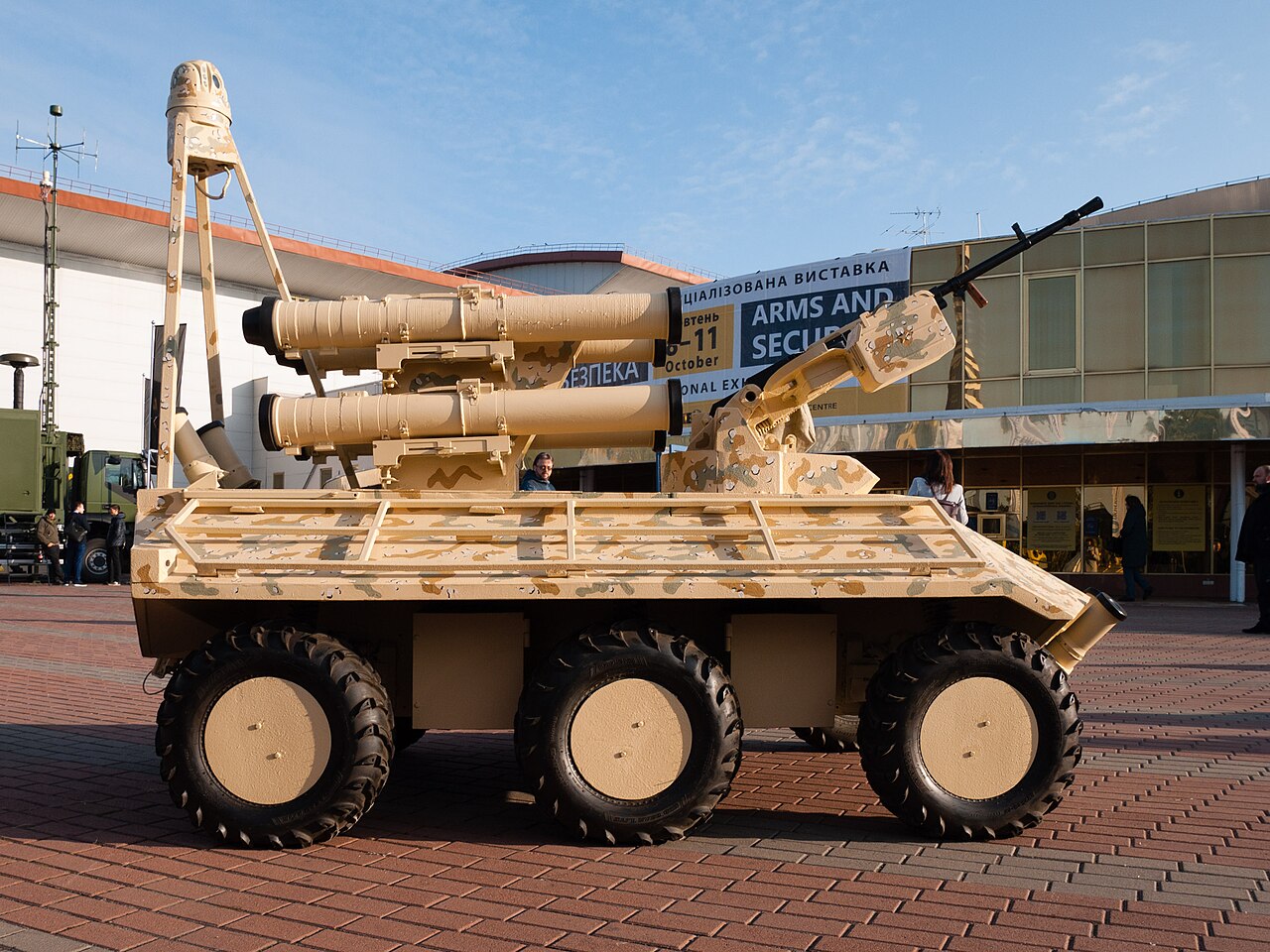
Today, however, conditions have changed. Ground robotic systems are becoming more widespread due to their effectiveness in logistics and, increasingly, in combat roles, including successful engagements against targets such as MT-LB armored vehicles. As a result, it is entirely plausible that tanks may eventually be destroyed by anti-tank guided missiles launched from unmanned ground platforms.
Read more: Why the Joint Ukrainian-Polish Pirat ATGM Program May Be Abandoned and What It Means for the Stugna-P