


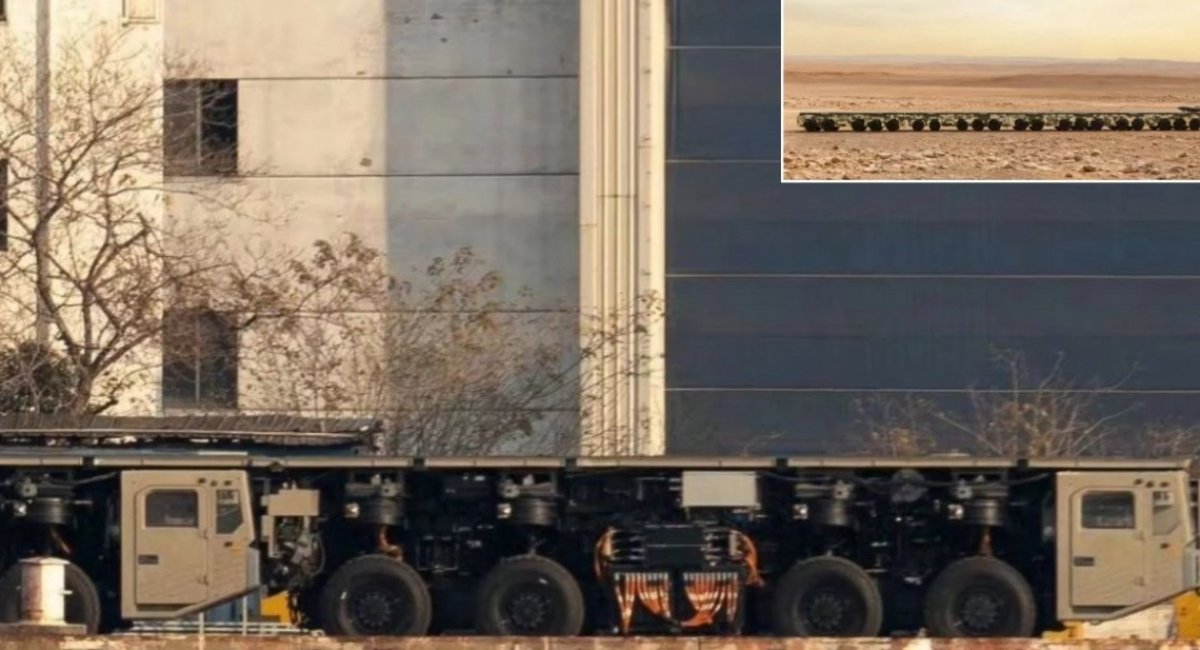
Photos appeared online of previously unknown Chinese equipment that looks like some fantasy or centipede as it can have 40 wheels total. However, this is a completely real weapons system. So what is it and what's it for?
It's essentially a wheeled electromagnetic catapult, similar to those on aircraft carriers for launching aircraft and UAVs. Worth recalling: China only recently commissionedits third aircraft carrier, Type 003 Fujian, which has electromagnetic catapults.
Read more: How Did Predecessor of russian Oreshnik IRBM Wich Putin is Scaring Europe Witn, Large Soviet Pioneer Lost to Small American Pershing II MRBM
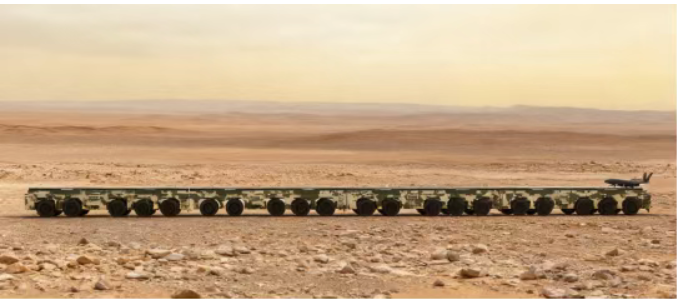
Meaning developments from there could be used here, and on Fujian the catapult is 105 meters long. Though currently publicly available information indicates length up to 60 meters and capability to launch drones weighing up to 2 tons.
A question may arise about how such large equipment can move at all. Actually, it's quite simple if you look closely, it's not one whole machine but consists of several smaller self-propelled sections connected sequentially.

It's quite possible that increasing the number of sequentially connected sections would increase the mass and type of aircraft that can be launched from it. Currently it's designed only for launching various drone types. Besides the ability to change the number of sequentially connected elements, electromagnetic catapults allow very precise power regulation, which on aircraft carriers enables launching different aircraft from light UAVs to heavy fighters or AWACS aircraft.
Electromagnetic catapults require very large volumes of electricity and accordingly many batteries and generators. Chinese engineers likely couldnt fit all necessary elements on one chassis. Therefore, most likely several more vehicles must travel with the catapult itself, carrying generators, batteries, and other elements.
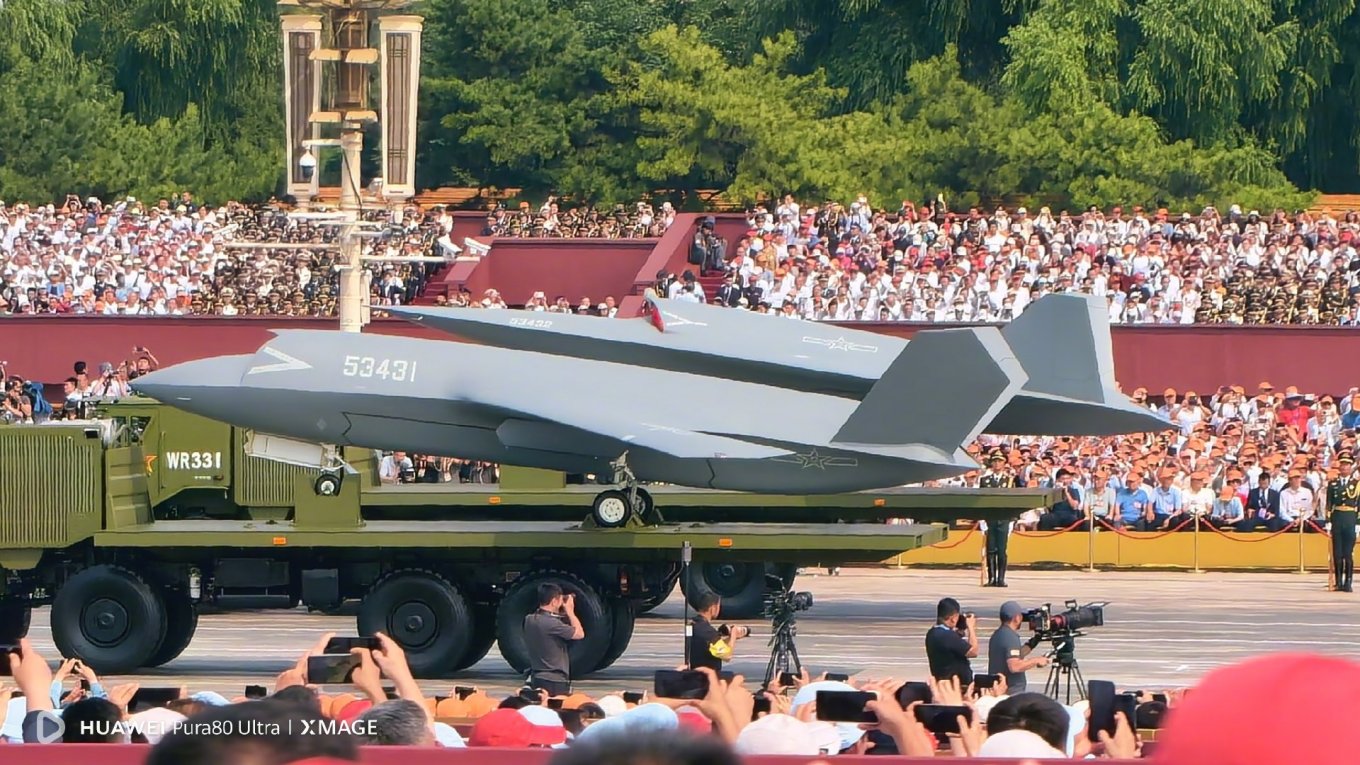
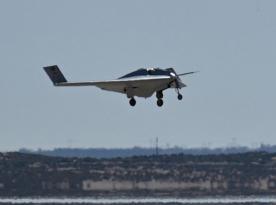
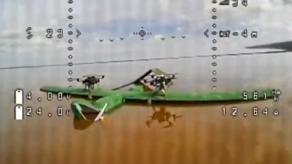
The published image shows the process of installing a certain drone on this catapult, probably for compatibility testing. This drone closely resembles American XQ-58 Valkyrie from Kratos and YFQ-42A from General Atomics.
These are loyal wingman drones for manned aircraft, capable of independently conducting reconnaissance, air combat, and striking ground targets. China has its own drones of this type, including one similar shown during a military parade in Beijing in early September this year this is precisely the case where Chinese copy faster than the U.S. develops.
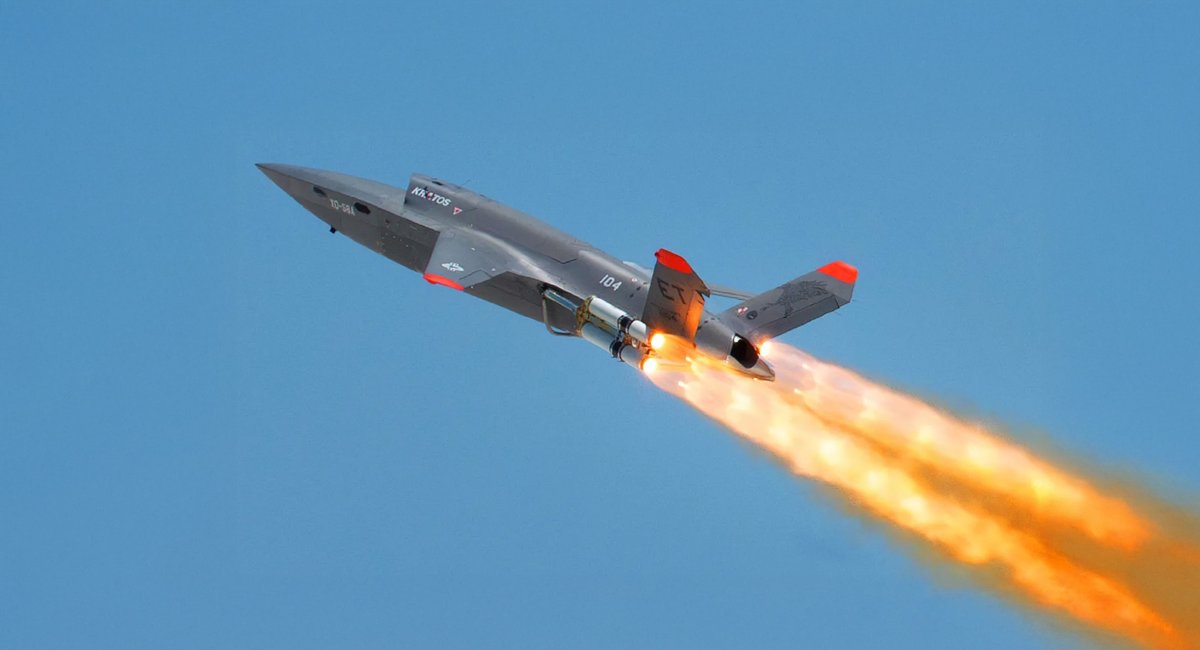
A question may arise: why make such a centipede with electromagnetic catapult for launching drones when you can look at the XQ-58 Valkyrie example, also launched from a launcher but using solid-fuel boosters?
The point is that in full-scale war with the U.S., first strikes would hit large static airfields, consequently damaging runways. Additionally, solid-fuel booster costs are much higher than launching from such a catapult.
Therefore, such a mobile electromagnetic catapult could replace runways, launching UAVs from any open terrain be it highway, field, or desert.
Read more: Balkans Unite: Kosovo, Albania, Croatia Team Up to Build Armored Vehicles Challenge Ukraine's Market