


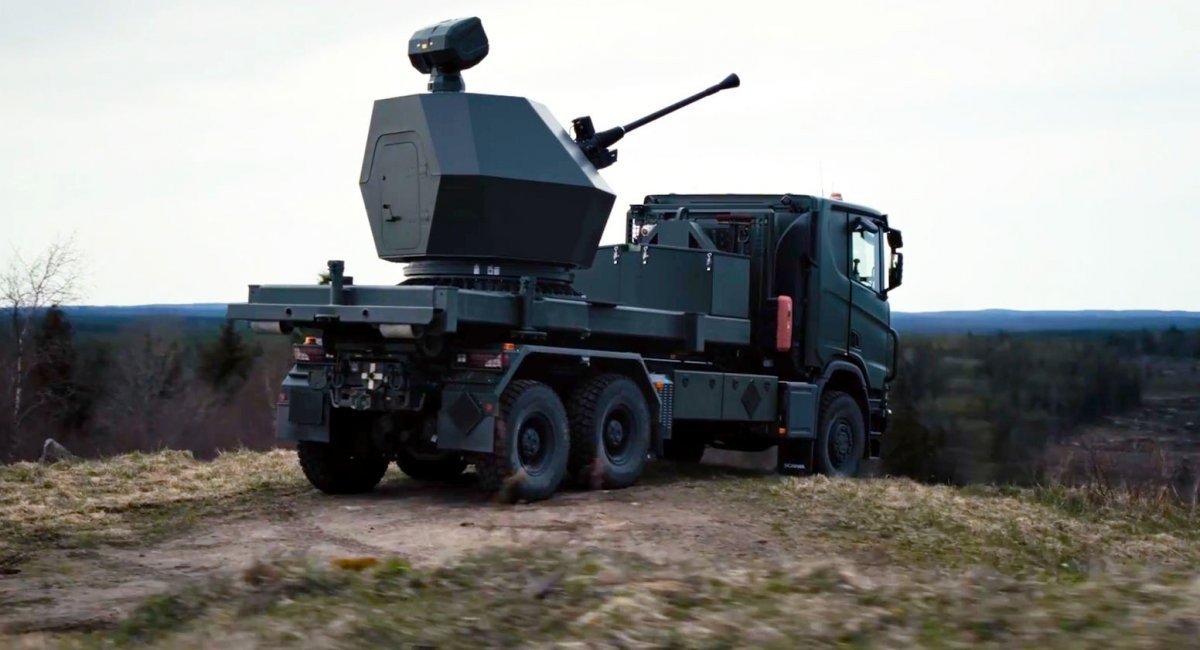
As Ukraine awaits reinforcement of its air-defense network with Tridon Mk2 "Shahed-hunters," financed by Sweden and Denmark, particular attention has been drawn to the system’s declared engagement range. BAE Systems states that the Tridon Mk2 is capable of delivering effective fire at distances of up to 12 km.
Such a figure is impressive, as it exceeds the engagement range of a number of short-range surface-to-air missile systems. For comparison, the Osa SAM system can engage targets at ranges of up to 12 km, while the RBS 70 NG is limited to about 9 km. The effective ranges of several newer air-defense solutions that rely on non-specialized missiles, such as the Vampire system with APKWS or the Tempest system with AGM-114L Longbow missiles, are generally closer to 5 km.
Read more: Sweden to Supply Ukraine with Air Defense Systems worth $113 mln Including Tridon Mk 2
At the same time, BAE Systems formulates its 12 km claim in a very specific way: "Tridon Mk2 is a self-propelled, remotely operated 40 mm air-defense gun system with an effective engagement range against air and surface targets of up to 12 km, depending on the target, selected ammunition, sensor suite, and surrounding terrain."
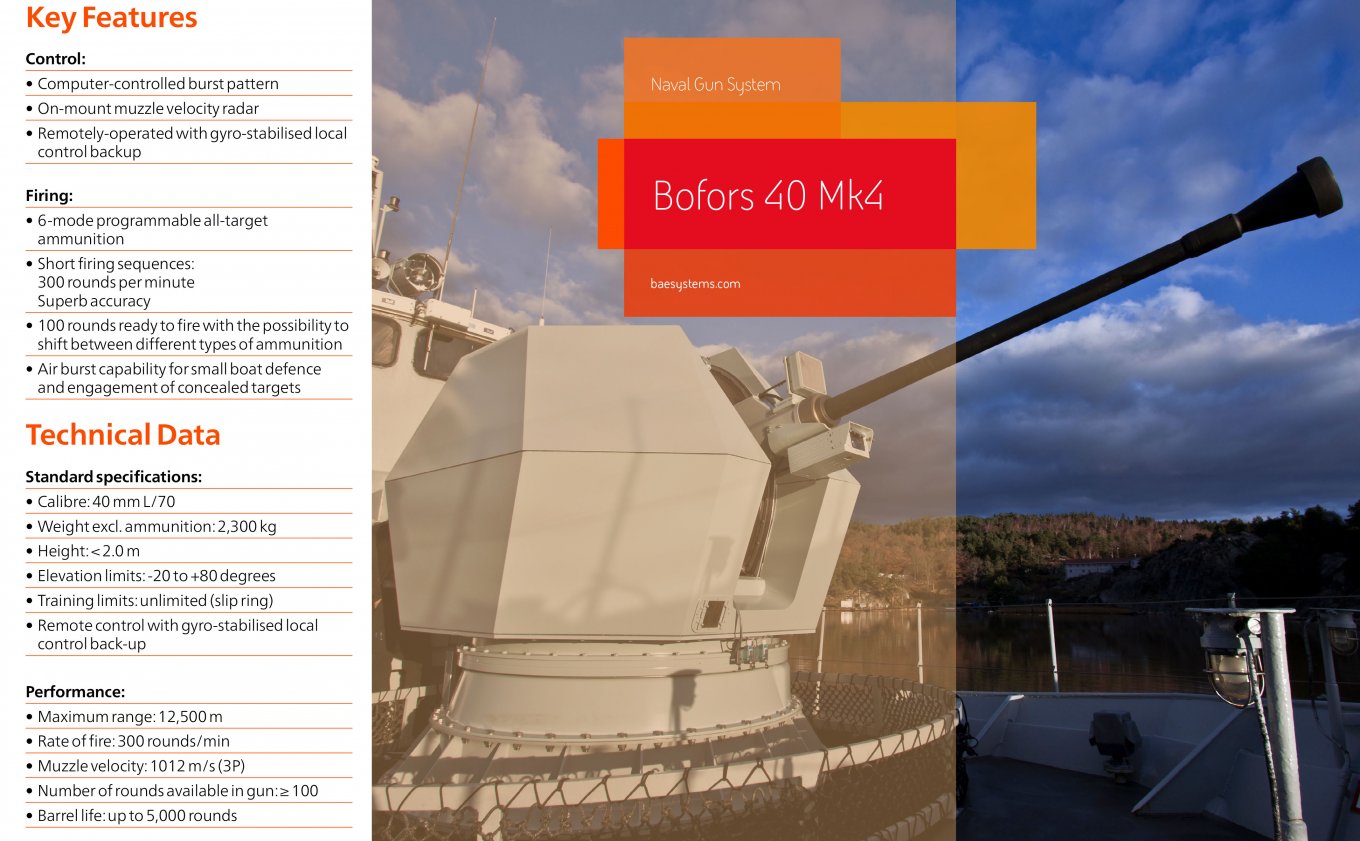
Given that the system is based on the naval Bofors 40 Mk4 gun mounted on a wheeled chassis, this figure aligns with the gun's maximum firing range, which is specified at approximately 12.5 km.
However, maximum firing range is one thing, while effective engagement range is another—especially when dealing not with stationary ground targets but with maneuvering aerial ones. This makes it necessary to look beyond the general characteristics of the naval system and focus specifically on the capabilities of the 40 mm Bofors L/70 automatic gun itself.
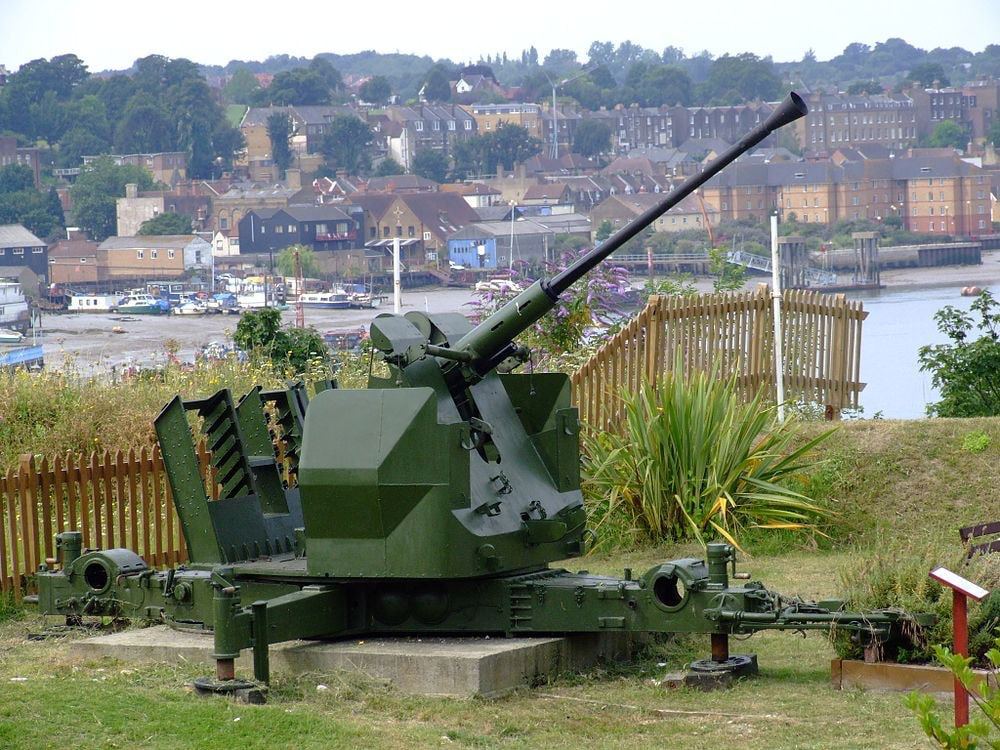
This is particularly relevant because the L/70 is a dedicated anti-aircraft gun. Moreover, such guns were supplied to Ukraine in their original configuration from Lithuania. A publicly available operator's manual issued by Bofors, translated into Ukrainian and published by the Territorial Defense Forces, provides detailed data on firing parameters, including highly illustrative charts showing range, velocity, and time of flight for standard high-explosive fragmentation rounds fired from the L/70.
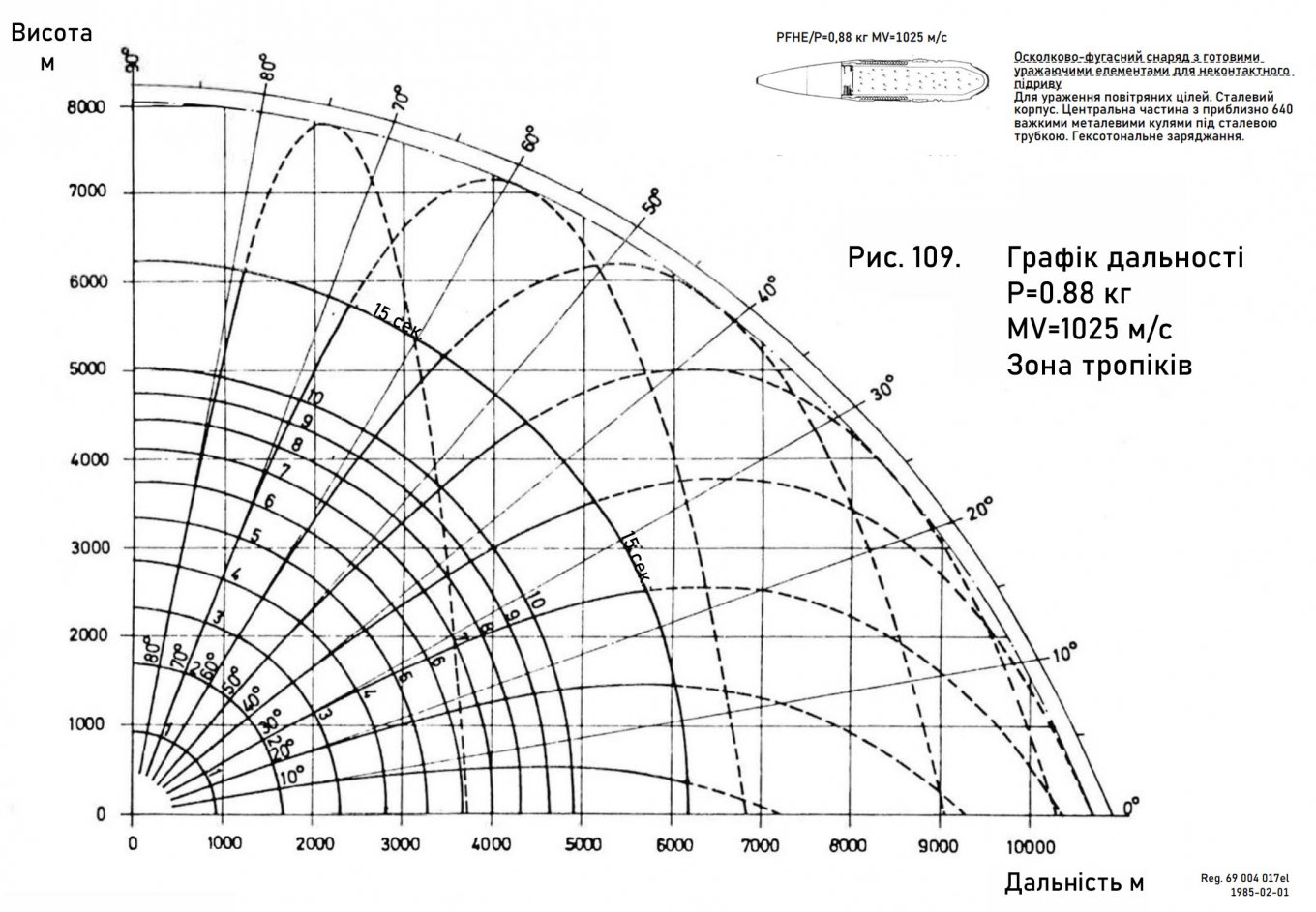
According to these materials, the gun can engage aerial targets at altitudes of up to 8 km and at ranges exceeding 10 km. However, this comes with numerous caveats that are often overlooked when such seemingly straightforward figures are cited. In particular, the achievable engagement altitude depends on range, while the effectiveness of fire depends not only on shell dispersion but also on projectile time of flight.
At a range of 3,000 meters, a shell requires approximately four seconds to reach the target. If the target changes its flight path even slightly at the moment of an otherwise perfectly calculated shot, it can evade interception. At around 3.5 km, the projectile drops below the speed of sound and continues its flight at subsonic velocity. Reaching a distance of 6,000 meters takes roughly 15 seconds. While no specific time-of-flight data are provided for a range of 10 km, it can be reasonably expected to exceed 30 seconds and approach 45 seconds when firing at the maximum range of 12.5 km.
That is to say, when firing at the notional maximum possible range, the system must calculate an intercept point with the target roughly 45 seconds after the target’s position at the moment the shot is fired. During that time, the target may simply make a minor change in course or speed. Even without addressing shell dispersion or the influence of external factors, this alone becomes a critical limitation. At the same time, at more realistic engagement ranges, namely up to 3–4 km, as with the German 35 mm Gepard, the effectiveness of such a system will be extremely high.
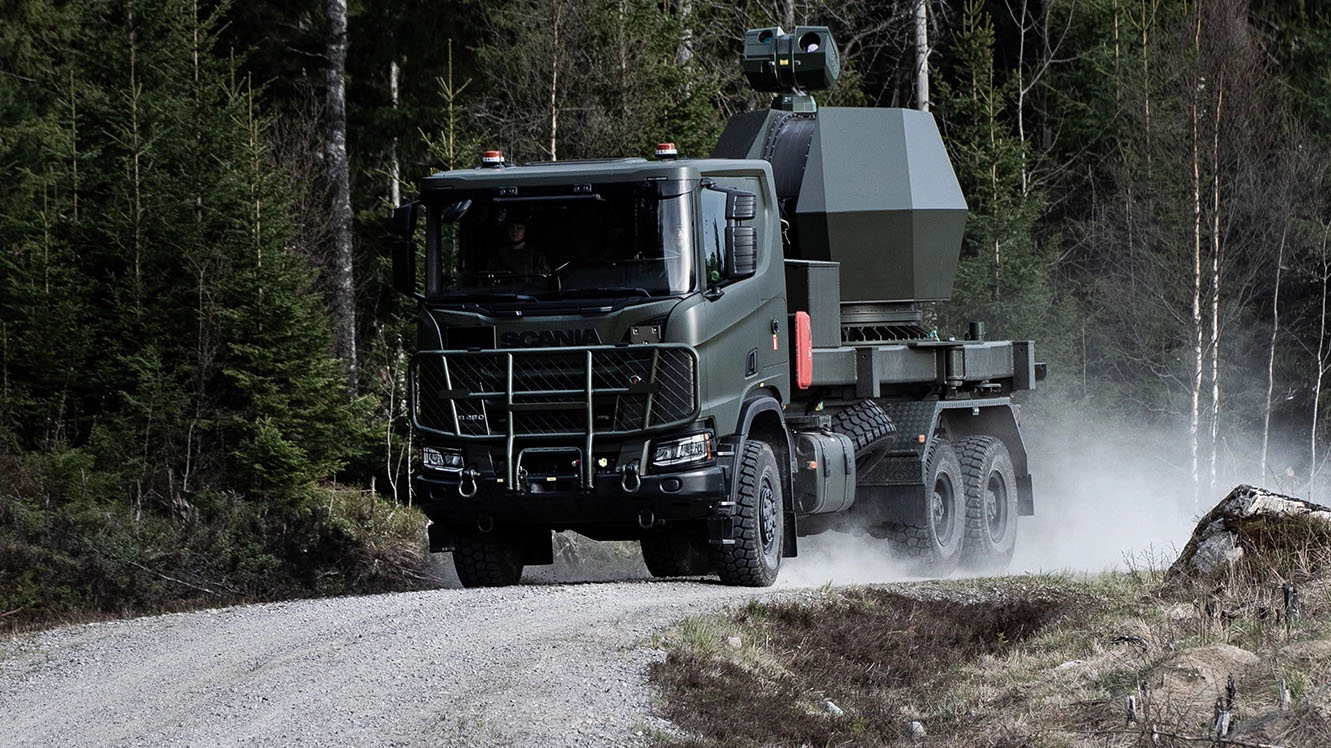
It should also be taken into account that ballistic calculations in the Tridon Mk2 are performed by a modern digital fire-control system. This system uses a laser rangefinder to determine the distance to the target and radar to measure the muzzle velocity of the projectiles. In addition, ballistic solutions typically incorporate data on air pressure, wind, and temperature, while modern systems increasingly integrate algorithms for automatic target tracking and analysis of the target's flight trajectory.
The primary intended targets for the Tridon Mk2 are Shahed-type drones, which generally exhibit very limited maneuverability. Moreover, the system can employ programmable airburst ammunition that creates a cloud of fragments in front of the target and does not require a direct hit.
Thus, can the Tridon Mk2 technically fire at ranges of 12 or even 12.5 km? Yes. Will it be effective at such distances? No. However, this should not be seen as a shortcoming of the system, as effective fire will in practice be conducted at ranges typical for comparable anti-aircraft artillery systems—up to 4–5 km. This is also influenced by the ability to acquire and track low-altitude targets in complex terrain.
Another important question is whether the Tridon Mk2 can counter not only drones but also cruise missiles, which is particularly relevant given russia's growing use of jet-powered drones. According to BAE Systems, such a capability does exist, as illustrated in the company's published infographic.
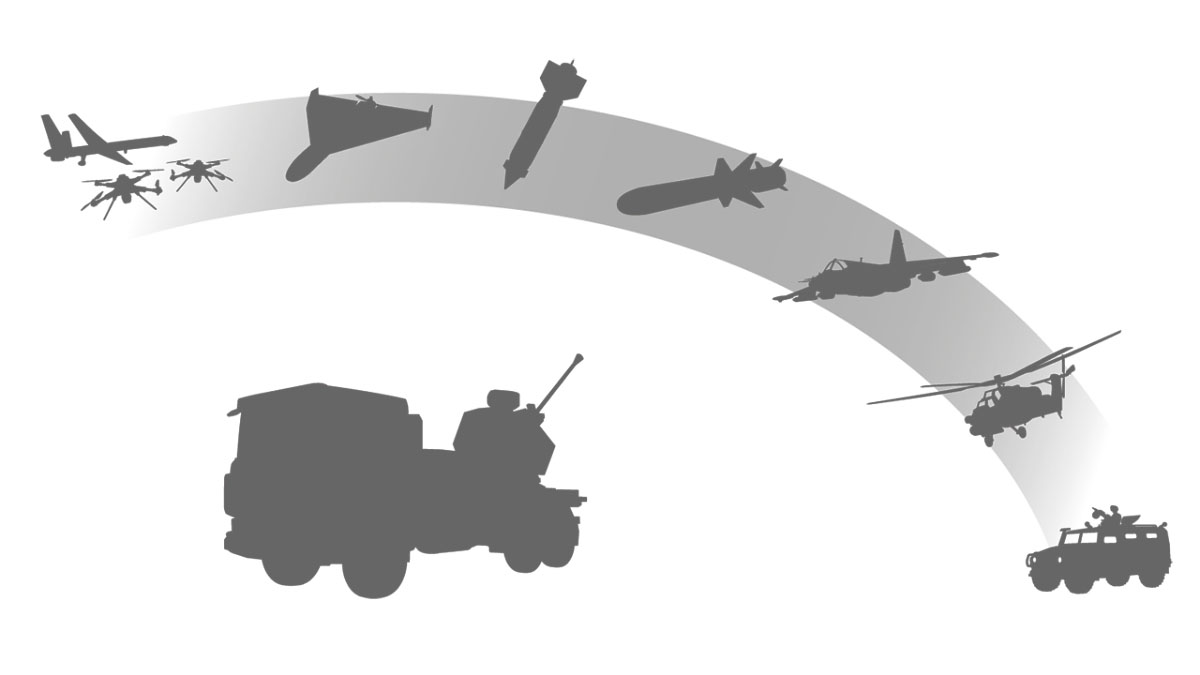
In that graphic, in addition to drones, one can also see a missile, a guided aerial bomb, an aircraft, a helicopter, and armored vehicles. While the latter three are unlikely to appear within the Tridon Mk2's engagement envelope in the realities of a war against russia, missiles and guided bombs certainly are. Ultimately, countering missiles, first and foremost anti-ship missiles, has always been the primary mission of naval anti-aircraft artillery systems, so there is little reason to doubt this capability.
From the Defense Express side, we urge readers to join a fundraiser for a solution that is already proving effective: the One United Fundraiser, organized by the Serhiy Prytula Charity Foundation to support interceptor drones.

Read more: Sweden and Denmark to Supply Tridon Mk2 Air Defense Systems to Ukraine