


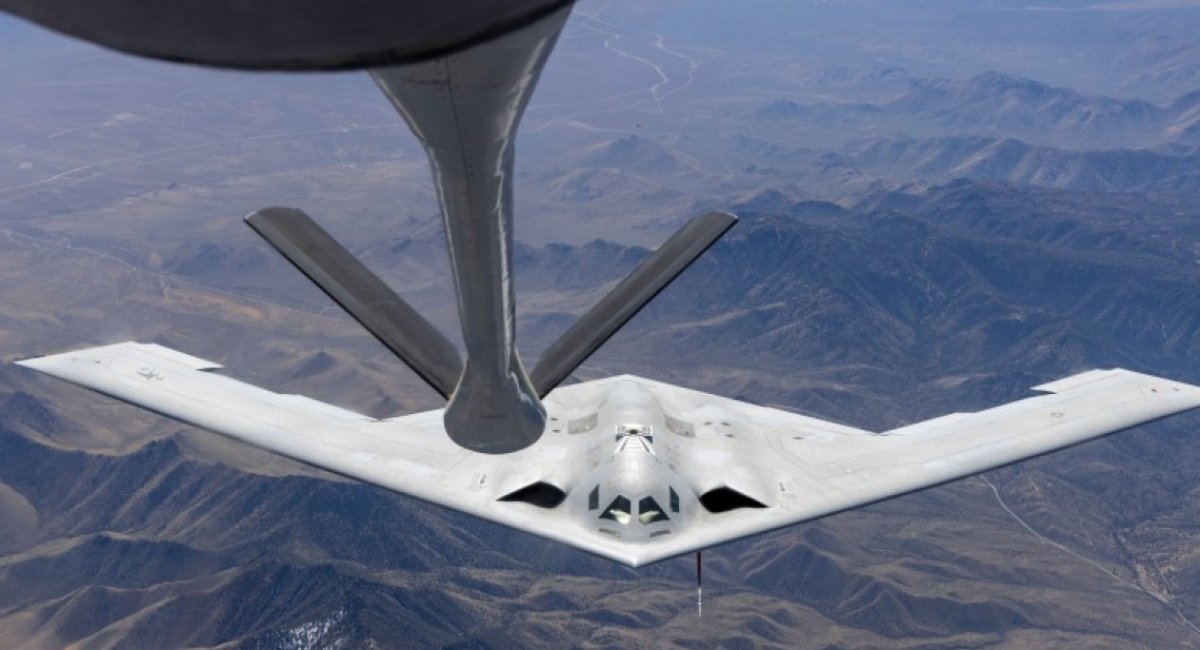
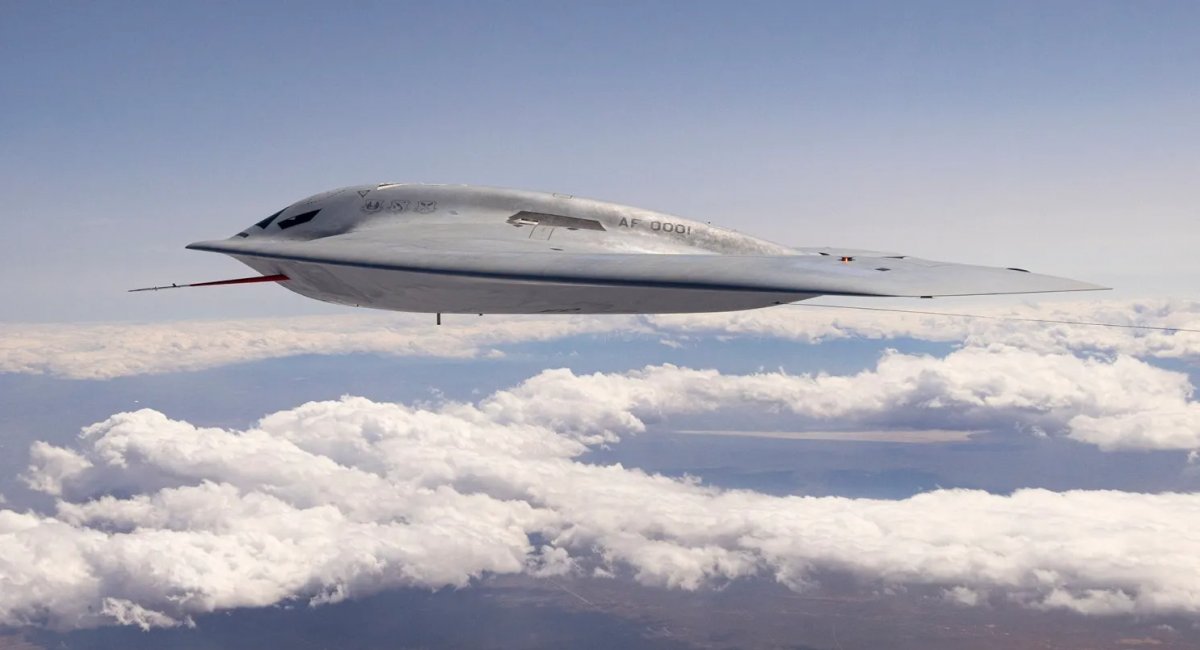
Northrop Grumman continues actively conducting testing of new low-observable B-21 Raider strategic bomber. They have already moved to demonstrating air refueling capability stage.
The developer company emphasizes this is an important part of such aircraft functionality, as it enables possibility to remain airborne longer and strike any point in the world. This includes capability to bomb russia, iran and China.
Read more: Ukraine's Unmanned Systems Forces Shoot Down russian Shahed Drone From Maritime Platform for the First Time in History (Video)
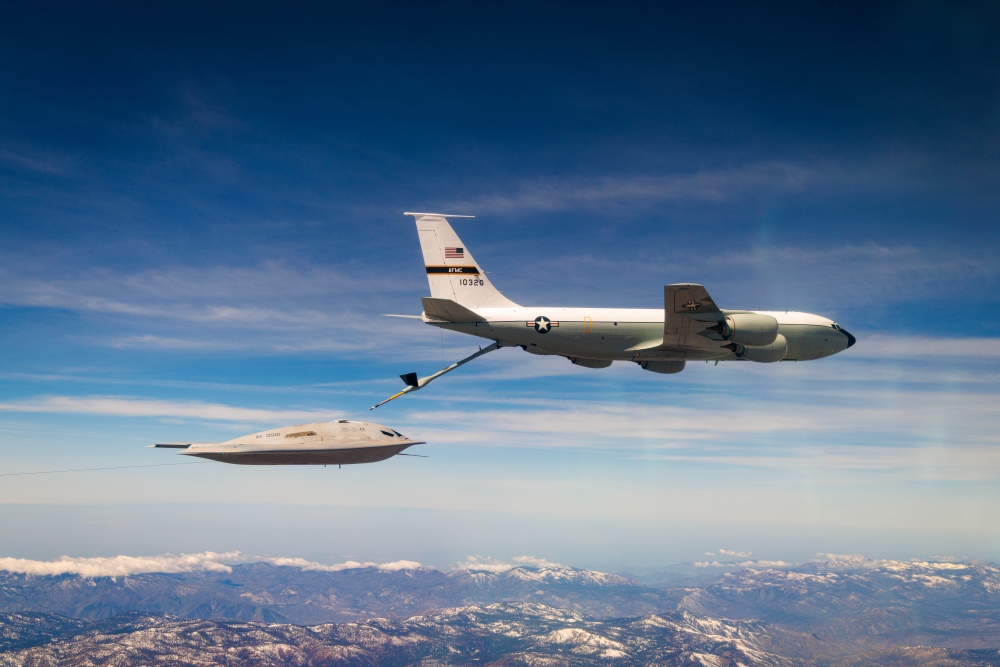
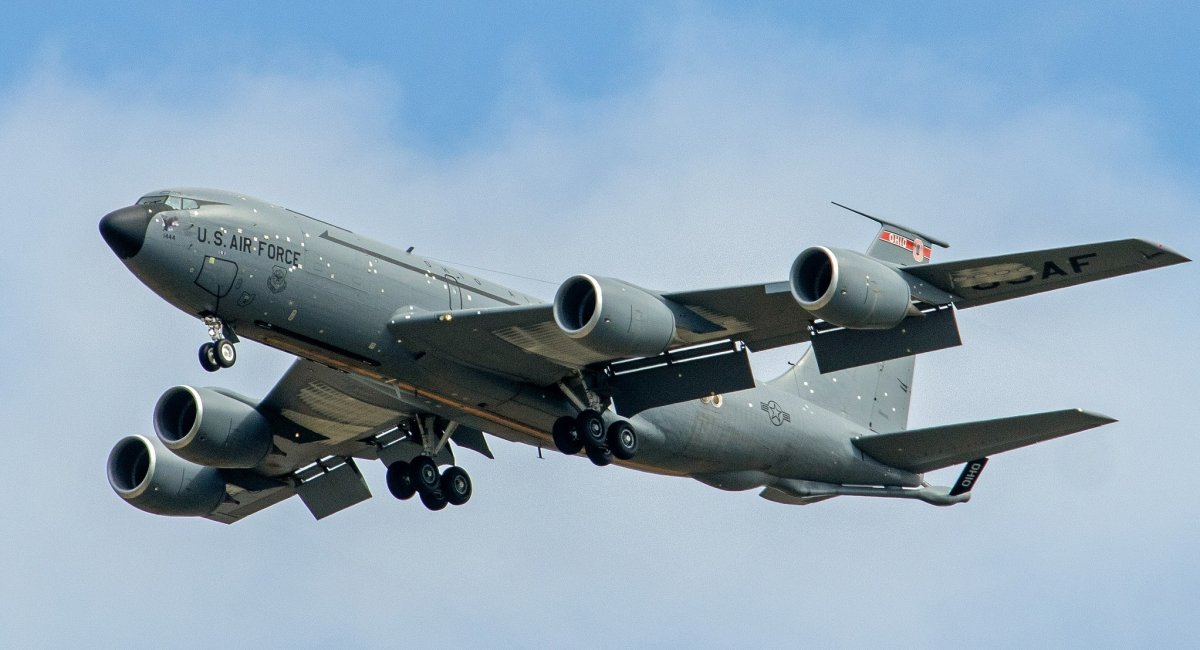
Interestingly, old KC-135 flying tanker was used for testing, which today is U.S. Air Force workhorse. Newer KC-46A Pegasus possibly was not used both due to smaller quantity and heap of problems.
Northrop Grumman boasts their bomber consumes only portion of fuel needed by fourth and fifth-generation aviation. Thus risks are reduced for flying tankers, whose losses already occurred in iran war, including on ground.
Overall according to developers, B-21 Raider testing proceeds at unprecedented speed, proving its high characteristics. It is planned first aircraft will arrive at U.S. Air Force Ellsworth Air Force Base already in 2027.
Hard not to agree that for American strategic bombers, effective fuel use and refueling are critical for mission performance. Primarily this enables nuclear triad component to keep all potential adversaries under sights.
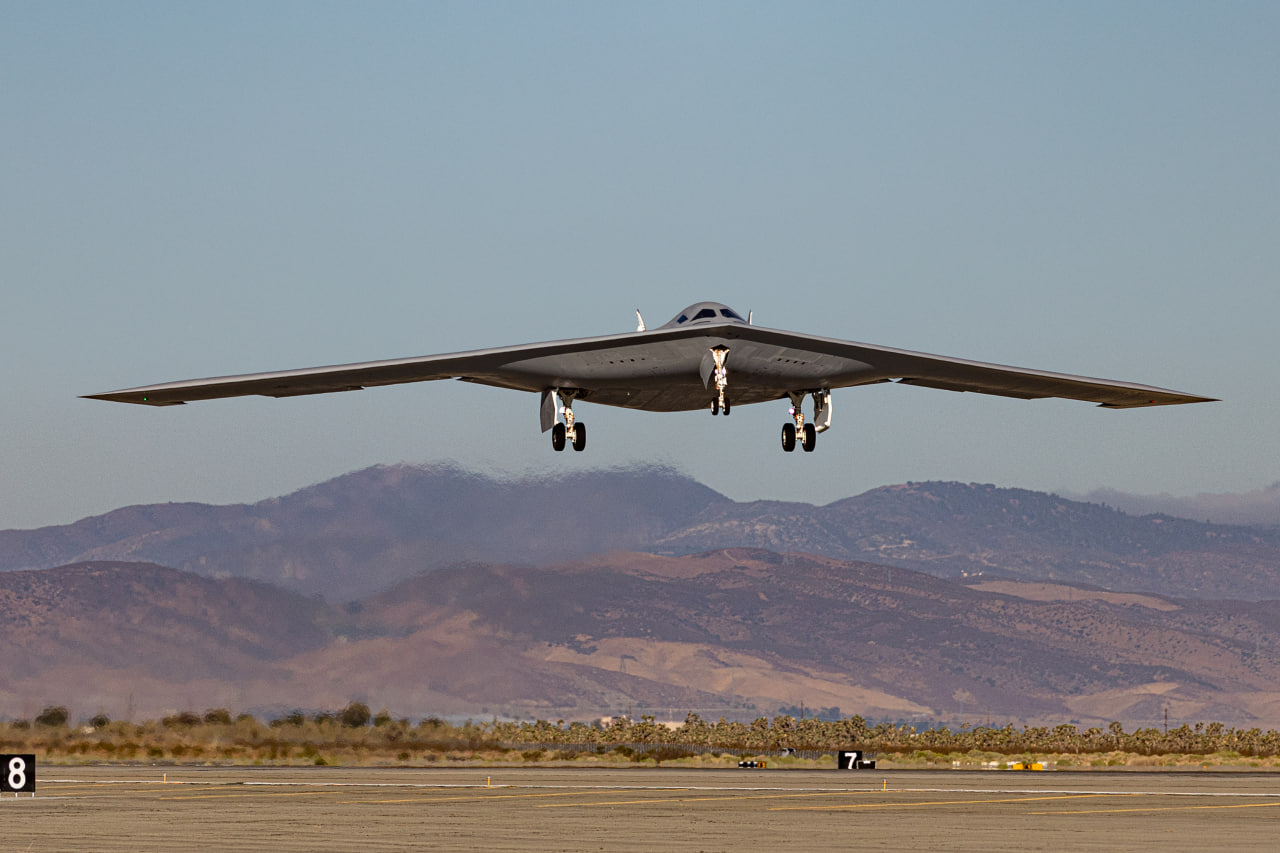
Regarding conventional wars, aircraft will not need to be kept at airbases near conflict zone. They can take off from distant airfields, possibly even in U.S. itself, and be supported by flying tankers to reach mission performance location and return. This was already done against iran.
Overall, B-21 Raider is being developed to replace B-1 and B-2, and also generally conceived as more mass strategic bomber. Currently at least one hundred such aircraft are planned for order, but several times more are needed.
Interestingly, old B-52 Stratofortress will remain in service until 2050s, working shoulder-to-shoulder with new aircraft. For this it will undergo modernization to B-52J level, but questions exist whether their quantity will suffice for simultaneous improvement and performing assigned tasks.
Read more: Ukrainian Drones Destroy russian TOS-1A Solntsepyok System in Zaporizhzhia (Video)