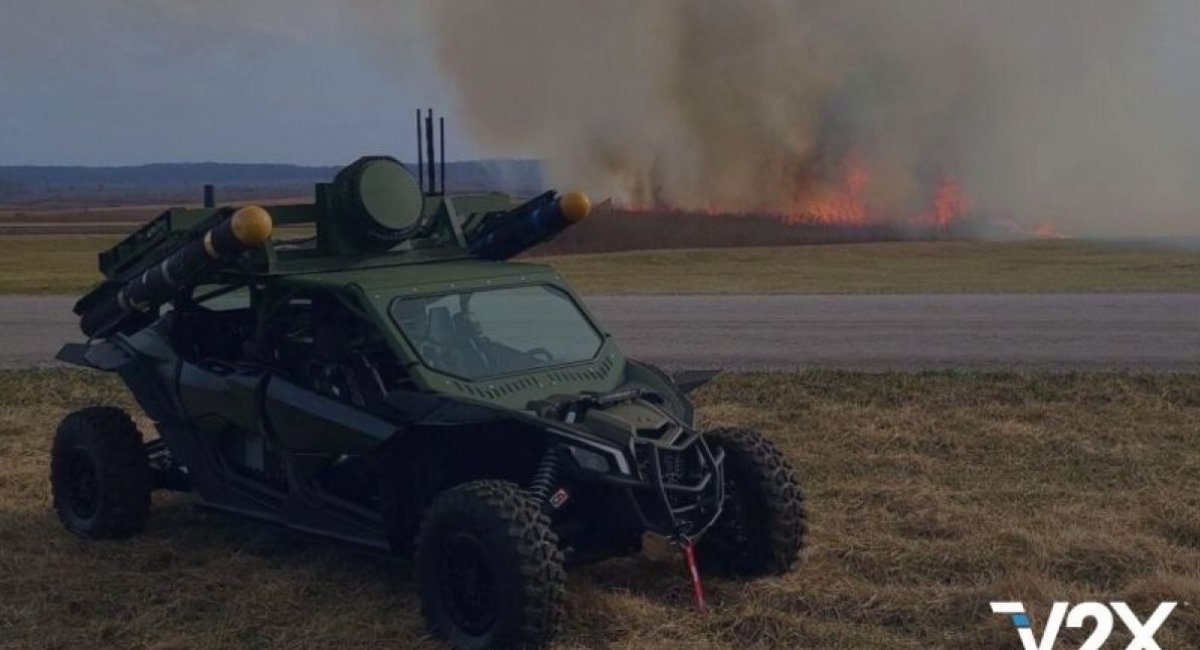
At the AUSA 2025 defense exhibition in Washington, D.C., the American company V2X presented its new air defense system, the Tempest. The system comes in two versions – a mobile configuration mounted on a lightweight buggy and a trailer-based version designed to protect stationary objects.
The most distinctive feature of the Tempest system is its low cost. The system includes only a small RADA-type radar, two missile launchers, and a commercial off-the-shelf buggy chassis, which is inexpensive to produce and maintain. However, the use of a single radar means the Tempest system has a limited field of view, able to scan only in one direction. This design suggests that the radar serves mainly for target tracking and missile guidance, rather than full-scale airspace surveillance.
Read more: Switchblade Production Rates, Lag AeroVironment Moves to Fix it
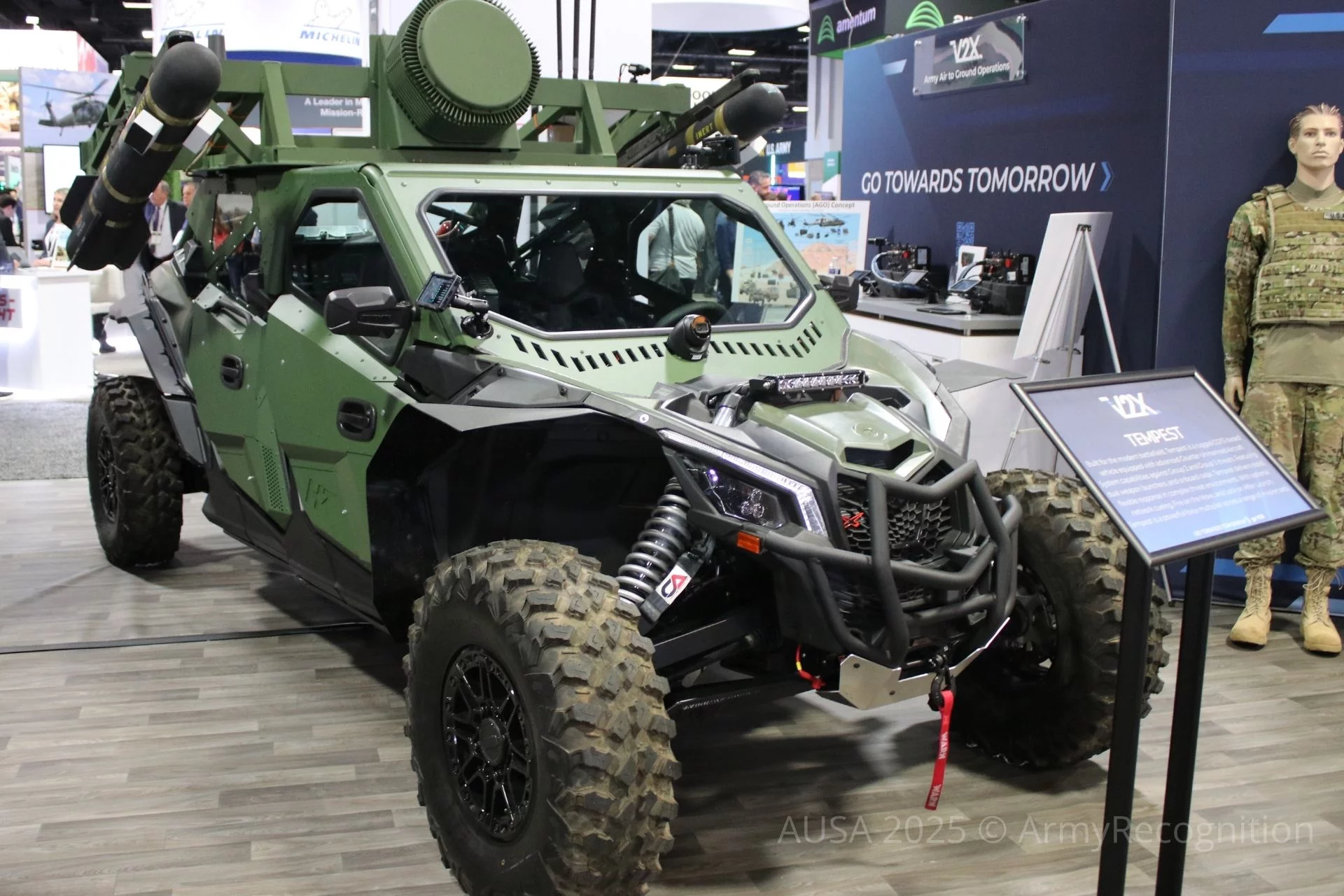
It is likely that the main detection tasks are carried out by an external radar that shares target information with the Tempest crew via a network. Once the direction of an incoming drone or aircraft is known, the Tempest system can be quickly turned to face the target and engage. This approach clearly reflects the lessons learned from Ukraine's air defense experience, emphasizing affordability, scalability, and mobility, much like Ukraine's mobile fire groups that hunt drones such as the Shahed.
The system's mobility allows it to rapidly change positions, increasing survivability and making it suitable for protecting critical assets under dynamic combat conditions. The simplicity of its construction also means that the Tempest system, could be deployed in large numbers to form a distributed air defense grid.
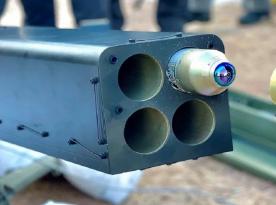
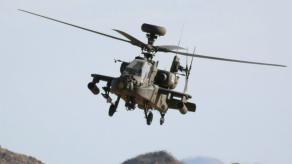
However, the main limitation lies in its choice of missile. The Tempest system uses the AGM-114L Longbow missile, equipped with a millimeter-wave radar seeker. While this missile is highly effective and capable of engaging helicopters or low-flying aircraft, it is also expensive, costing roughly $100,000-150,000 per unit. As a result, intercepting a single Shahed-type drone could cost as much as the target itself or even more.
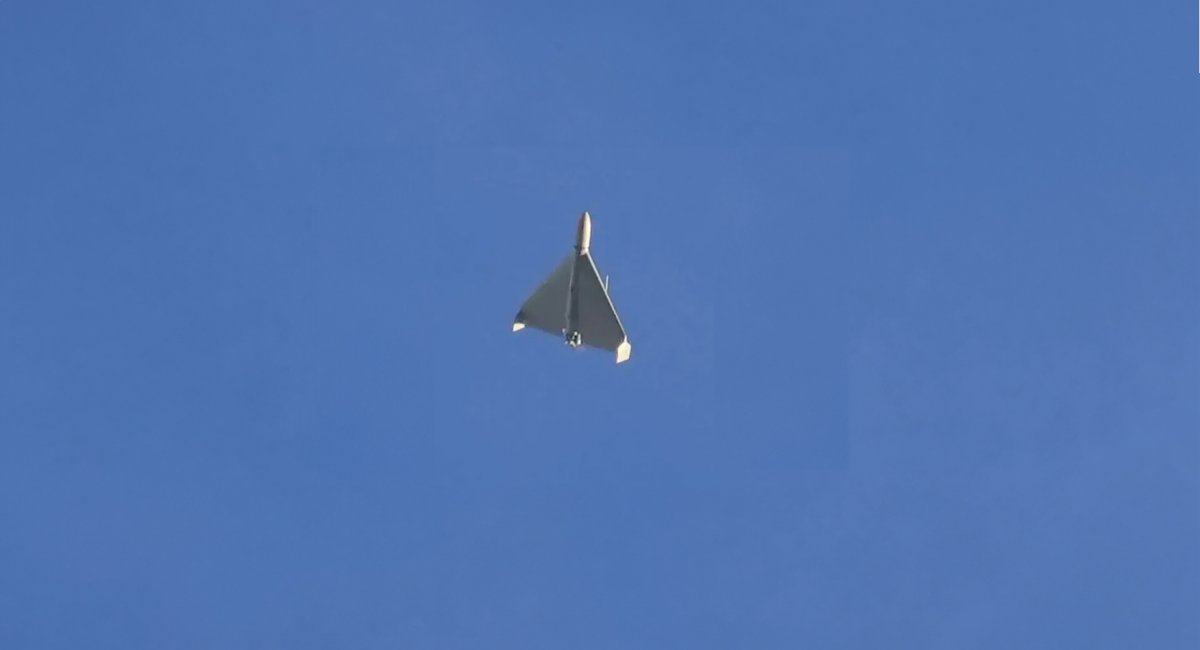
Despite this, the system's creators may see the Tempest not as a low-end anti-drone solution but as a flexible, multi-role platform, capable of targeting a range of aerial threats from loitering munitions to helicopters. The missile's effective range of up to 8 kilometers provides solid coverage for short-range defense, though its detection and engagement range will decrease when facing smaller, less reflective targets.
In essence, the Tempest system demonstrates a pragmatic design philosophy: a cheap, mobile launcher paired with precision missiles and external radar support. While its cost-per-shot remains high, its adaptability, simplicity, and modular concept make it a promising system for countering modern drone threats, especially in scenarios where rapid deployment and flexibility are essential.
Read more: France Proves Impossible — Warship Shoots Down Air-To-Air Missile Mid-Flight