


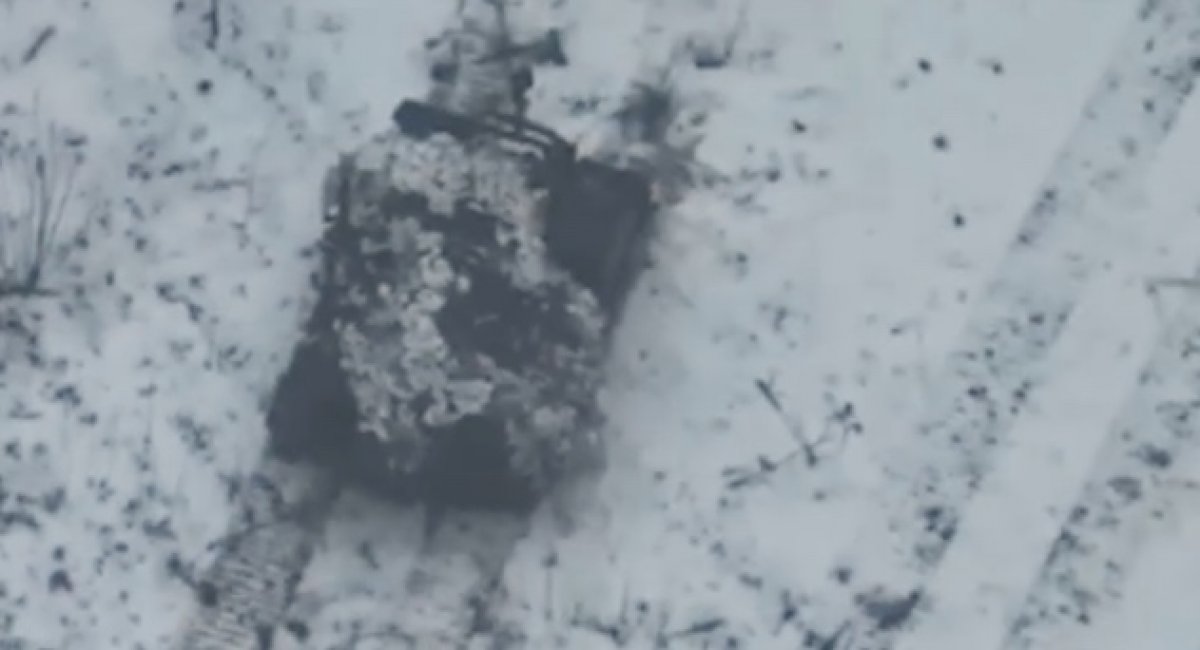
Ukrainian forces have destroyed russian ground robotic system carrying an unusually heavy payload on the Kupiansk axis, highlighting both Moscow's expanding use of unmanned logistics and its growing vulnerabilities. The tracked ground drone was neutralized by soldiers of the motorized infantry battalion of Ukraine's 14th Brigade.
According to an exclusive comment given to ArmyInform, head of communications for the brigade, the system was being used purely for logistical purposes. Unlike previous cases, where ground drones typically transported ammunition, fuel, food, or water, this platform was carrying a disassembled 120-mm mortar intended for installation at a forward position.
Read more: russian Robotic Supply Vehicles Targeted by Ukrainian Border Guard Drones (Video)
The attempt to covertly move such a weapon underscores russia's increasing reliance on unmanned ground vehicles to reduce personnel losses near the front line. However, Ukrainian aerial reconnaissance detected the drone despite camouflage efforts, after which it was destroyed using an FPV strike drone.
Footage of the incident suggests that the vehicle's detection was aided by the wide, clearly visible tracks it left in shallow snow. These tracks made the movement of the tracked platform easier to spot from the air, negating attempts at concealment in winter terrain.
The destroyed system appears to have been relatively powerful. A standard 120-mm mortar weighs roughly 200 kilograms, making it one of the heaviest loads observed on russian unmanned ground platform destroyed by the brigade to date. Ukrainian soldiers noted that this was likely the most capable such drone they had eliminated so far.
At the same time, the footage indicates clear limitations in the platform's capabilities. No secondary explosion was observed, suggesting that the drone lacked the capacity to carry mortar ammunition alongside the weapon itself, likely due to weight and power constraints.
The absence of fire following the explosion also points to an electric propulsion system rather than an internal combustion engine. This aligns with broader trends in russian unmanned ground vehicle development, which increasingly favors quieter electric drives to reduce acoustic detection.
Read more: Ukraine's Achilles Brigade Targets Rare North Korean Koksan SPG Near Kupiansk (Video)