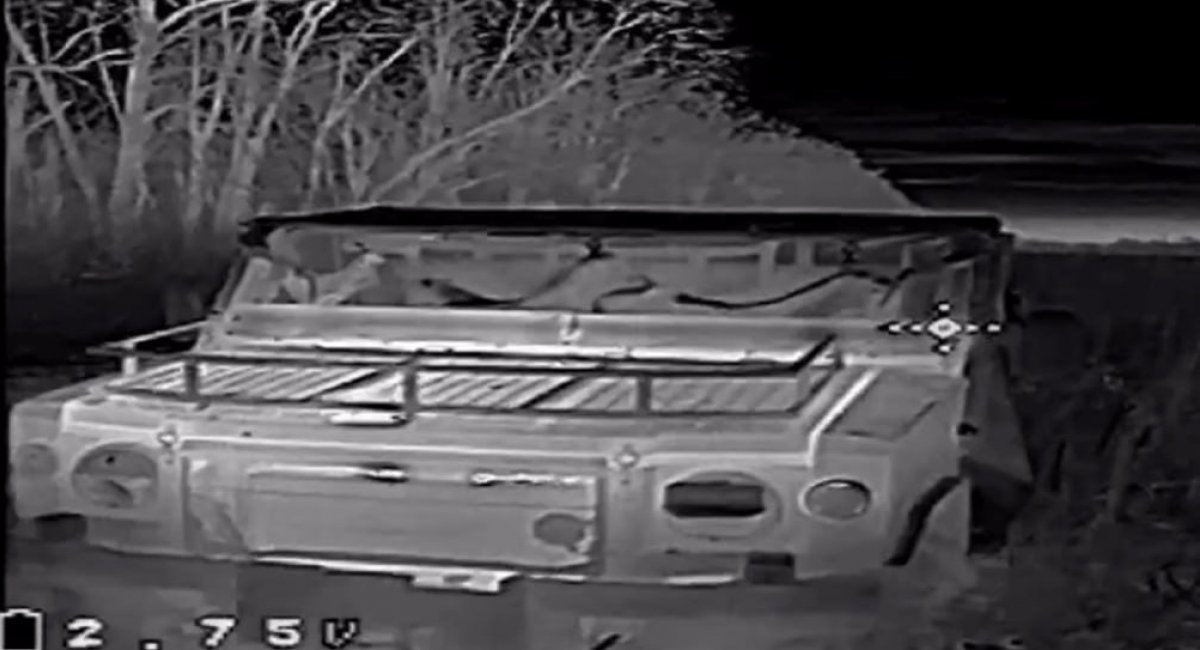
Operators of Ukraine's 159th Brigade have destroyed russian Ulan light tactical vehicle southeast of Voznesenivka, according to information released via ArmyInform and confirmed by Ukraine's 16th Corps. The strike reportedly targeted the vehicle while it was conducting a troop resupply mission toward the settlement of Marine.
At the time of the attack, the Ulan vehicle was transporting personnel to forward positions. Ukrainian forces successfully engaged the vehicle, resulting in the death of one russian serviceman and injuries to three others.
Read more: russian Military Transport Aircraft Crashes in Crimea, No Survivors
Notably, this marks the first recorded destruction of Ulan vehicle on the Vovchansk axis. The appearance, and rapid loss, of such platforms reflects russia's ongoing efforts to adapt its logistics under pressure, particularly in sectors where conventional transport is increasingly exposed to drone strikes.
The Ulan vehicle represents a clear example of wartime improvisation, often described as "ersatz equipment". It is essentially a lightweight buggy assembled from civilian automotive components, designed to provide mobility in difficult terrain while remaining relatively cheap and easy to produce.
Technically, the platform is based on the chassis and mechanical components of the Lada Niva, a widely available civilian off-road vehicle. It retains the Niva's 1.7-liter engine, manual transmission, and all-wheel-drive system, but strips away the standard body, replacing it with a tubular frame to reduce weight and simplify construction.
This configuration gives the vehicle moderate off-road capability and logistical practicality. With a top speed of around 85 km/h, a range of up to 320 kilometers, and a payload capacity of approximately 600 kilograms, Ulan vehicle is intended to move small groups of troops or supplies across rough terrain with minimal maintenance demands.
However, these advantages come at a significant cost. The vehicle lacks any form of armor or meaningful protection, and its lightweight tubular frame offers little structural integrity in the event of a rollover or blast. Even minor impacts can render it inoperable, while more serious hits, particularly from FPV drones, are typically catastrophic.
Russian forces themselves reportedly refer to such vehicles as "disposable", reflecting their extremely low survivability on a battlefield increasingly dominated by unmanned systems.
Read more: Ukrainian UAV Strike Takes Out russian Buk-M3 System Hidden in Forest Belt (Video)