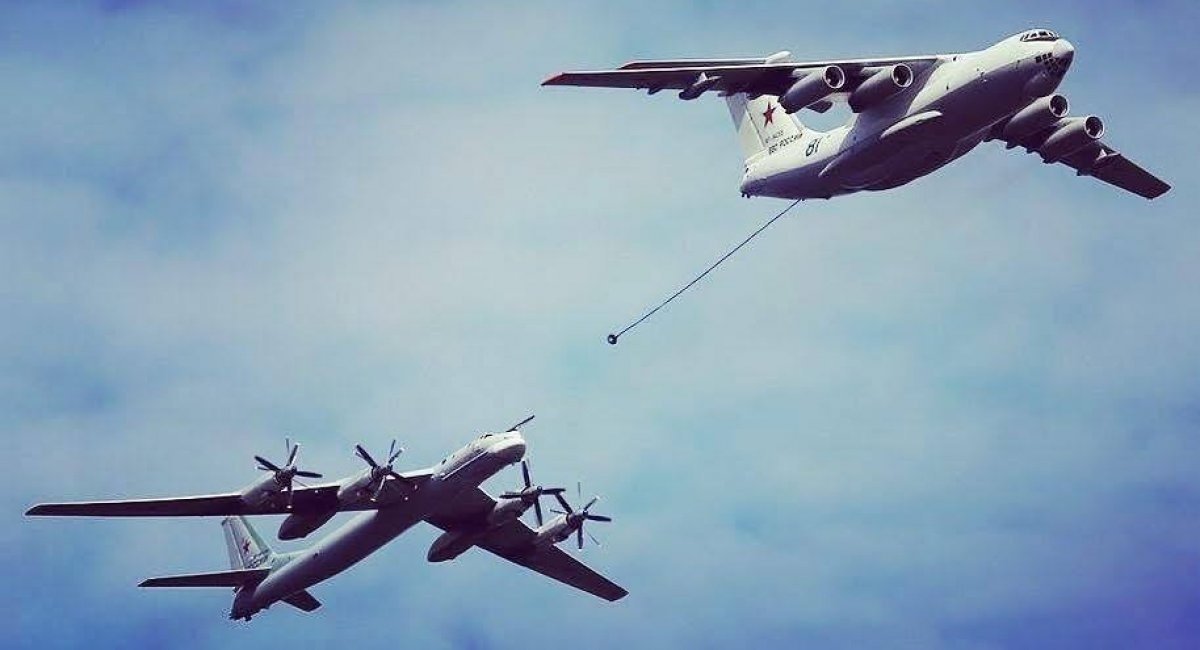
During nearly four years of full-scale war against Ukraine, russian aviation has gained capabilities that make the russian Air Force in 2026 stronger than it was in 2020. This applies to both tactical aviation, especially the Su-34, and strategic aviation, particularly the Tu-95MS bombers.
This conclusion is outlined in a publication by the authoritative British analytical institute RUSI, "The Evolution of russian and Chinese Air Power Threats," available at this link. The article discusses the following.
Read more: Saab Nears Completion of First Hungarian Gripen Amid Pending Order for Ukraine
How quickly lost aircraft were replaced
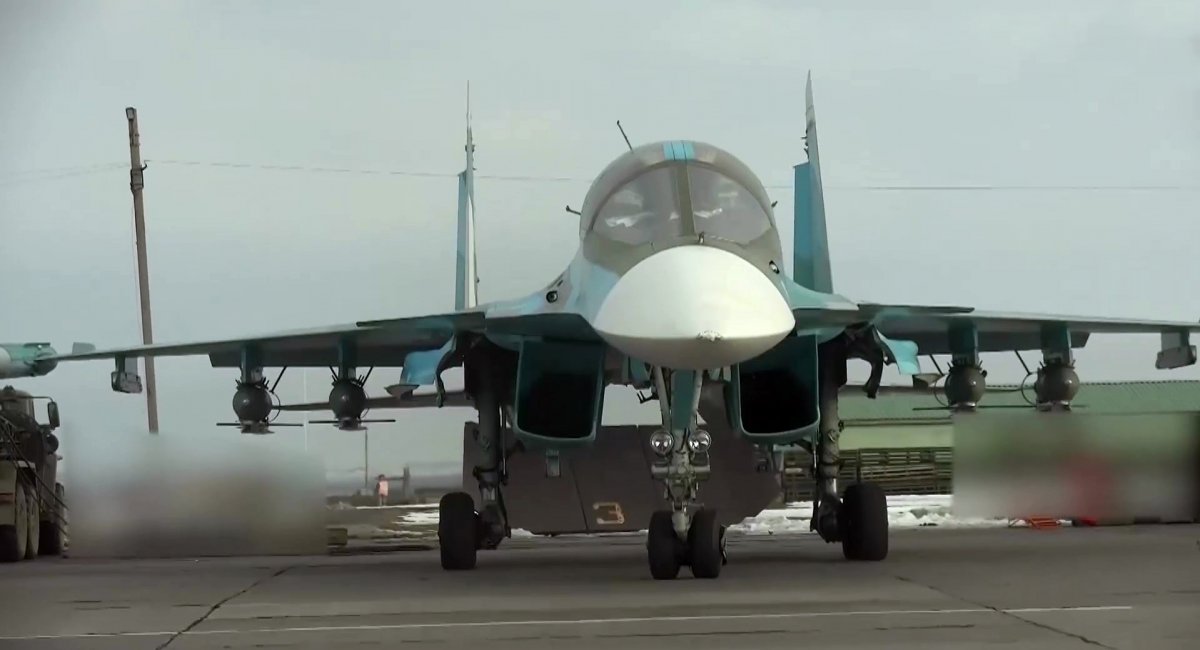
According to the publication's author and RUSI expert Justin Bronk, the russian Air Force's primary strength lies in its ability to rapidly replenish losses in the tactical aviation segment. It should be noted that the expert uses retrospective data covering the period from 2020 to 2025 and relies on his own calculations, according to which the russian federation lost only 140 aircraft during the full-scale war against Ukraine.
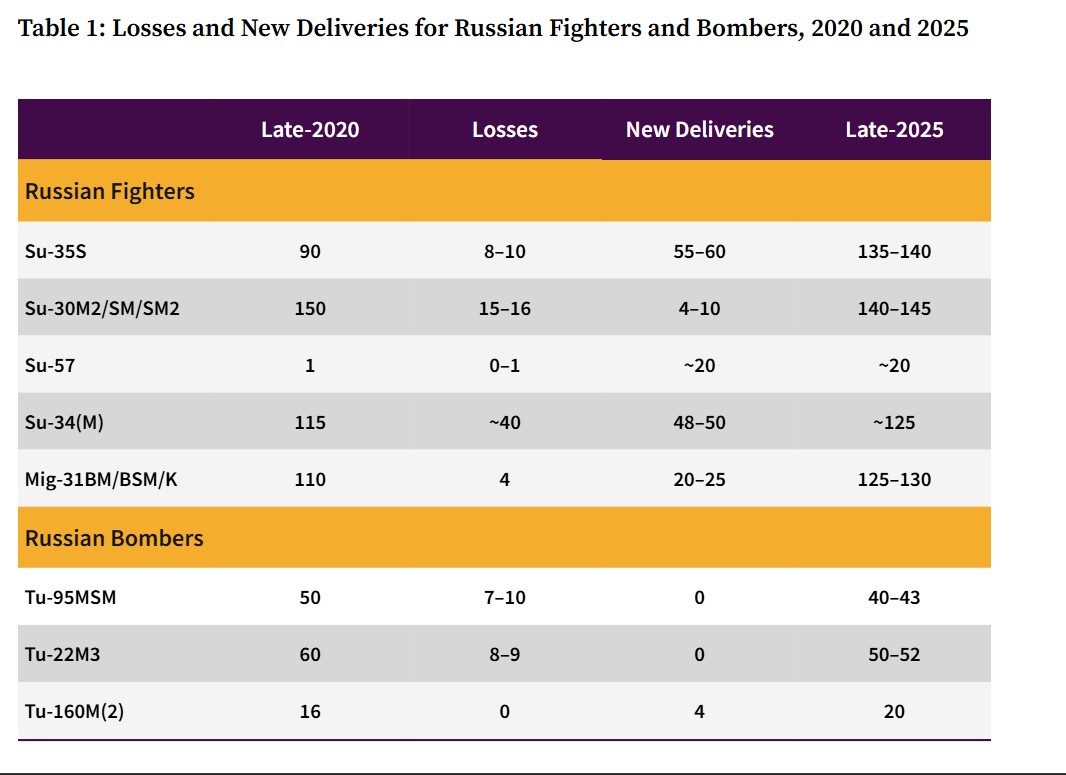
Bronk notes that during the full-scale invasion, Russia lost 40 Su-34s, its most powerful tactical strike aircraft, yet the russian military industry managed to produce up to 50 new aircraft of this type between 2022 and 2025. The table below illustrates the ratio of losses to deliveries for other aircraft types.
Whether these estimates are reliable remains an open question. From Defense Express we can confirm that RUSI uses these figures to assess the enemy's aviation capabilities. These figures differ significantly from the official data of the General Staff of the Armed Forces of Ukraine, which report that russia has lost 434 aircraft to date.
The shift from R-77-1 to R-37M and the impact of Operation Spider Web
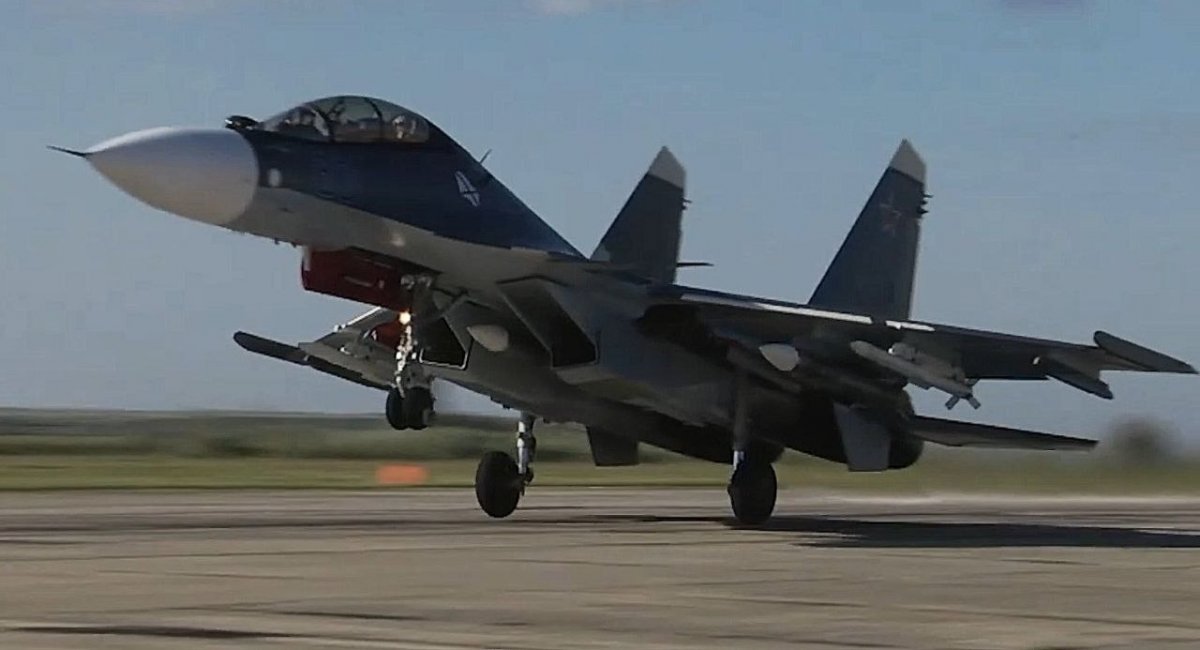
As described by the author of the article, the russian Air Force's second major strength, accumulated during four years of war in Ukraine, is its ability to conduct air combat and strike ground targets. In particular, it is noted that russian Su-35S and Su-30SM2 fighters have begun to use more powerful and longer-range R-37M missiles, with a launch range of over 200 kilometers, instead of R-77-1 air-to-air missiles.
russian tactical aviation has also gained experience in the massive use of guided aerial bombs to strike various categories of ground targets. These missions were carried out alongside ground-based air defense systems, notably the S-400.
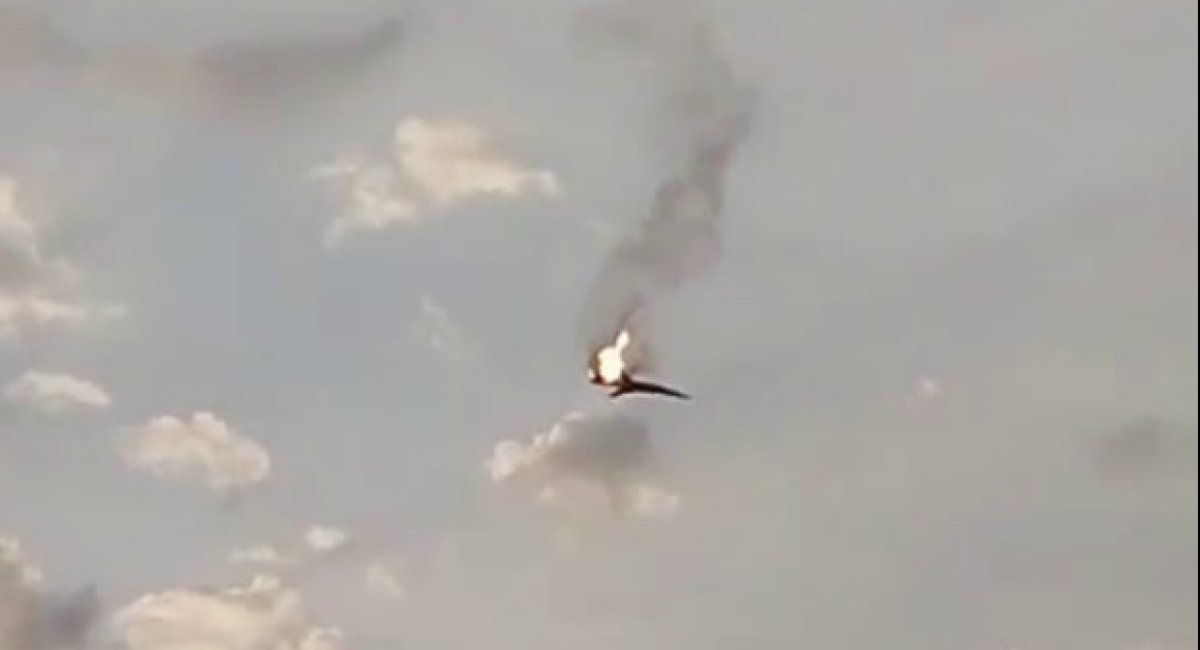
Justin Bronk emphasized that, despite significant setbacks caused by Operation Spider Web, conducted by the Security Service of Ukraine on June 1, 2025, and the successful downing of a Tu-22M3 in April 2024, russia's long-range aviation still retains substantial capabilities to conduct coordinated strikes against Ukraine's critical infrastructure.
The RUSI expert, however, bases his calculations on estimates suggesting that Operation Spider Web led to the loss of only four Tu-95MS and three Tu-22M3 aircraft, a number that is still open to debate.
Conclusions
In his article, Justin Bronk emphasized that during four years of full-scale war against Ukraine, russian aviation has learned to intensively strike ground targets with KABs and missiles, covered by dense air defense. In the event of a "major war" between the Kremlin and NATO, this "would create urgent and complex challenges for the Alliance's air forces in providing aggressive offensive air cover during the early stages of any conflict."
The question remains whether NATO's political and military leaders will bolster their air forces enough to stop russia from dominating the skies in a full-scale war.
Ivan Kyrychevskyi, serviceman of the 413th Raid Regiment of the Unmanned Systems Forces of Ukraine and weapons expert at Defense Express.
Read more: How russia Is Strangely Using Its "Rare and Irreplaceable" Be-12 Aircraft Against Ukrainian USVs (Video)