


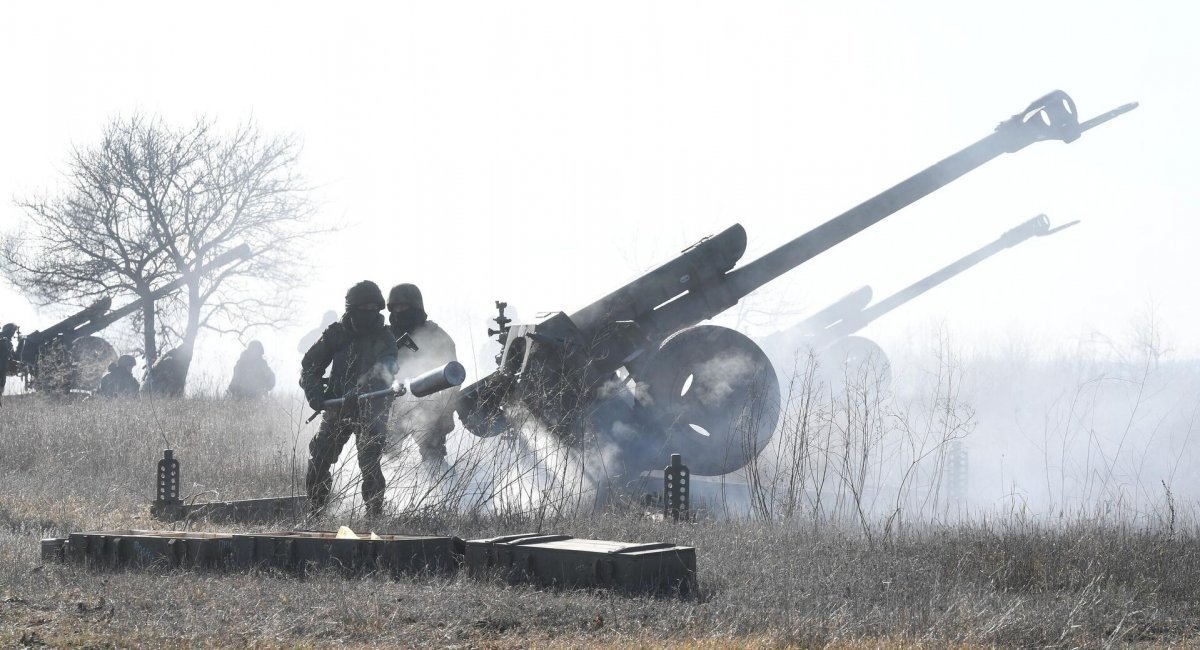
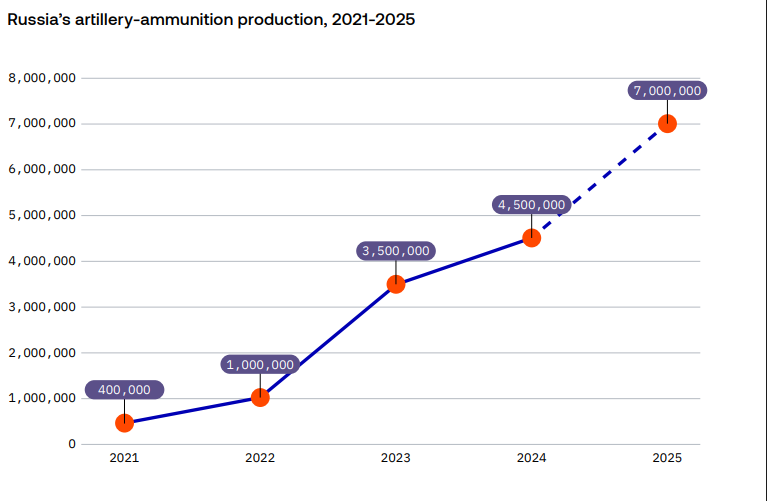
In 2025, the russian federation's military industry produced a total of seven million shells of all types. Total production costs reached one trillion rubles, or approximately €10.6 billion. russia's production reached record levels, allowing the country to set aside part of the ammunition for reserve.
A new report by Estonian intelligence, International Security and Estonia 2026, highlights the russian federation's ability to continue the war in Ukraine and its aggression toward Western countries.
Read more: Two Nigerian Nationals Killed While Serving in russian Army in Luhansk
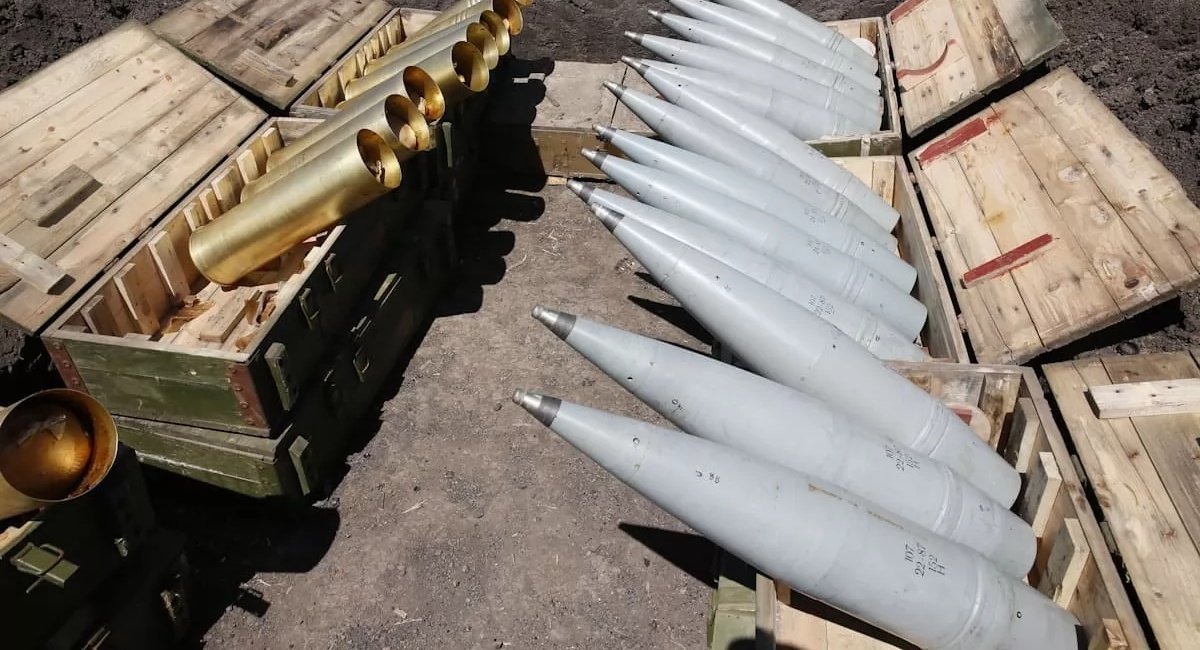
Last year, the russian military industry produced:
- Howitzer ammunition (122 mm, 152 mm, and 203 mm) - 3.4 million;
- Tank and infantry fighting vehicle ammunition (100 mm, 115 mm, and 125 mm) - 0.8 million;
- Multiple-launch rocket system ammunition (122 mm, 220 mm, and 300 mm) - 0.5 million;
- Mortar rounds (120 mm and 240 mm) - 2.3 million.
For comparison, in 2023 the russian military industry produced 3.5 million rounds of ammunition, while in 2024, 4.5 million rounds. It turns out that in 2025, russians managed to increase the pace of ammunition production for their troops by 50%. At the same time, between 2023 and 2025 russia also relied on ammunition imports from Iran and North Korea, which could amount to 5-7 million units of all types.
"Given this production growth and substantial imports, russia is highly likely to be able to replenish part of its strategic artillery ammunition reserves even while engaged in the ongoing war against Ukraine. For the Kremlin, maintaining such reserves is almost certainly a critical element of planning for potential future conflicts," the authors of the Estonian intelligence report emphasize.
Regarding cost, the text provides the following example: an older-model 152 mm shell costs less than 100,000 roubles (about 1,050 euros) in state procurement, which is several times cheaper than similar 155 mm shells produced in Western countries.
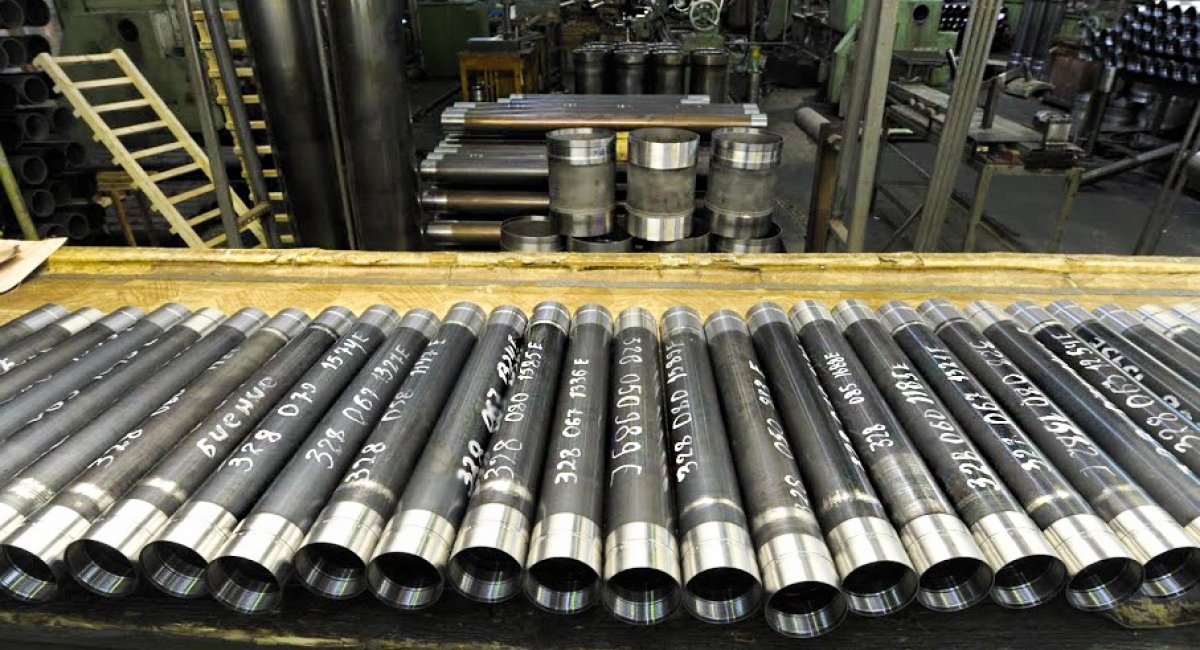
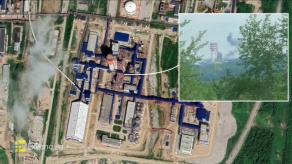
The production of explosives within the russian military industry is handled by Spetskhimiya, a subsidiary of the russian Rostec State Corporation. One of the key components in this industry is the production of concentrated nitric acid or a mixture of nitric and sulfuric acids, which is known in russian industry as melange.
Melange is produced at only one plant—the Berezniki Chemical Plant, part of the Uralchem concern—while concentrated nitric acid is produced at the aforementioned plant and at the EuroChem plant in Novomoskovsk. These plants are vulnerable points, as interruptions there can lead to delays in the production of shells and mortar rounds in russia.
Ivan Kyrychevskyi, serviceman of the 413th Raid Regiment of the Unmanned Systems Forces of Ukraine and weapons expert at Defense Express.
Read more: Ukrainian Forces Strike russian GRAU Arsenal Near Kotluban: How Much Ammo Was Stored There?