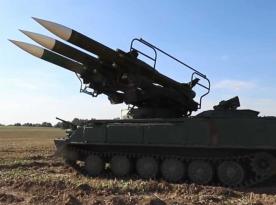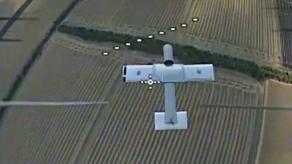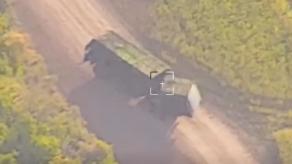
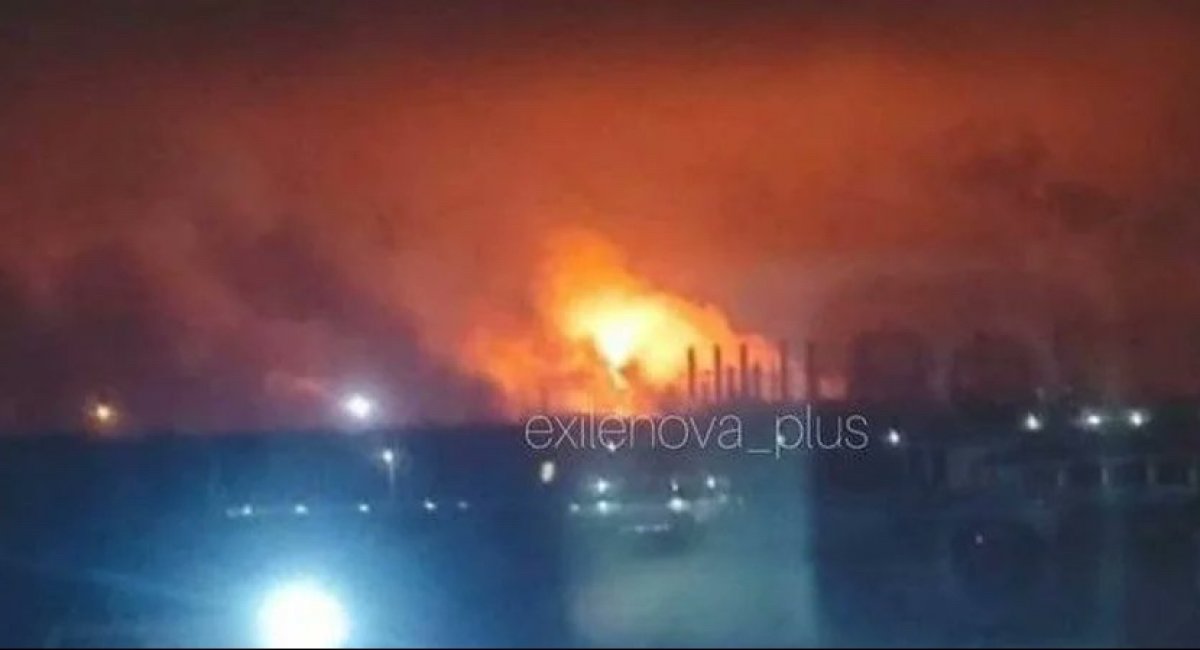
Ukraine's Unmanned Systems Forces delivered a significant blow to russia's military-industrial complex on December 4, striking one of the largest chemical plants in the russian Federation. Working in coordination with other components of Ukrainian forces, drone operators targeted the Nevinnomysskiy Azot facility in Stavropol region, a key hub in Moscow's war production network.
The Nevinnomysskiy Azot facility is among the most important chemical enterprises serving the russian defense sector. With an annual output exceeding one million tons of ammonia and up to 1.4 million tons of ammonium nitrate, the plant provides essential raw materials used in the manufacture of explosives and a wide range of ammunition. Its role in sustaining russia's frontline firepower makes it a high-value target within the broader campaign to degrade military logistics.
Read more: Ukrainian Drones Hit Military Unit of Kadyrov's Forces and FSB Building in russia's Chechnya
The facility's production capacity feeds multiple russian defense factories, forming a backbone for the supply chain of explosive compounds. By serving as a chemical hub for military-grade inputs, the plant contributes directly to the technical support of russian operations across Ukraine.
This entrenched role in enabling sustained shell production and battlefield supplies underscores why it has become an operational priority for long-range Ukrainian strike planners.
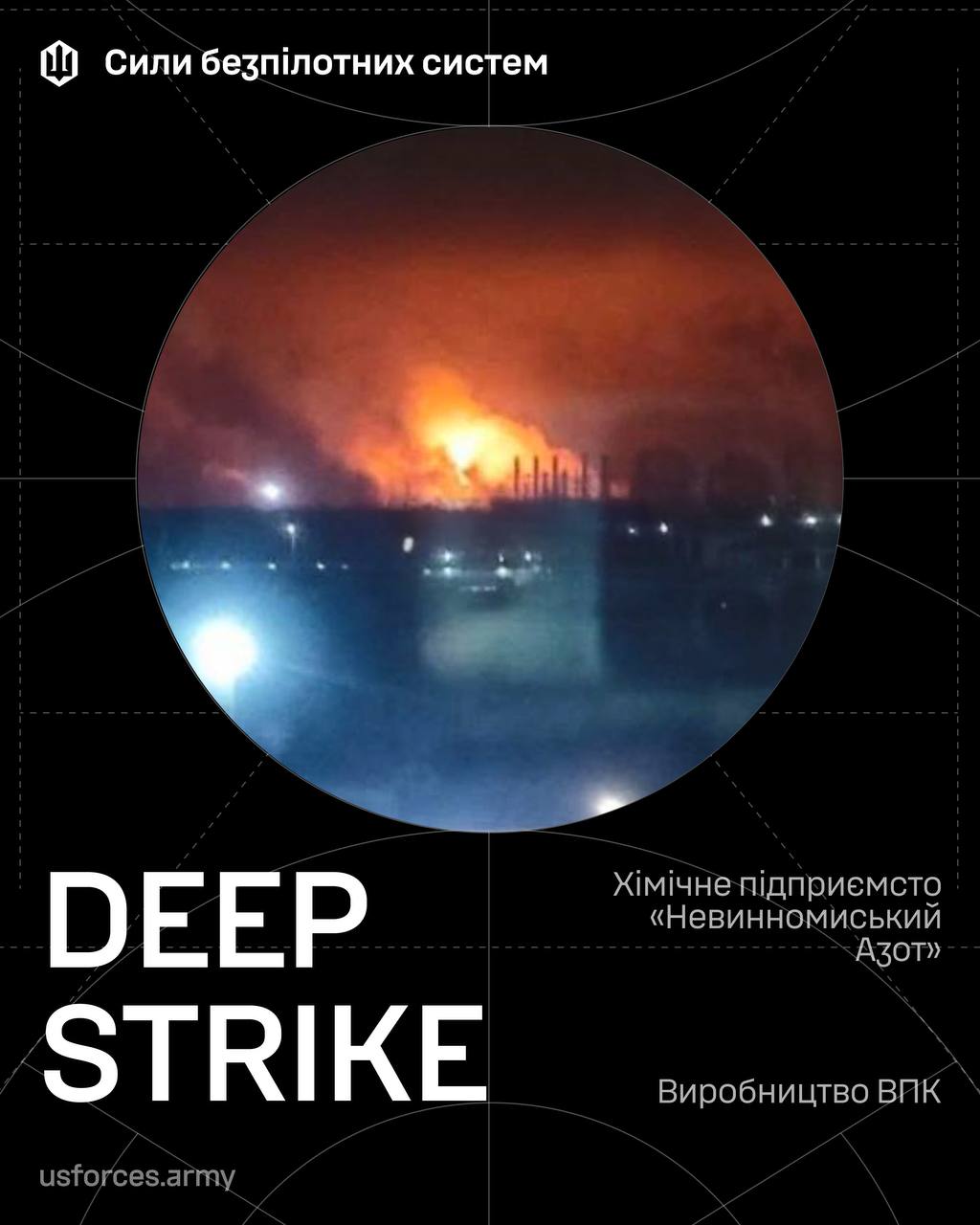
The strike demonstrates the growing reach and effectiveness of Ukraine's deep-penetration drone capability. Over the past year, Ukrainian unmanned systems have increasingly shifted from tactical frontline strikes to strategic-level operations targeting fuel depots, aviation infrastructure, radar nodes, and now high-capacity chemical plants supporting ammunition production. The attack on the Nevinnomysskiy Azot facility highlights this evolution toward systemic disruption of russia's war economy.
In the aftermath, a fire broke out within the plant's territory. While russian authorities attempted to downplay the damage, early indications suggest that the impact may be significant given the sensitivity of chemical production lines and the vulnerability of highly specialized equipment. Even limited damage to core facilities can interrupt output for weeks or months, affecting downstream defense manufacturers.
Read more: Deep Strikes Into russia: Ukraine Hits Oil Depots, Offshore Surveillance Sites, and High-Value UAVs