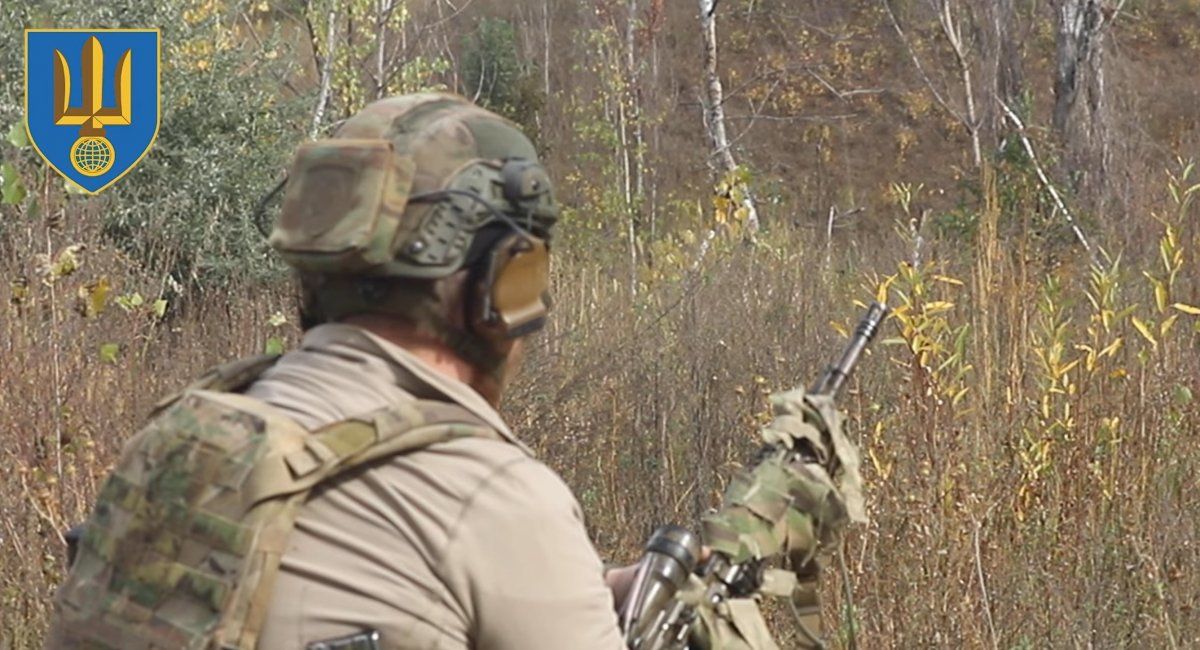
Back home, Bacardi served as a carabinero — a police officer sworn to protect and uphold the law. It was in uniform, responding to calls for help, that he discovered something deeper than duty. He found his vocation: to stand between danger and those who could not face it alone.
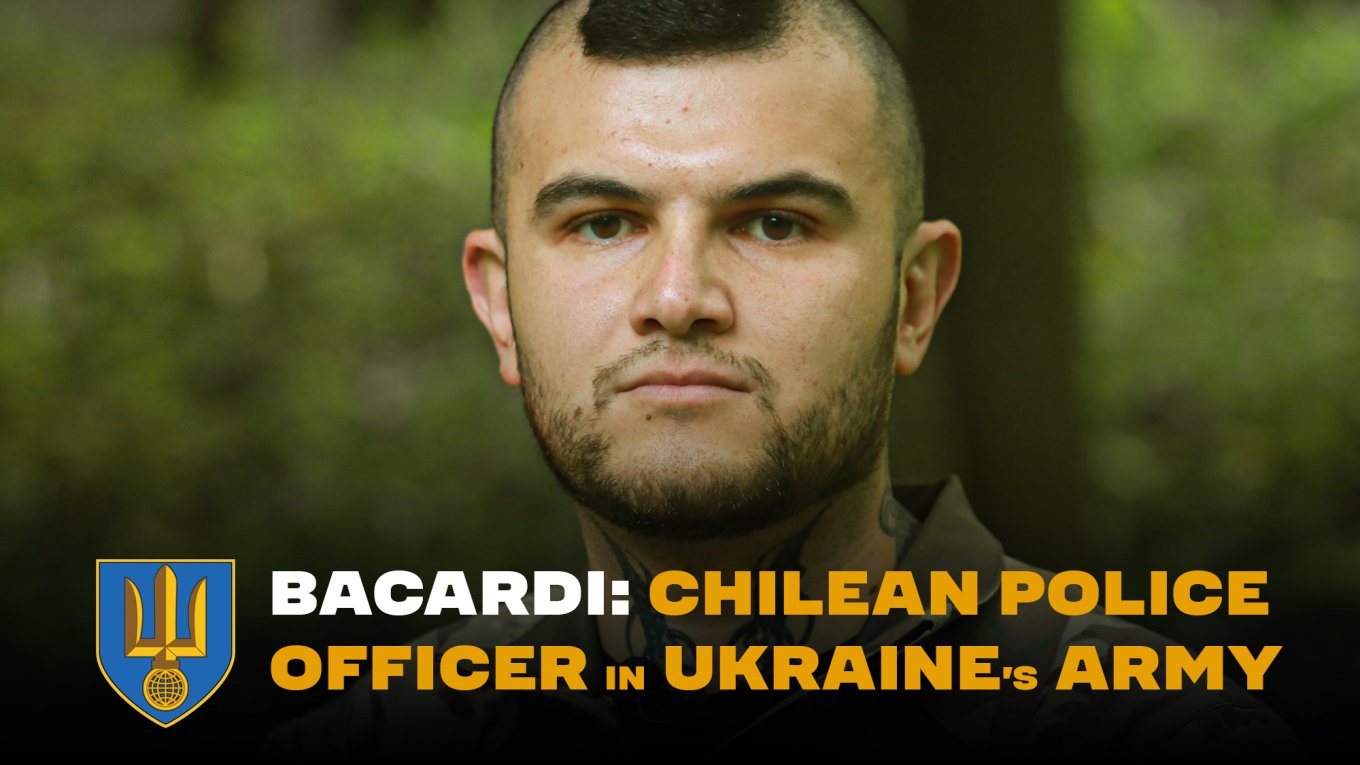
That sense of responsibility did not end at Chile’s borders. When russia unleashed its war on Ukraine, and civilians once again found themselves under fire, he recognized the same need. And so it led him to where the war was hottest:
Read more: Experience of Ukraine's International Legions in Using Smoothbore Rifles on Modern Battlefield
“The main motive was helping people. I saw so much suffering — children dying, especially in Mariupol. I saw soldiers completely exhausted. Personally, I believe what russia is doing is a crime. There are other ways to resolve conflict. I see it as standing up to a bully, and I feel I have the tools to stop that abuse.”
Before joining the Ukrainian army, Bacardi had already chosen a path few dare to follow. He was in France, serving in the legendary French Foreign Legion — specifically in the 2nd Foreign Parachute Regiment, within a mountain company known for operating in some of the harshest terrain imaginable. The unit demanded physical endurance, discipline, and the ability to function under extreme pressure. It was an environment that shaped him — but it was not yet the battlefield he sought:
“I served there for two and a half years. Normally, the contract is five, but I left early because I truly had the initiative and the calling to serve in a real war, on an actual battlefield. I wanted to test all my knowledge, and through contact with a friend who served with me in the French Legion, I came to Ukraine."
The Chilean’s background in law enforcement and his time in the French Foreign Legion gave him structure, resilience, and combat fundamentals. Yet the war in Ukraine proved to be something entirely different — faster, more technological, and more brutal in its intensity. Experience helped, but it was not enough.
To prepare for what lay ahead, Bacardi underwent demanding, focused training tailored to this battlefield. Only after proving himself ready was he cleared for real combat missions:
“I had a month of training — trench assaults, forest reconnaissance, a lot of CQB, medical training, really adapted to this type of war, which is completely different from what was seen in Afghanistan, Iraq, or Africa.”
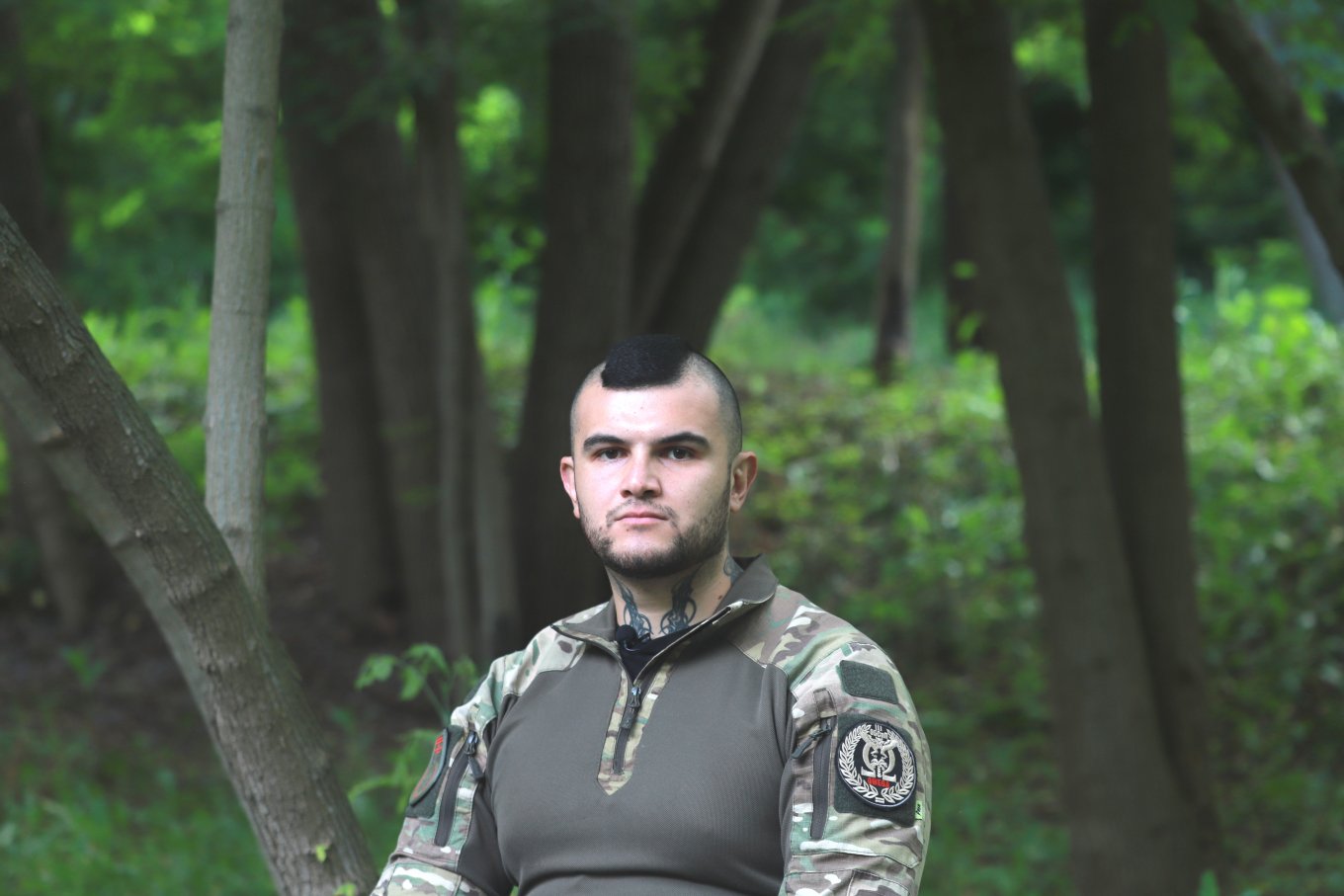
Thanks to his prior military experience and the successful completion of specialized training, the Chilean volunteer earned his place in Omega Team within the 3rd International Legion for the Defence of Ukraine.
The English-speaking unit has built a reputation for undertaking some of the most complex and high-risk missions on the front. Their operations are typically carried out in small, highly coordinated groups of four to six fighters — compact enough to remain agile, but strong enough to hold ground when needed:
“I instantly felt that the group was very close-knit. First of all, everyone had the motivation to serve here in Ukraine. Second, the language — everything is spoken in English. And when we conduct trench assaults, CQB, or forest combat, we all have something to contribute, and we work in a unified way. Many come with NATO-standard training, so I can work with someone from Canada, Germany, or Portugal — the knowledge may differ, but the foundation is the same.”
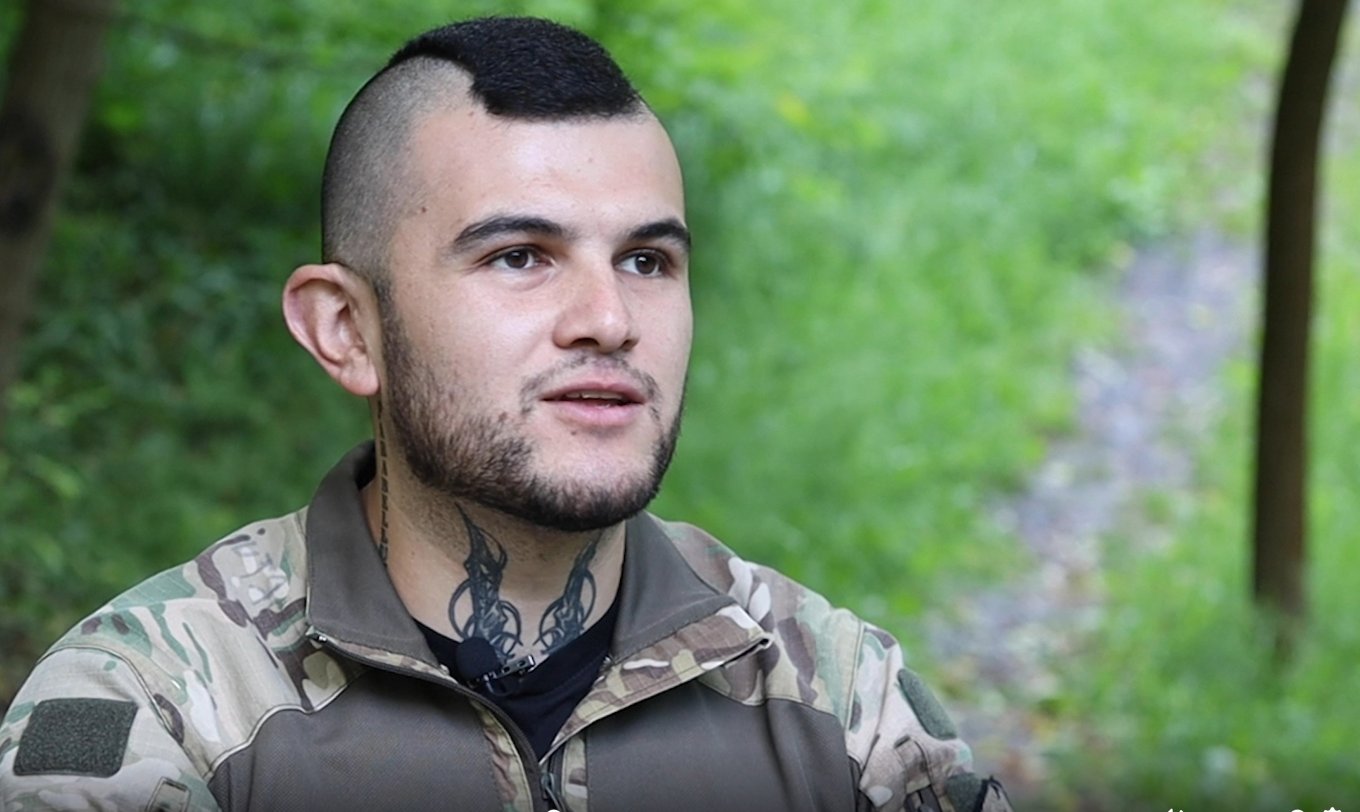
Selection into Omega is uncompromising. Physical endurance tests, proven military backgrounds, and psychological resilience are prerequisites. It is not a unit for adventurers — only for those prepared to operate at a professional level under constant threat. From his very first moments with the team, Bacardi sensed he was exactly where he belonged:
“When I arrived at Team Omega, the first thing I saw was that everyone was in exceptional physical condition, which is vital. People train every day — mornings, we do physical workouts, run a lot, and maintain operational readiness. My teammates are all professionals who keep a cool head in combat. So I can go on a mission with anyone on my team and feel confident that we will do a good job.”
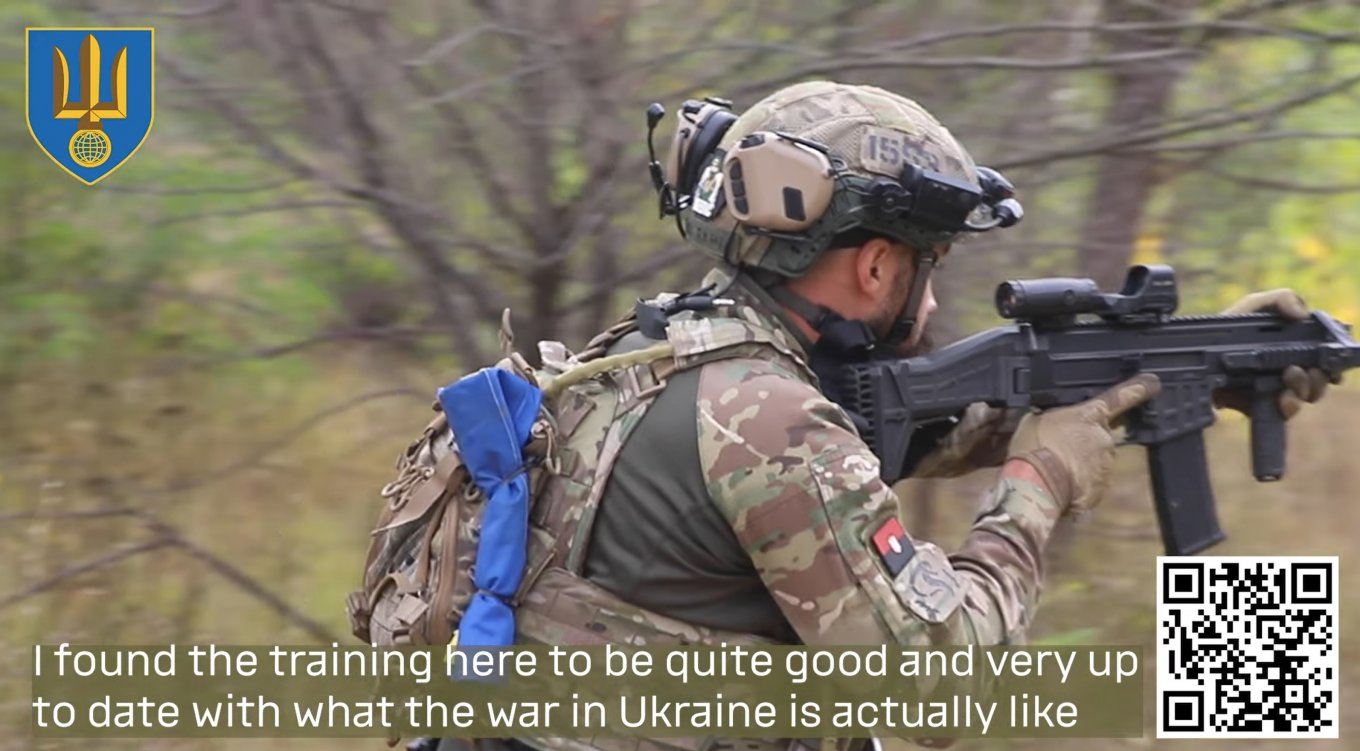
By the time we spoke with Bacardi, he had already spent around six months with the team. In that time, he had taken part in multiple operations across the Kharkiv region — including missions near Kupiansk and in the outskirts of Kharkiv itself. His experience ranged from defensive holding actions to coordinated assaults and reconnaissance missions conducted in contested zones. Positions shifted, drones hovered overhead, artillery set the rhythm of the day. Amid the chaos, Bacardi’s composure earned him a new role: team leader. Leadership on this front, however, is not about rank alone. It is about clarity under fire and being the first into uncertainty — carrying the weight of others’ lives with every decision:
“I usually go first to analyze what’s happening. Once you make contact — with a drone or the enemy — adrenaline takes over, which is normal. You must stay calm, not think you’re going to die. Motivate yourself and the team, even for simple actions like taking cover. The more communication there is, the more team cohesion. So the main function is to stay calm and transmit that calmness to the team.”
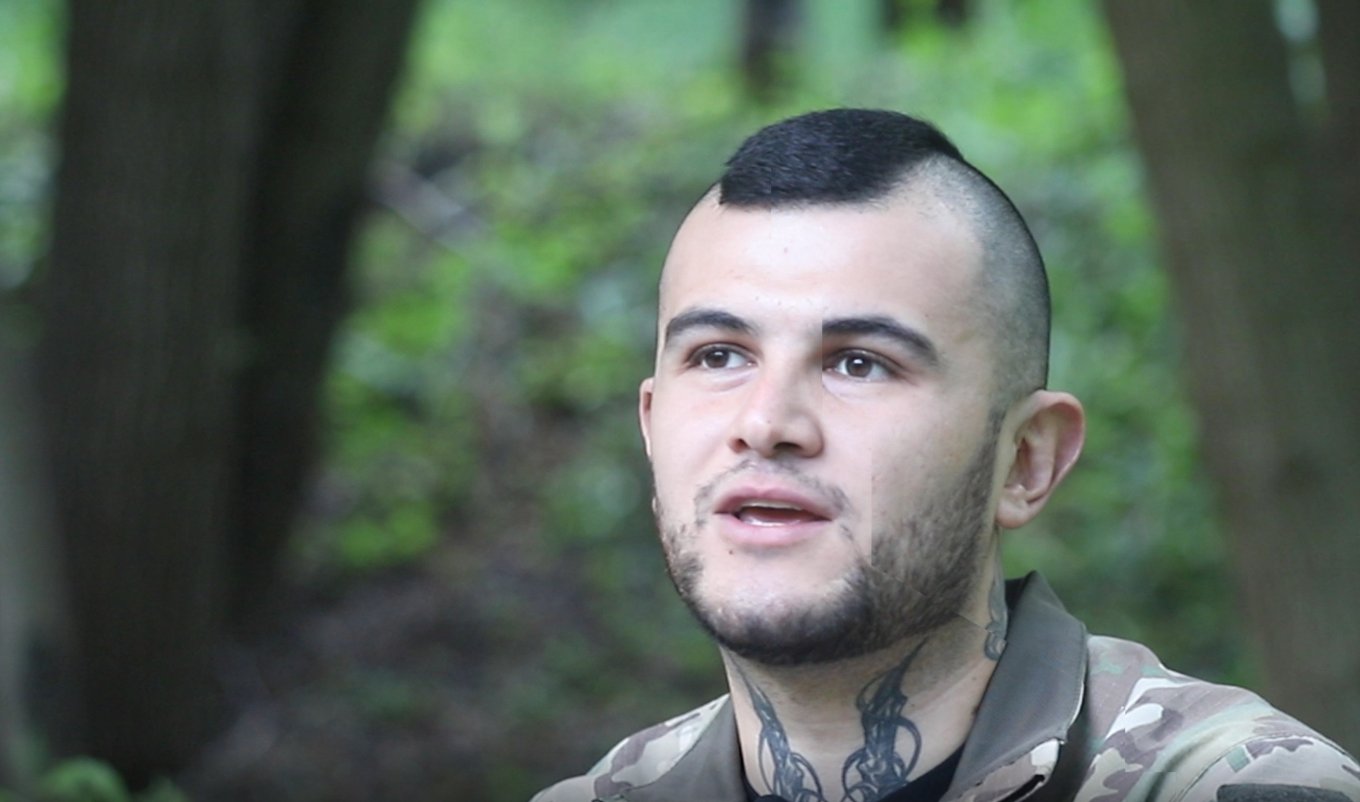
For Bacardi, war is not only about holding ground or leading a team under fire. It is also about confronting mortality — and, paradoxically, about recognizing what makes life worth protecting. The future may be fragile, shaped by artillery strikes and drone alerts, but the human instinct to hope endures.
Amid the uncertainty, he found something unexpected: a relationship that brought warmth into an otherwise harsh reality. For him, it became a reminder that even in the darkest circumstances, life continues to assert itself:
“To be honest, when I arrived here I was impressed by the women — they are gorgeous. And I did meet someone a couple of months ago, and I’m now in a relationship. I hope that if the war ends — and if neither of us is killed first — we can continue our relationship here in Ukraine or, if necessary, in another country.”
Learn more about the Legionnaires of the Free World — and how to join the brave — on the official website.
Text: Dmytro Tolkachov
Photo, video, editing: Volodymyr Patola
Read more: Colombian Soldier Says War In Colombia Is Totally Different from russia-Ukraine War