Donald Trump is swiftly and unalterably moving the U.S. toward NATO exit. The timeline for final announcement of a decision already not subject to review was set by U.S. Secretary of State Marco Rubio after completion of the war with iran.
However, back in 2024, the American Congress adopted a provision (Sec. 1250A) in the national defense law stating the U.S. president cannot suspend, terminate, denounce, or withdraw the United States from the North Atlantic Treaty (NATO membership) without recommendation and consent of the Senate. Before informing the Senate of intention to leave NATO, the president must consult with both chambers of Congress. After all approvals, 2/3 of Senate votes will be needed for withdrawal.
Read more: Norway’s €86M Tactical VTOL Drone Framework Agreement Delayed Since 2022 - Camcopter S-100 vs Skeldar V-200
Whether the White House will decide to follow this procedure or try to circumvent it is difficult to predict now. This actually doesn't have particular significance, because the problem with any international treaty is that its implementation depends on parties' good will and desire. The NATO treaty is unconditionally subject to this first and foremost.
The very famous Article 5 of the North Atlantic Treaty establishes that in case of attack on one member country, all others will provide assistance and immediately take such action as it deems necessary, including the use of armed force. In other words, the NATO treaty quite allows sending only weighty concern to a country repelling aggression. This won't be a violation.
Even if someone considers this non-fulfillment of the treaty, no leverage against the U.S. exists. After all, without the U.S., the Alliance will be left even without a command system, as well as a whole series of key weapons systems, compensating for which will require 5-10 years of persistent work.
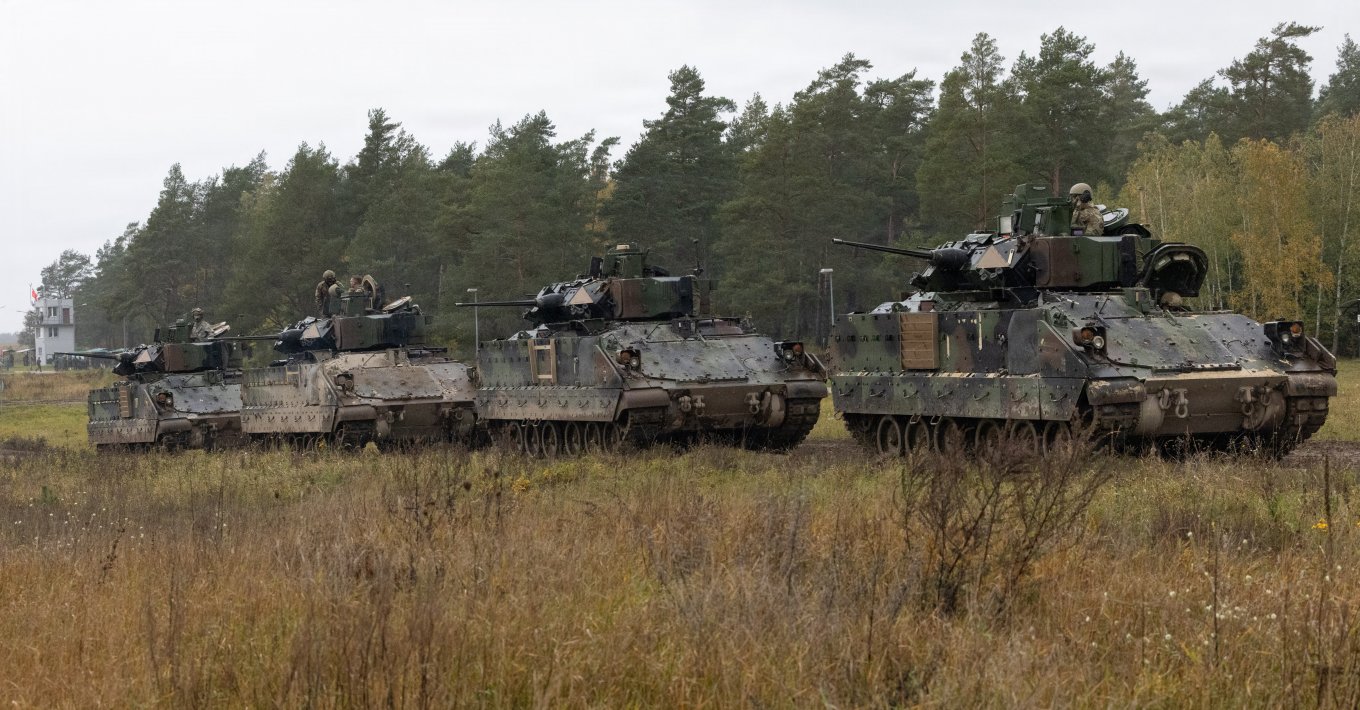
Therefore, the real American security guarantee for Europe can only be American soldiers themselves. Currently, the Pentagon maintains a 100,000-strong European contingent. Its main land component is the 5th Army Corps, units of which are stationed in Germany, although headquarters was moved to Poland, to Poznań.
However, Armored Brigade Combat Team (ABCT) brigade groups within Operation Atlantic Resolve are significantly more important. After reducing American military presence in Romania from November 2025, they're now stationed only in Poland. In particular, in mid-March a rotation of 1st Infantry Division brigade group to 1st Armored Division brigade group of U.S armed forces took place in Poland. This is about approximately 3,000 fighters of an armored formation who arrived for a 9-month rotation.
The redeployment of units itself took, counting only by ceremonial events, time from February 18, when 1st ABCT from 1st Armored Division held a flag-lowering ceremony, to March 18, when 1st ABCT from 1st Infantry Division returned to the U.S in full strength.
In other words, if desired, withdrawing Armored Brigade Combat Team from Poland could take approximately a month at normal pace. It will be significantly more difficult for the U.S. to withdraw troops stationed in Europe on a permanent basis, with families.
The Pentagon already went through this immediately after the Cold War ended, when from 1990 to 1993 it reduced its European presence from about 300,000 to 160,000 military personnel. That's 140,000, although U.S. Department of War logisticians insisted on significantly longer timelines at a pace of 20-30 thousand per year.
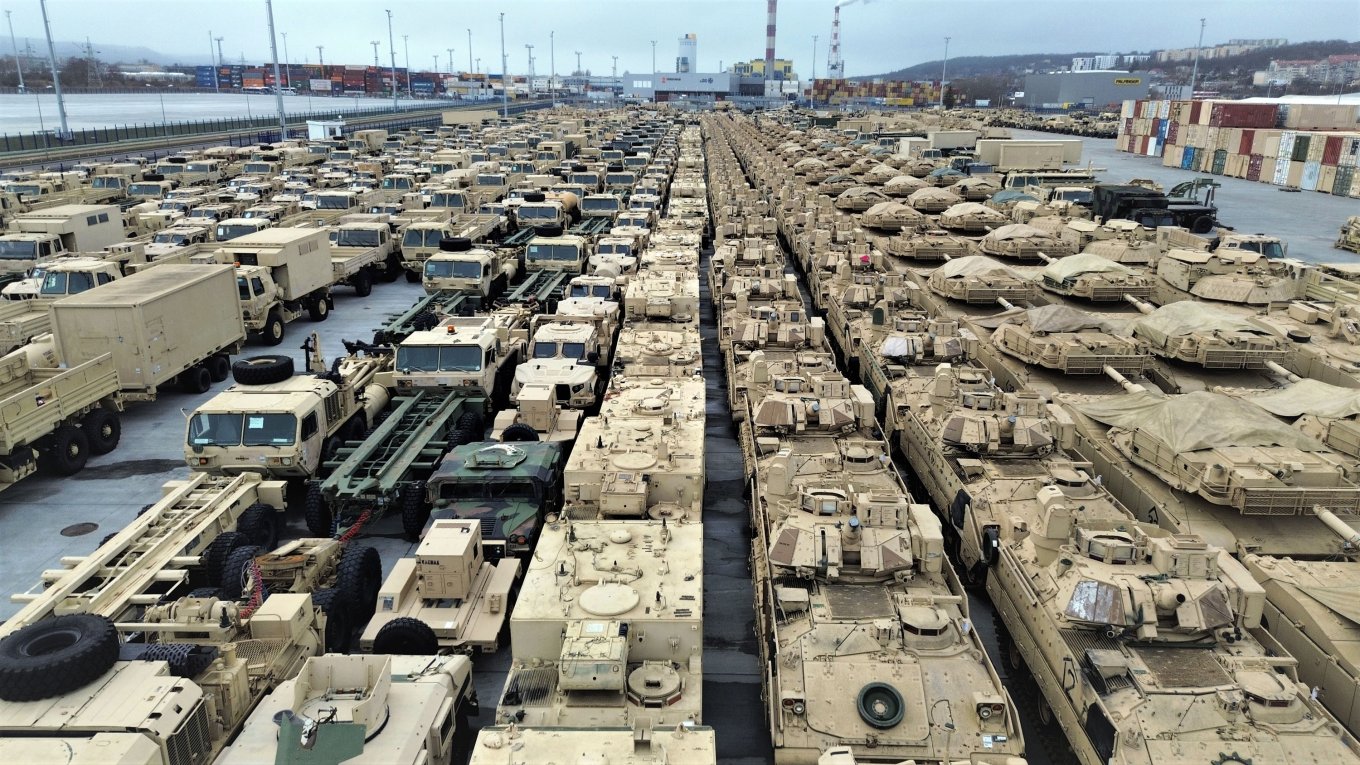
However, such shock pace was realized at the cost of deactivating entire divisions and actively engaging civilian ships to transport equipment. Even in case of repeating the scenario, actual physical withdrawal of existing American forces from Europe will also take several years. At the same time, this is in case of removing property, not evacuating only personnel and their family members.
Read more: China Builds New Zubr-Class Landing Craft After Acquiring Four Units From Ukraine in 2000s