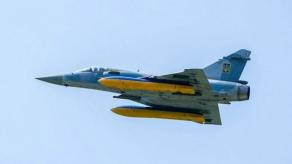



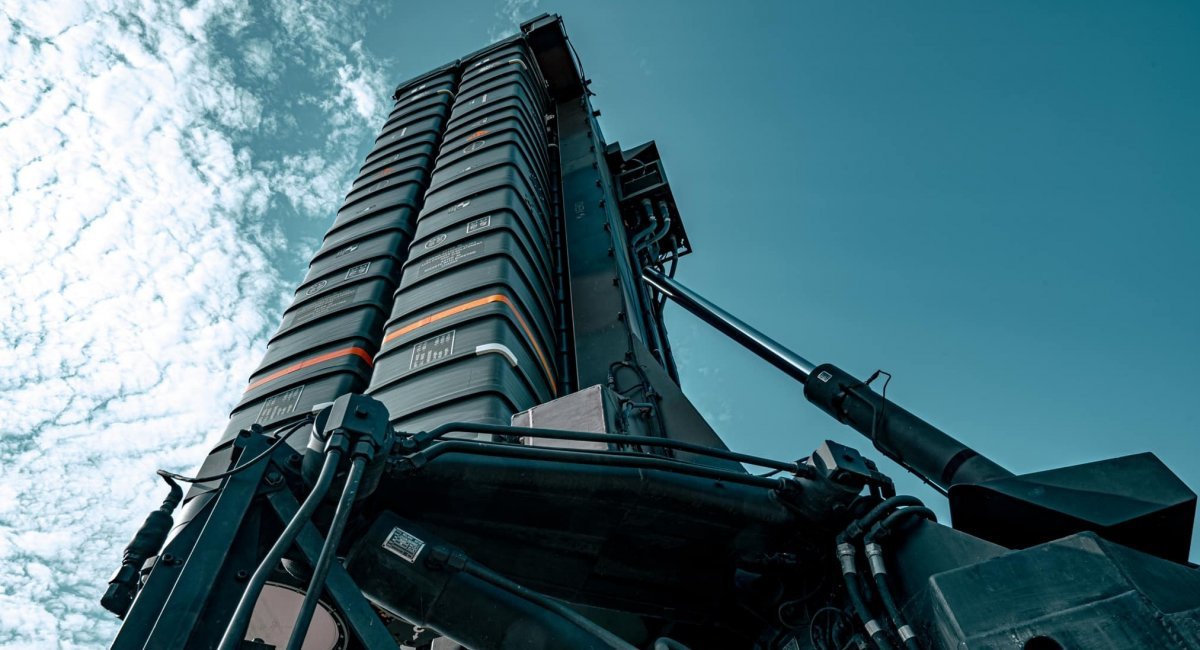
Alongside plans to procure 100 Rafale fighters, with potential localized production in Ukraine, Kyiv also intends to order eight SAMP/T systems from France. Officials have already confirmed that these will be the latest-generation variants.
This means the order concerns the SAMP/T NG, which is now completing trials and preparing for serial production. It is a modernized version of the system jointly developed by France and Italy under the Eurosam consortium in the 1990s, with the first units delivered in 2008.
Read more: SAMP/T Beats Patriot System in the Iskander Fight and What That Reveals About russia's Ballistic Missile Upgrades
The SAMP/T NG upgrade program began in 2021 and aims to modernize all components of the system—primarily the radar and the Aster 30 interceptor. The goal is to improve performance against ballistic and high-speed threats and to enhance resilience in dense electronic-interference environments.
As of March 2025, factory testing of the new radar—the Thales Ground Fire 300, already in serial production—was completed. Meanwhile, the new Aster 30 B1NT interceptor continued undergoing trials under various scenarios as of August 2025. France and Italy approved the transition to serial production of both the SAMP/T NG and its new missiles back in February 2023, with deliveries planned from 2026 onward.
The Ground Fire 300 will replace the current Arabel radar. The existing radar provides detection out to 80 km and can track around 130 objects. In contrast, the GaN-based Ground Fire 300 offers a 400 km detection range and the ability to track up to 1,000 objects. Despite its size, it features mechanical rotation at one revolution per second or can concentrate its beam with a refresh rate of ten updates per second.
The new Aster 30 B1NT missiles—whose development began in 2015—feature an updated electronics suite and a new active radar seeker that operates in the Ka-band rather than the Ku-band (26.5–40 GHz, wavelength 1 cm–7.5 mm). This provides greater detection range and improved target-position accuracy. The missile and its software have also been optimized for intercepting ballistic threats.
The interceptor's fundamental architecture, a two-stage design, remains unchanged, and its engagement parameters are the same: a range of up to 120 km and an intercept altitude of up to 20 km.
As for the cost of the SAMP/T NG, the only confirmed foreign customer beyond Italy and France is Denmark, which placed an order in September of this year. However, Copenhagen has not disclosed the quantity, price, or delivery timeline.
Before Denmark, the only foreign customer for the original SAMP/T was Singapore, which in 2013 ordered two systems for what insiders said was €651 million for two batteries and 200 missiles. Deliveries proceeded slowly, and full operational capability was reached only in 2023. For this reason, estimating the current price of the SAMP/T NG is difficult, although a dramatic increase is unlikely.
Regarding production pace, France expects to receive eight SAMP/T NG systems by 2030 and another four by 2034. This rate may involve upgrading existing SAMP/T units. Meanwhile, France has already confirmed that the Ukrainian Armed Forces will become the first operators of the SAMP/T NG.
Read more: Why Denmark Chooses the SAMP/T NG System Over the Patriot in Major Air Defense Procurement