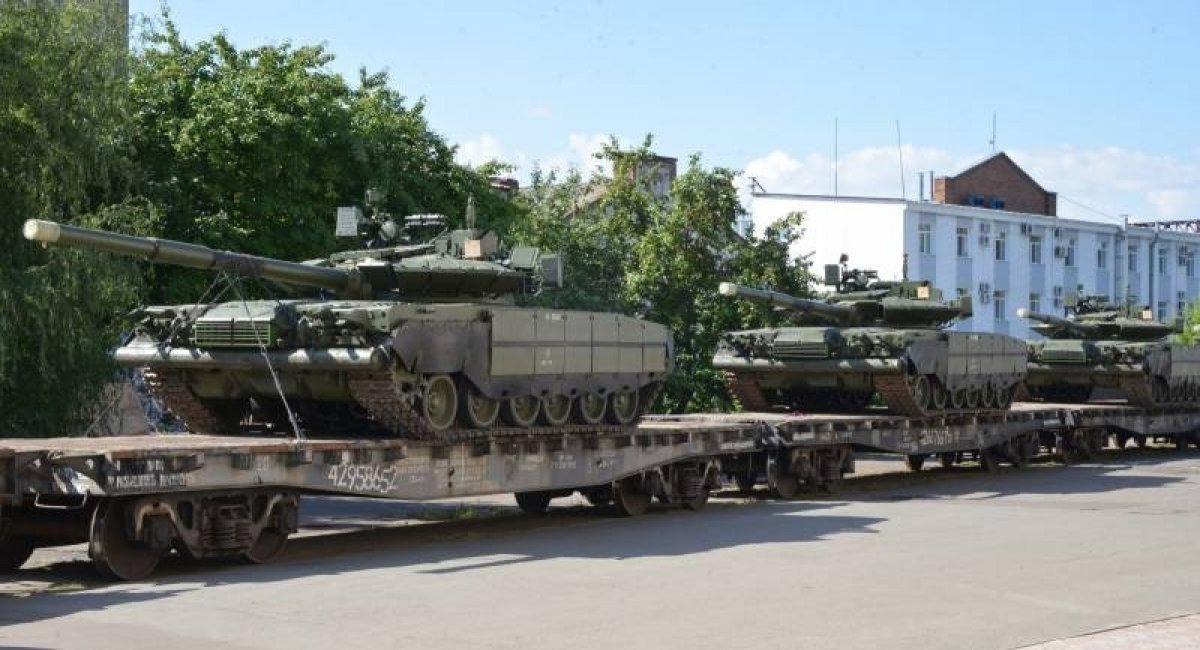
russia's defense industry is currently capable of producing up to 250 T-90M Proryv tanks annually at Uralvagonzavod, and up to 150 T-80BVM tanks at the Omsktransmash plant.
However, evaluating russia's armored forces requires looking not only at output rates, but also at how many military units are actually receiving these MBTs. Combining these indicators offers a clearer picture of what russia describes as the "restoration" or "regeneration" of its tank forces. This is the approach taken by analysts at Janes in their recent report, which provides several notable insights.
Read more: How to Cripple russia's Fighter Jet Industry: Britain Pinpoints Targets for Sanctions and Drone-and-Missile Strikes
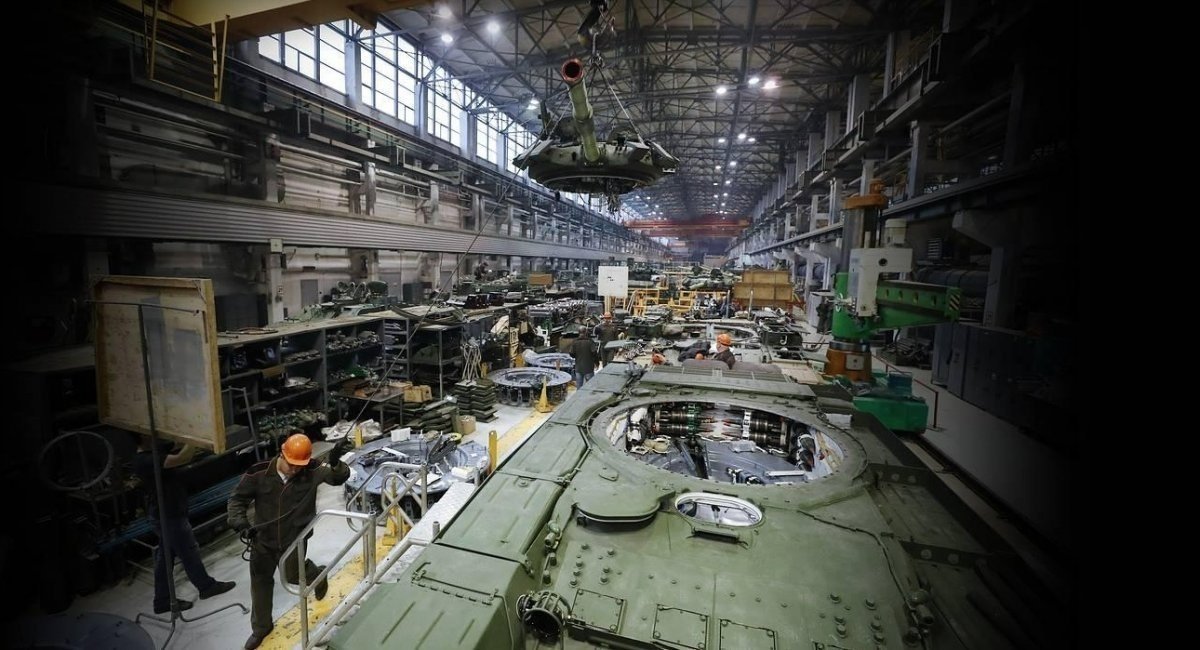
Production Trends
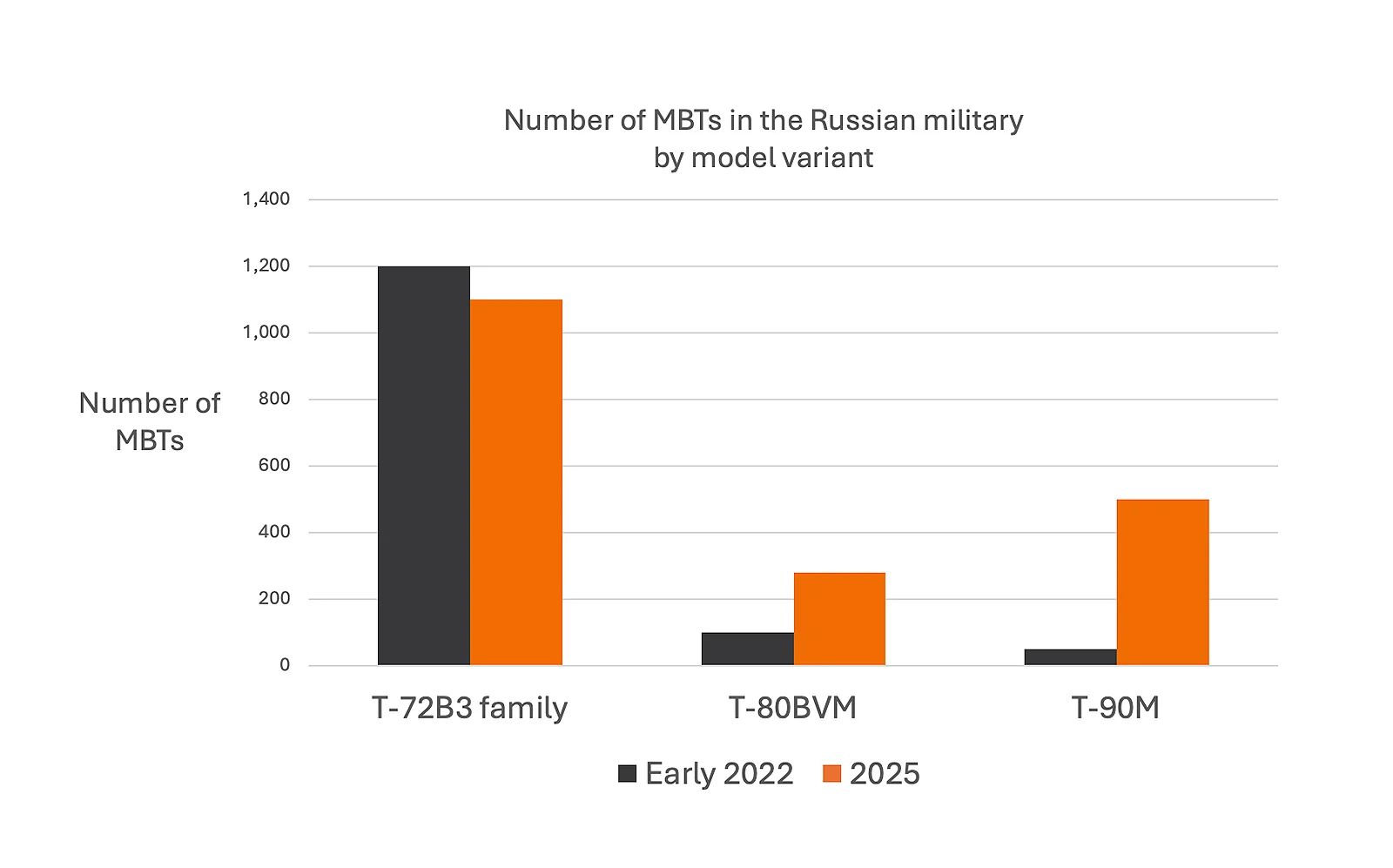
Comparing 2022 figures with 2025 estimates, the number of T-72B3 tanks in russian service has reportedly decreased from 1,200 to 1,100, while the number of T-90Ms has increased from around 50 to 200, and T-80BVMs from 100 to 280. These figures account for both new production and battlefield attrition during russia's war against Ukraine.
Janes estimates that the T-72B3, T-90M, and T-80BVM together now constitute 65–70% of all russian main battle tanks in service — up from just 50% before the full-scale invasion.
Janes does not provide sourcing details for the estimate of 150 T-80BVMs per year from Omsktransmash. The figure of 250 T-90Ms per year is attributed to Ukraine's Defense Intelligence (HUR), with the note that this number refers specifically to new-build tanks. However, Janes offers a more conservative estimate, suggesting Uralvagonzavod is likely producing 150–200 new T-90Ms annually.
The report also references russia's 2023 announcement that it intended to restart production of brand-new T-80s — but notes that no evidence suggests this has actually happened.
"All three tank types share a significant number of common components, enabling a unified production process that increases manufacturing efficiency. However, the parallel production of multiple MBT types reflects a Soviet-era mindset — prioritizing scale over optimization and efficient resource use," the analysts conclude.
How Many Units Are Receiving Modernized Tanks?
Janes also highlights a substantial increase in the number of russian military units fielding T-90Ms, T-80BVMs, and T-72B3s:
- T-90M: from 2 units in early 2022 to around 20 today
- T-80BVM: from 4 units to 23
- T-72B3: from 35 units to 53
However, the term "unit" is highly variable — it may refer to a full battalion set (30–40 tanks), a company (about 10 tanks), or even a platoon (a handful of vehicles). Janes illustrates these trends in a detailed infographic.
Conclusions
From the perspective of Defense Express, it is clear that Janes' analysts aimed to quantify the growth in the number of russian military formations capable of fielding modernized MBTs — even if many of these tank units remain significantly understrength.
Thus, when Janes refers to the "regeneration of russia's tank forces," they do not suggest that russia is rebuilding its armored fleet to pre-war standards. Instead, russia appears focused on sustaining the mass employment of tanks on the battlefield, even as modern Ukrainian strike drones pose a severe threat to all MBT types currently in russian service.
Read more: russia to Import 12,000 North Korean Workers for the Shahed Drone Production