Britain, which initially flatly refused to provide its airbases for American military to use them in Operation Epic Fury for strikes on iran, sharply changed its decision after one Shahed reached a British airbase in Cyprus and hit a hangar with American U-2 reconnaissance aircraft.
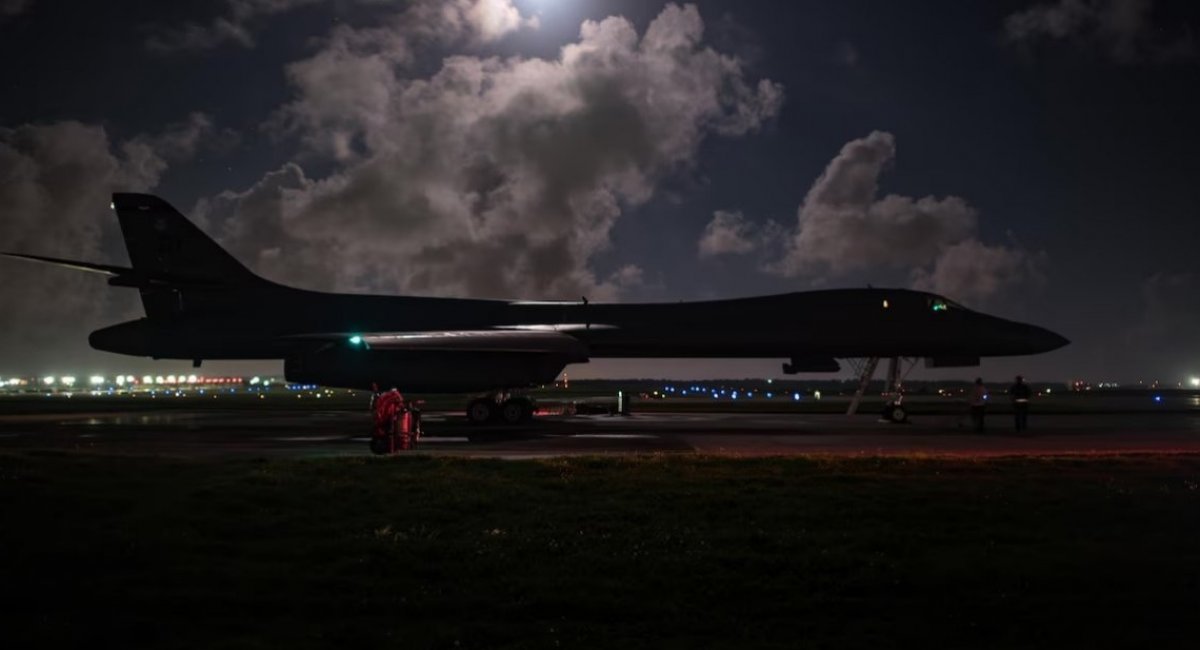
Immediately after the U.S. received green light to operate British airbases, they began building up bomber presence there in quite tight timeframes. As of today, over a dozen B-1B Lancer bombers are already stationed at RAF Fairford in Britain.
Read more: UK Pays $821K Per Drone Boat While Ukraine's Combat-Proven Sea Baby Costs $200K, Britain Should Look East
According to Air and Space Forces Magazine, based on open source data, the first bomber arrived at the airbase March 6, four more March 7 (along with three more B-52s), three more March 9, and four more March 10. In total, at least 15 bombers, of which 12 B-1 aircraft plus four B-52s.
For B-1, this is truly unprecedented deployment, especially considering such an interesting fact that this actually involves about half the combat-ready fleet of these fighters.
Overall, as of today the U.S. Air Force has 44 B-1 bombers in service after one crashed during landing in 2024. At the same time, these aircraft's readiness level is worst of all bombers at only 47%.
This means the U.S. Air Force can overall count on fewer than 21 combat-ready B-1 bombers, over half of which are now stationed in Britain and will participate in conducting strikes on iran.
The publication emphasizes that actually the B-1 specifically provides the U.S. Air Force greatest action variability, as it can carry the most payload compared to others (75,000 pounds versus 70,000 pounds for B-52 and 40,000 pounds for B-2), as well as the capability to remain airborne for extended time.
All these machine advantages indicate the U.S. should not prematurely retire them, as previously there were plans to bid them farewell before first sixth-generation B-21 Raider bombers enter service.
Also recall that previously the U.S. Air Force ordered new LAM (Load Adaptable Modular Pylon) pylons for these bombers, which was initially developed for testing ARRW hypersonic missile with B-1, but also enables expanding this bomber's munitions nomenclature.
Previously, Defense Express reported that B-52 bombers may not be enough to carry nuclear weapons, fight globally, and modernize.
Read more: Ukraine Explains How PAC-3 Missiles Protect Cities from Ballistic Attacks