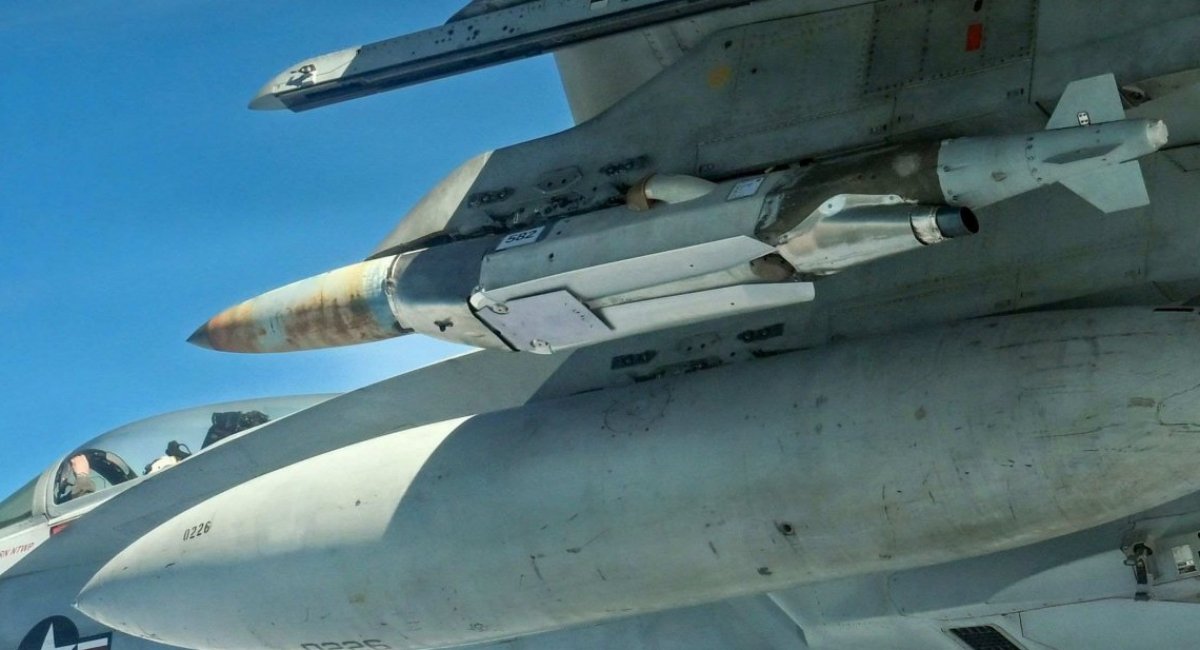
The new version of the JDAM with a jet engine, JDAM LR (Long Range), was successfully tested by the United States Navy. During the tests, two releases were carried out, during which the bombs flew about 200 nautical miles (around 370 km).
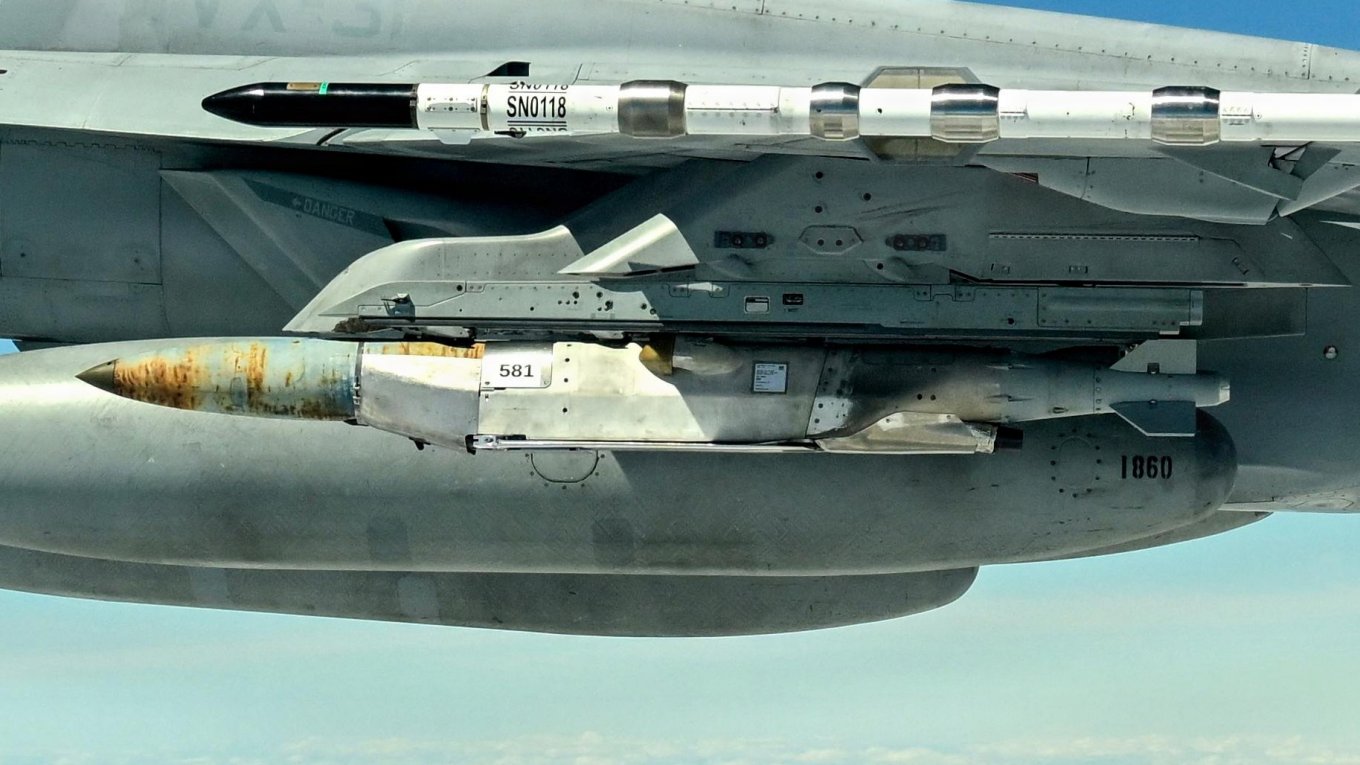
The tests demonstrated safe weapon separation, the ability to use existing aircraft interfaces, as well as controlled flight and navigation. Each demonstration covered approximately 200 nautical miles, providing stable guidance directly to the target, NAVAIR (Naval Air Systems Command) stated. The actual release of the JDAM LR from a carrier-based F/A-18 fighter was also shown.
Read more: Brazil Orders Second Batch of 4 German-Built Stealth Frigates Despite BRICS Ties, Total Fleet Reaches 8 Ships
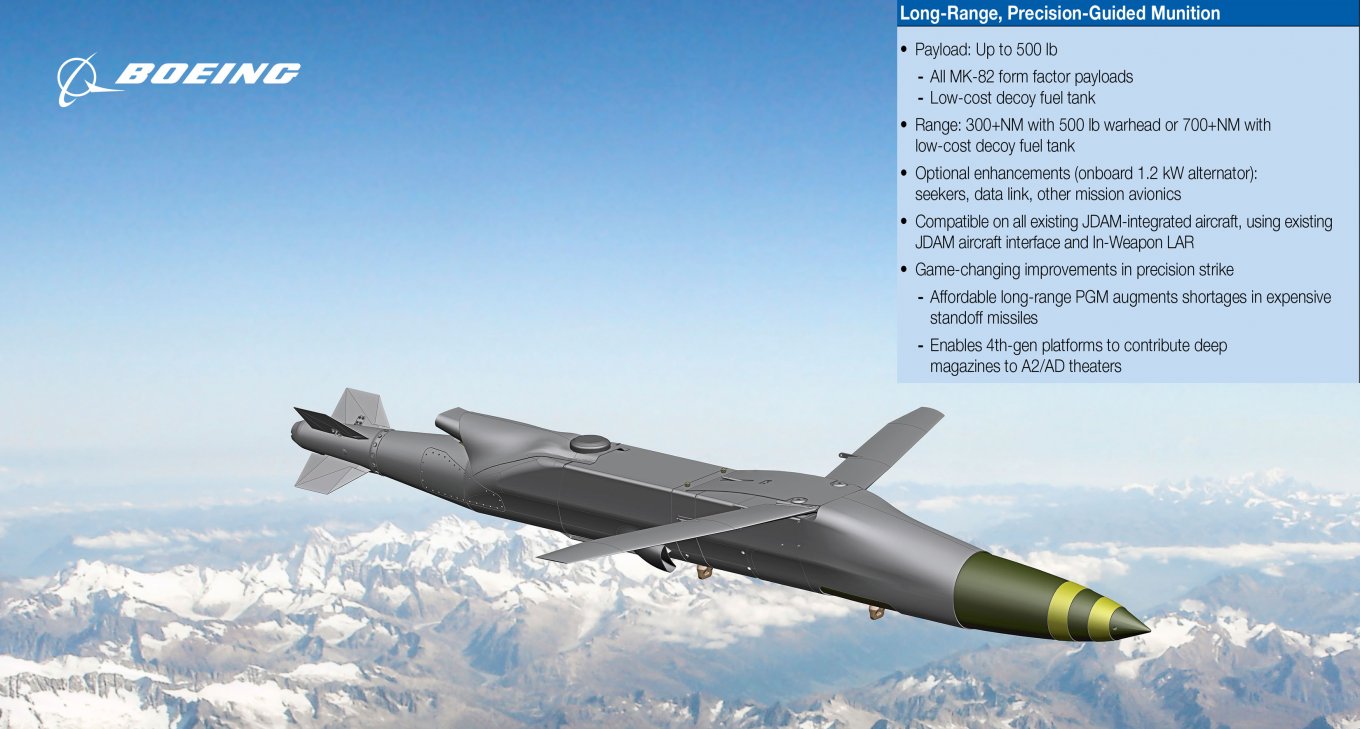
From the Defense Express side, it should be noted that JDAM LR is a new name for Powered JDAM being developed by Boeing, and what has entered testing fully corresponds to the concepts the company had previously demonstrated. In particular, this involves a rather complex system with the installation of a compact turbojet engine TDI-J85 from Kratos, along with the entire fuel system housed within the kit's body, which also includes folding wings, tail assembly, as well as a control and navigation system.
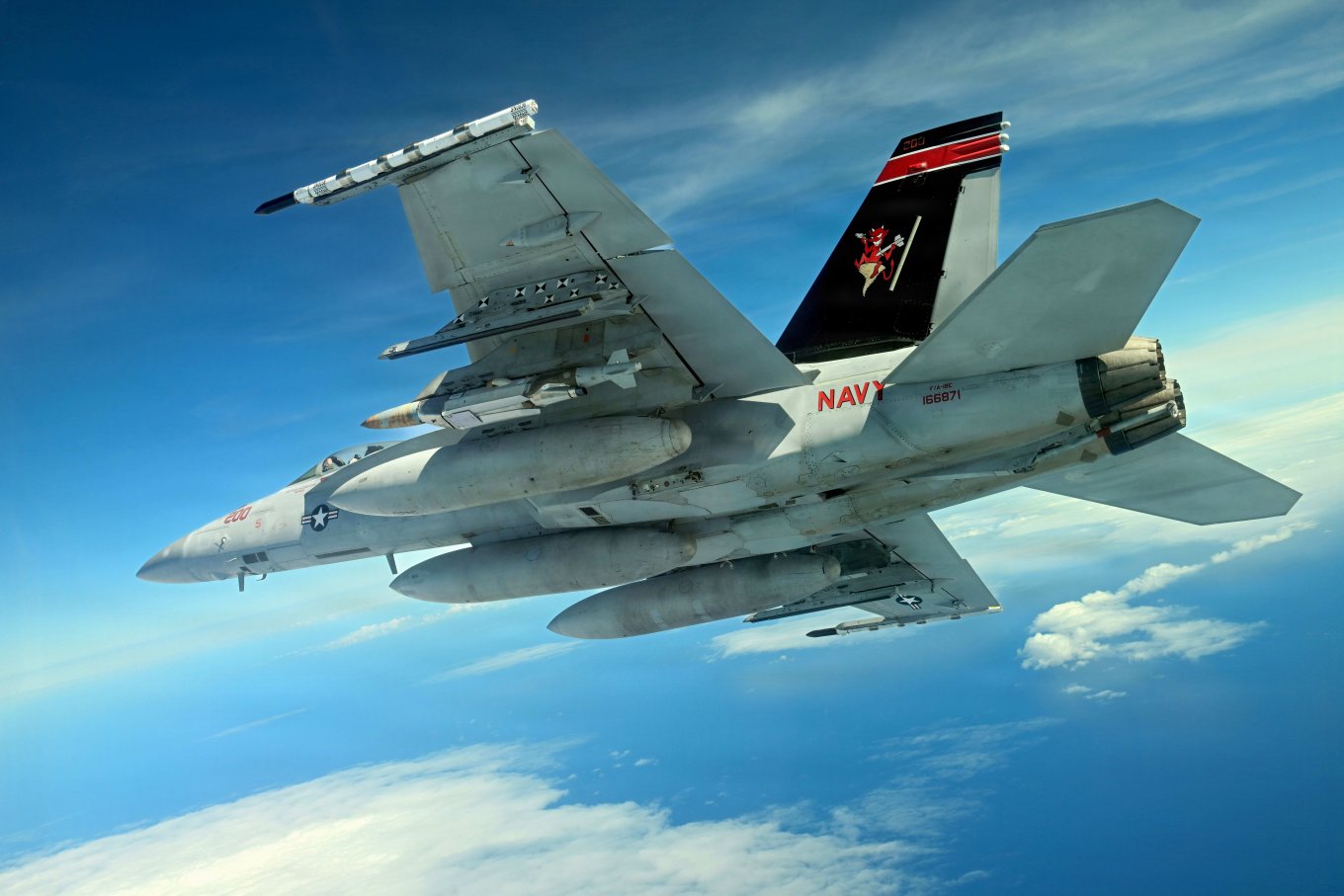
The JDAM LR itself is designed for a 500-pound (227 kg) bomb in the Mk 82 form factor. At the same time, Boeing declared a flight range not of 200 nautical miles (370 km), but over 300 miles, that is more than 550 km. Moreover, if a fuel tank is used instead of a bomb, the range increases to 1300 km.
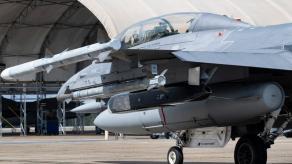
It is also important that all aircraft already integrated with JDAM can use this version of the kit as well. This, of course, opens the possibility of its installation on Ukrainian fighters, both F-16 and, through a special pylon,on soviet aircraft.
However, the issue is not only the start of serial production of JDAM LR. The development is still undergoing testing, and the U.S. Navy has announced that the next stage of qualification will focus on integrating the new weapon into aircraft carrier infrastructure.
There is also an important question of cost and feasibility. The main problem with JDAM-ER, as well as SDB used in Ukraine, has been the sensitivity of satellite navigation systems to electronic warfare.
Because of this, guidance accuracy decreases even when used against targets in the enemy's near rear. In the case of launching JDAM LR at targets hundreds of kilometers deep inside enemy territory, the duration of exposure to electronic warfare systems will be even longer.
That is why the issue of implementing effective jam-resistant navigation systems for JDAM LR is no less important than ensuring its range.
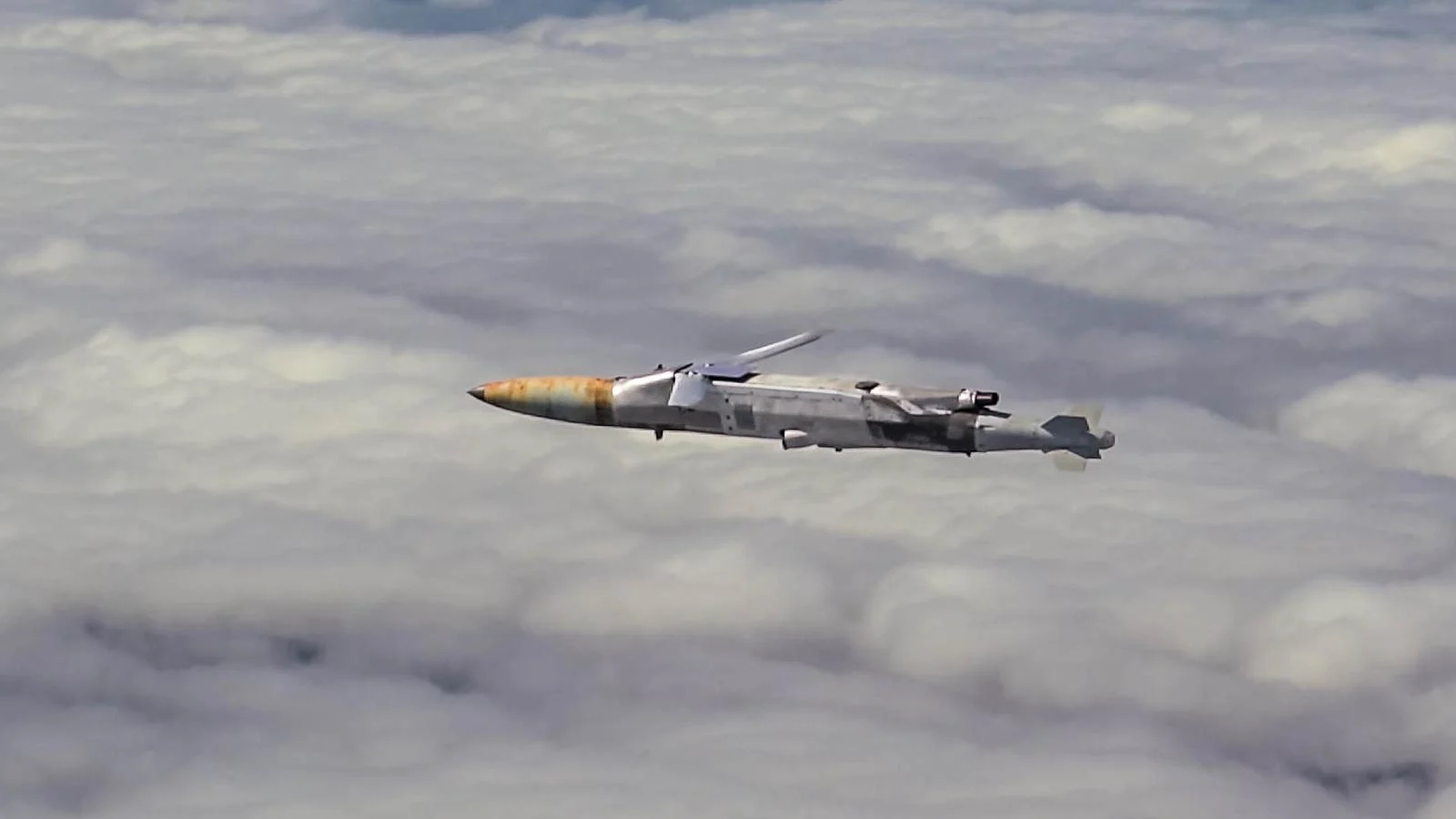
It should also be added that such launch range for JDAM LR is achieved only from high altitude, while launches from low altitude will result in a significantly shorter range.
Read more: russians Showcase Their Courier UGV Transporting a D-30 Howitzer — But There's a Problem with This Approach