


Swedish defense giant Saab announced the start of quite a bold and advanced experiment involving artificial intelligence in aircraft design and adapting their production through additive technologies.
In very simple terms artificial intelligence should design the structure according to specified requirements, maximize its simplification, and adapt it for mass printing of elements on 3D printers. All this should allow for multiple reductions in time and necessary resources for development itself, as well as accelerate serial production.
Read more: U.S. Created LUCAS Attack Drone Squadron, then Admitted Warheads Don't Exist Yet
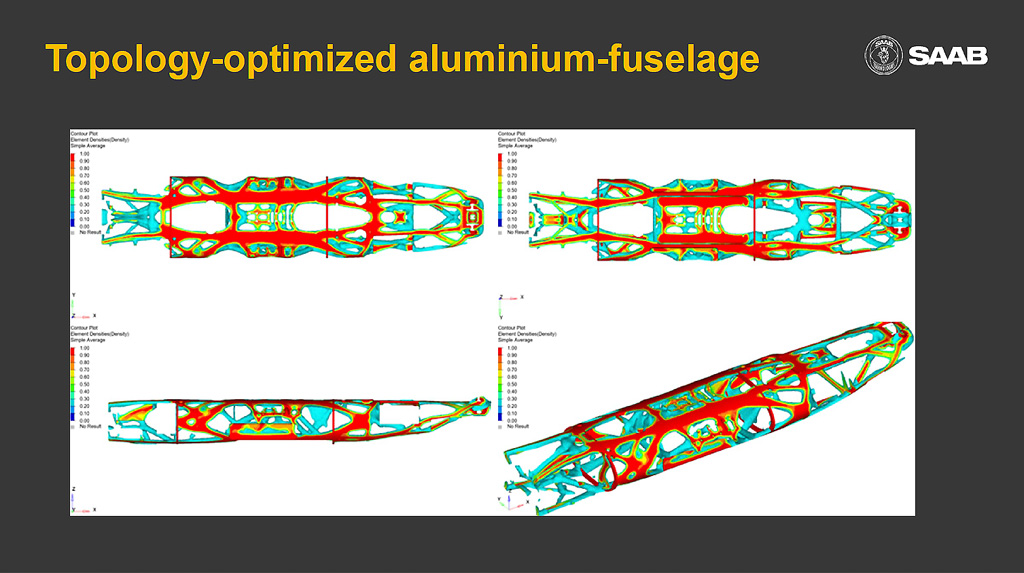
Saab announced such an initiative at a closed event for a limited number of media representatives. The project for integrating advanced technologies is led by a separate Saab research unit called Rainforest. It actively cooperates with American Divergent Technologies, which specializes in digital design and additive manufacturing. And at the first stage, we're talking about using artificial intelligence in creating the fuselage.
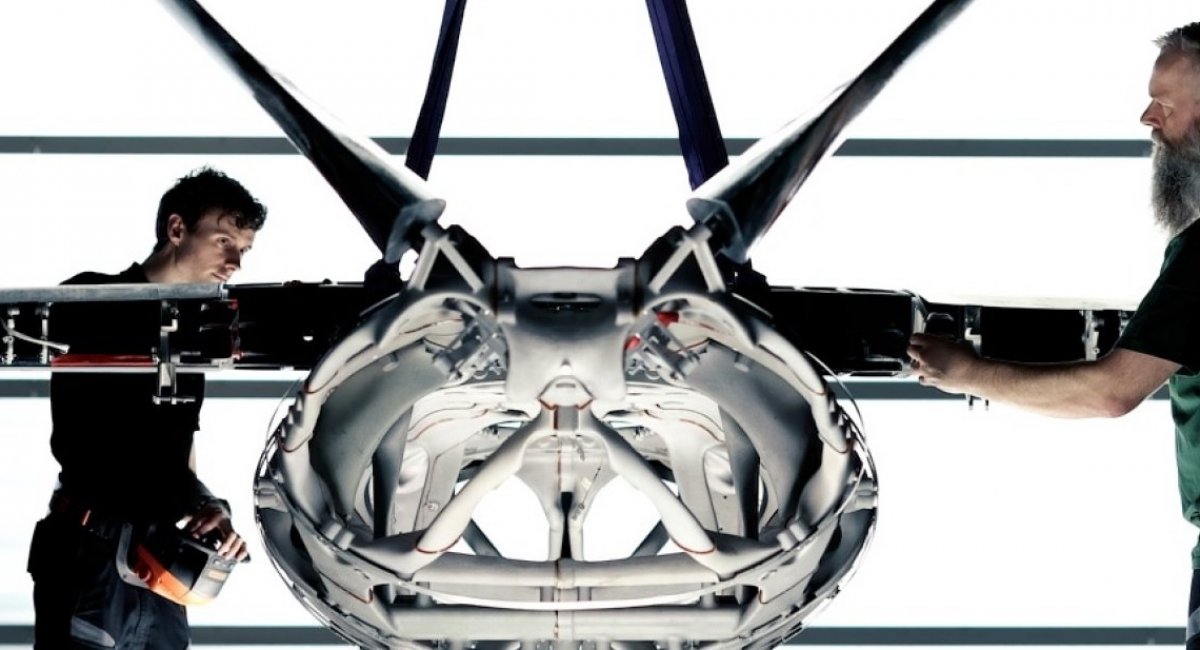
The first experimental sample was the Ruby jet drone, which has a wingspan of 6-7 meters. Already at the first stage of designing a fuselage element measuring 5x1x0.6 meters, it was possible to reduce the number of parts by 99% and change the amount of material waste by 90%, Aviation Week writes.
It's announced that Rubys fuselage has already passed load testing, and the drone itself will be ready for first flight in 2026. And in available photos of the fuselage itself, what radically differs from what humans usually design, but very much resembles a skeleton.
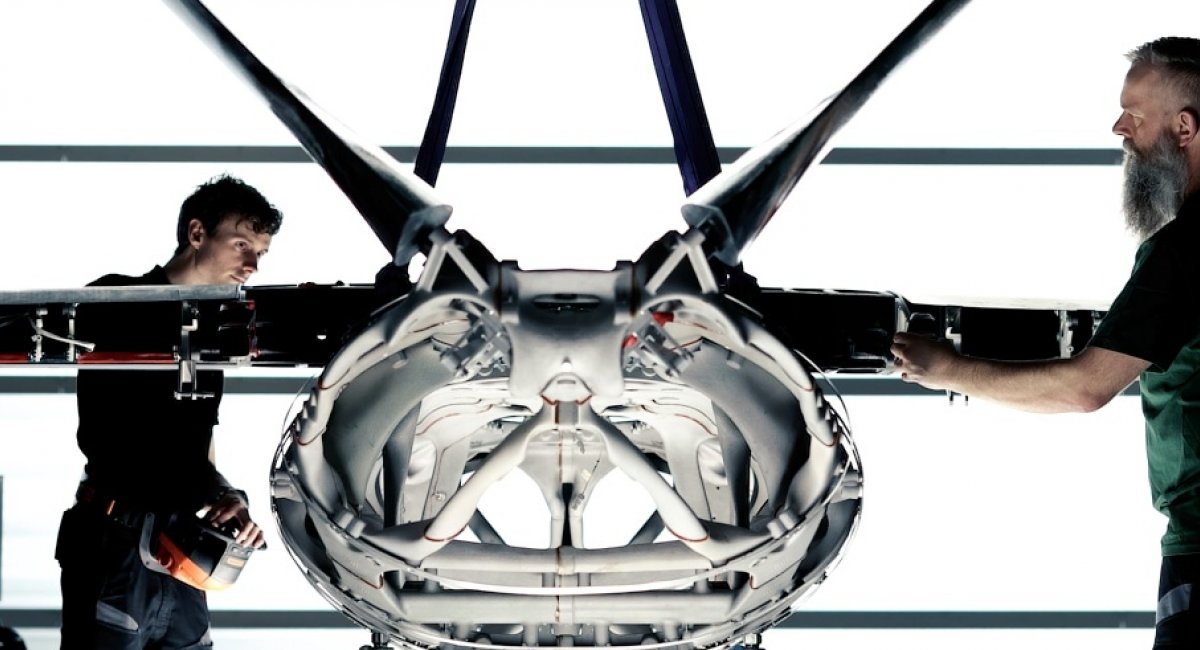
I was struck when I worked with such topological optimization algorithms that nature is quite inventive. It was strange that these forms look so organic and resemble a skeleton. On the other hand, I think nature is very good at optimizing and creating only the structure that meets given loads. And I think we see this here too, noted Axel Baatt, quoted by EDR, who was also at the event.
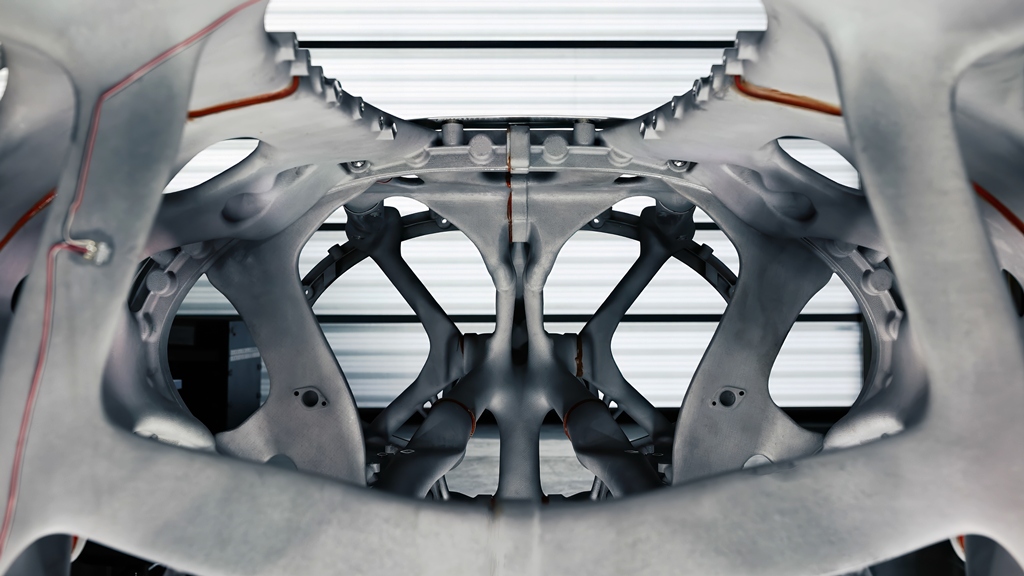
Essentially, artificial intelligence designs individual elements calculated for current capabilities of available large-format laser powder 3D printers that can print metal parts with dimensions up to 0.7x0.7x0.835 meters, which are then assembled without need for fasteners.
We can create biometric, more topologically optimized structures because we can allow design tools to optimize the design considering physical principles, placing structure exactly where loads are located, said head of Saab unit Rainforest, Axel Baat.
Overall, time savings on developing such a solution is estimated in thousands of man-hours. And time savings on creation is described by Divergent Technologies as follows: we received drawings on Saturday, and by Tuesday we manufactured a part that had specified stiffness and resource, but 45% less weight compared to baseline sample.
Read more: How Many MiG-29 Fighters Poland Could Sell to Ukraine, Their Condition, Versions, and Capabilities