


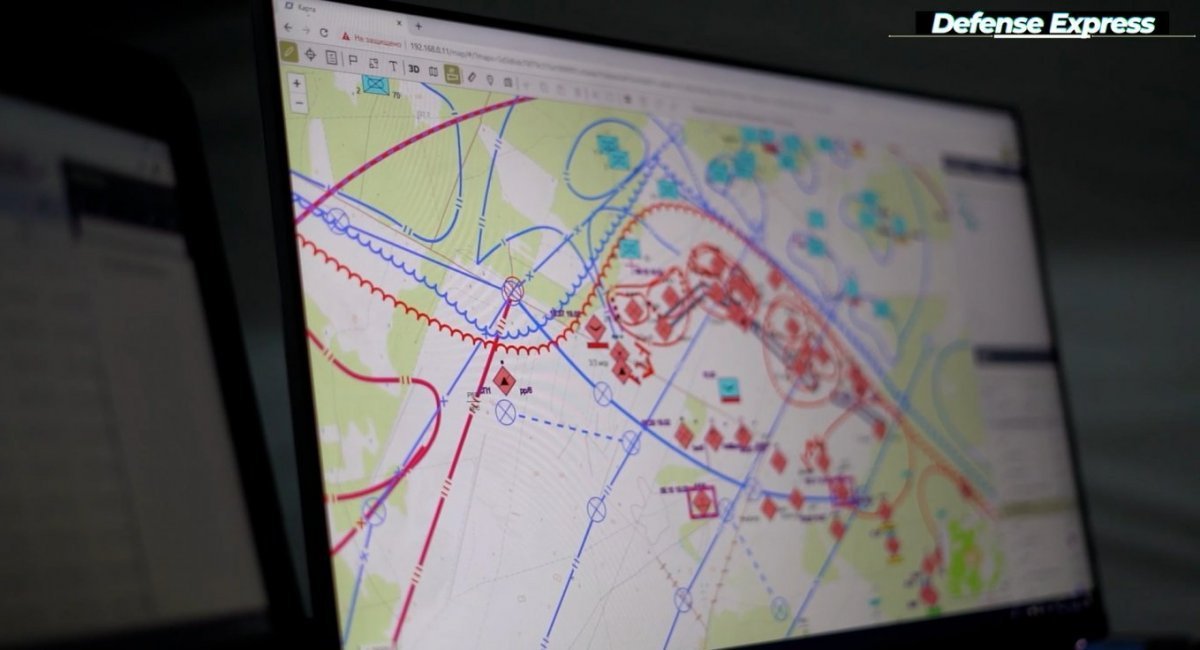
Since 2022, the Ukrainian government has actively cooperated with the U.S. IT company Palantir, which specializes in large-scale data analytics and information systems. Today, however, it is increasingly difficult to consider these solutions fully secure. Moreover, there is a growing risk that Ukraine's critical defense data may now be exposed.
These concerns are rooted in a 2024 audit conducted by the Swiss Armed Forces General Staff of Palantir's IT system for military intelligence services. While the audit confirmed the system's high technical capabilities, it also identified a significant likelihood that sensitive data could be accessible to the U.S. government and American intelligence agencies. As a result, Switzerland decided to discontinue the use of Palantir solutions.
Read more: U.S. Has Ordered Development of the SBI Orbital Interceptor Designed to Shoot Down Nuclear Missiles Immediately After Launch
At the same time, in May 2023, Ukraine's Ministry of Digital Transformation signed a memorandum of cooperation with Palantir covering defense-related applications and post-war reconstruction efforts.
The specific systems involved were not disclosed, as the official announcement lacked technical details. It merely stated that the memorandum concerned "digital capabilities" in the defense sector, as well as the exchange of "data and experience in implementing leading global technologies with the support of the Armed Forces of Ukraine."
Palantir's involvement, however, began even earlier. On June 2, 2022, a meeting took place in Kyiv between President Volodymyr Zelenskyy, Minister Mykhailo Fedorov, and Palantir CEO Alex Karp.

This cooperation has been broad and deep, directly affecting the combat capabilities of Ukraine's Defense Forces, intelligence collection, and strike planning against russian troops.
In February 2023, Alex Karp publicly stated that Ukraine was using Palantir's situational awareness system for direct targeting. According to him, the platform aggregates data from numerous sources, ranging from social media to satellite imagery, enabling Ukrainian forces to identify and track enemy units.
In 2022, 2023, and even throughout 2024, cooperation with Palantir was objectively a strategically sound choice. Even if Palantir's systems allowed U.S. intelligence agencies, including the CIA (which played a role in the company's early funding), to observe activity within these platforms, there was a prevailing assumption that Ukraine would, in any case, receive extensive intelligence support from the United States as a strategic partner and ally.
That assumption has now changed.
With Donald Trump's return to power, Ukraine and Europe have entered a new political reality. The updated U.S. National Security Strategy clearly indicates that the United States no longer views itself as an ally of Ukraine or Europe, and in many respects not even as a partner. It is also important to recall that Palantir's co-founder and major shareholder, Peter Thiel, was one of the key financial backers of Donald Trump's election campaign.
Under these circumstances, it may be necessary to very carefully reassess the use of any Palantir software, as well as the hardware on which it is deployed. This is particularly relevant given that Palantir solutions are no longer confined to the defense sector. For example, about a year ago it was announced that Palantir technologies would be used in demining operations and in the education sector.
It is also worth noting that Ukraine is not alone in facing this dilemma. Since 2022, Palantir has signed multiple agreements with European governments. Its involvement in security and defense-related projects has been reported in France, Germany, Italy, the Netherlands, Spain, and Poland.
The largest customer, however, remains the United Kingdom. In September 2025, the UK Ministry of Defence signed a five-year contract worth £750 million (€855 million) with Palantir, extending an earlier agreement concluded in 2022.
Read more: U.S. Created LUCAS Attack Drone Squadron, then Admitted Warheads Don't Exist Yet