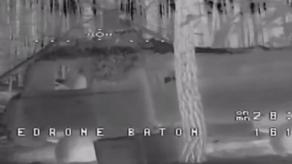



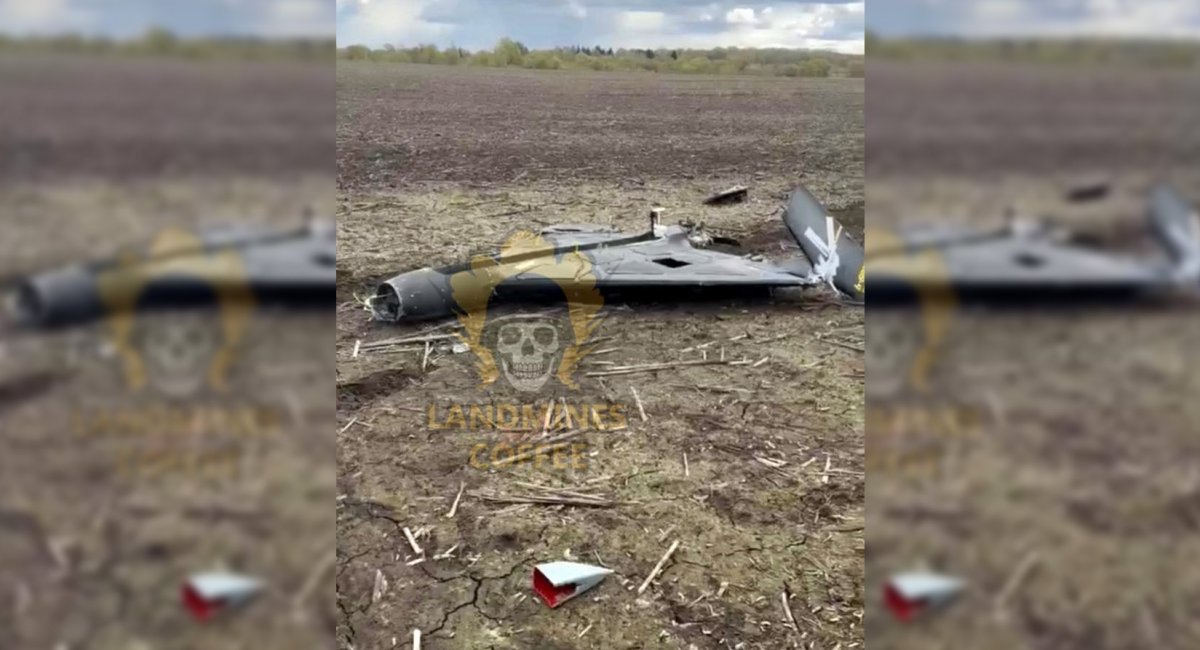
Earlier attempts to equip Shahed drones with R-60 missiles have evolved from field improvisations into a standardized production solution. A new Geran-2 variant, manufactured at the Alabuga facility, was neutralized by Ukrainian warriors, and images of it have circulated in specialized online communities.
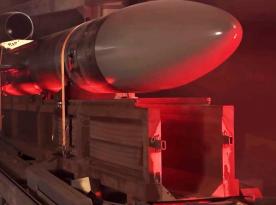
Previously, the R-60 missile was mounted on a pylon attached to the top of a standard drone. In the new version, a dedicated recess is integrated into the fuselage to house the launcher. Notably, this configuration no longer includes a conventional warhead.
Read more: russian Forces Continue Building Shahed Drone Launch Site in Oryol Region
This design reduces aerodynamic drag caused by earlier improvised solutions, which negatively affected range. It may also improve flight stability by mitigating issues related to the missile’s aerodynamic surfaces and shifts in the center of mass.
The recessed launcher configuration also appears to confirm earlier experiments, when a mock-up of the missile was installed in a similar semi-recessed layout observed in late March.
Developing such a variant is far from simple. It requires major structural modifications to the airframe. To integrate the launcher, engineers at Alabuga likely had to redesign the center wing section and relocate fuel tanks. These are significant changes that cannot be implemented as ad hoc field solutions and require substantial development and testing resources.
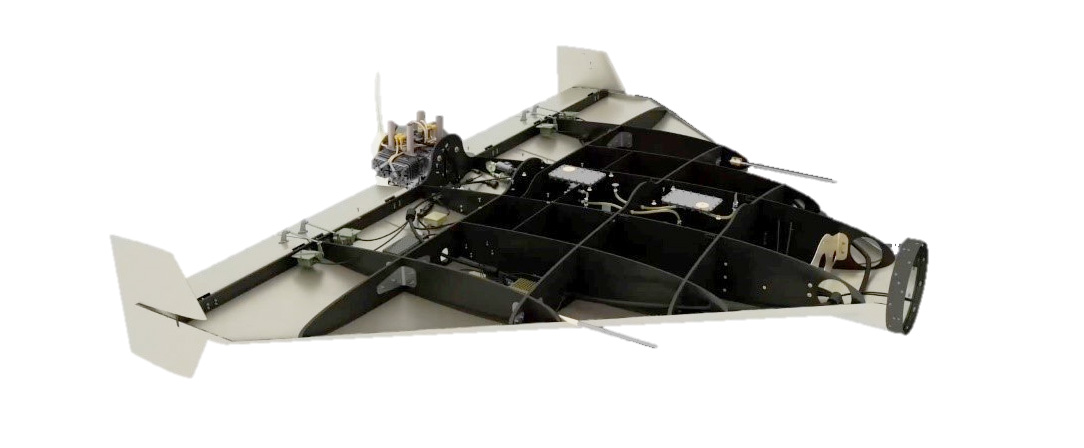
The absence of a warhead highlights the drone’s narrow specialization as an interceptor platform.
This leads to several conclusions. First, russia appears satisfied with the results of its earlier experiments with air-to-air missiles on Shahed drones. Second, it likely believes it can ensure stable control and communications, or even enable autonomous operation using AI-based algorithms, which would require additional onboard systems. Third, it appears ready to scale this concept. Similar solutions may also emerge on jet-powered Shahed variants.
The R-60 missile has a range of up to 7–8 km and uses an infrared seeker with a relatively narrow field of view, approximately 24–34 degrees depending on the version. By integrating this missile, russia appears to be attempting to convert part of its Shahed fleet into interceptor drones capable of targeting Ukrainian helicopters, light aircraft, and anti-Shahed gunship platforms such as the An-28.
Read more: Is UK's Skyhammer Anti-Shahed Interceptor Tested in Jordan Competitor to Ukraine's Anti-Aircraft Drones