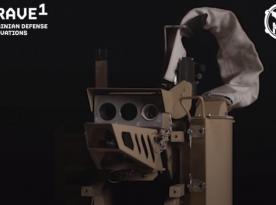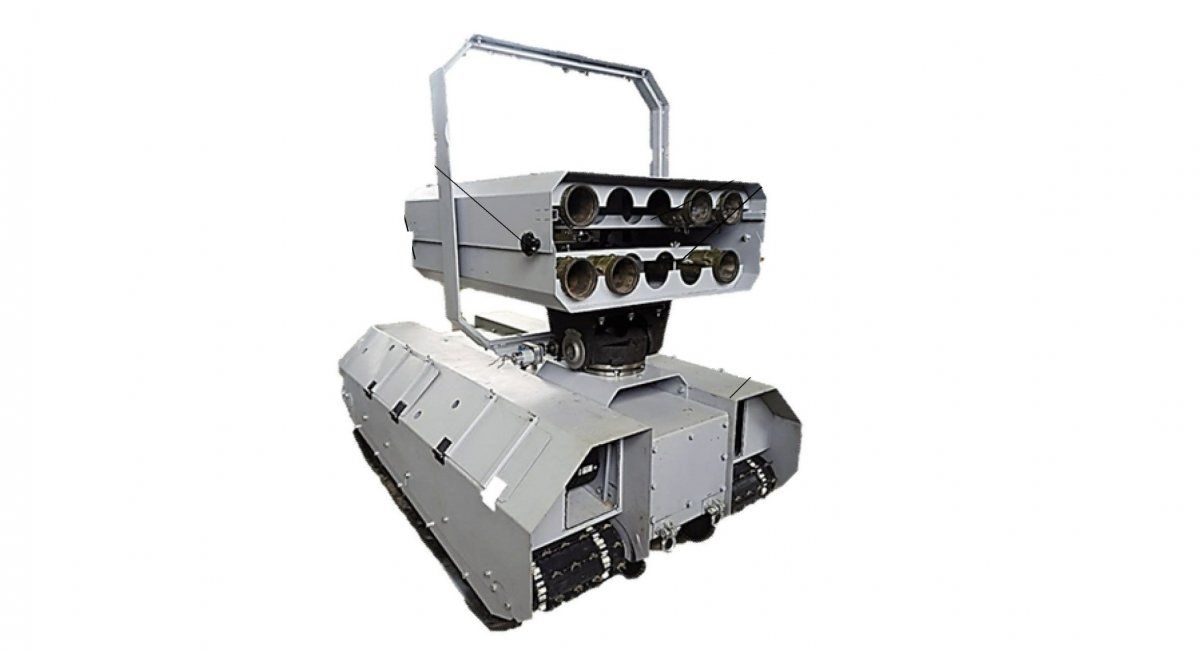
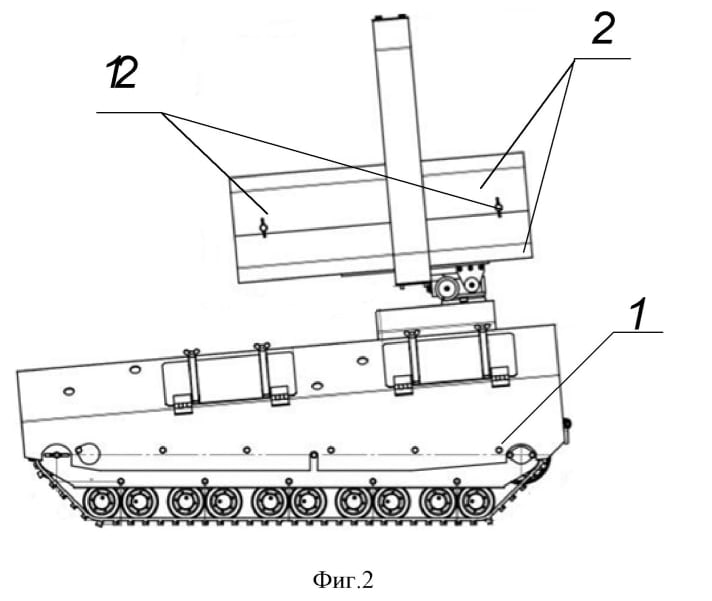
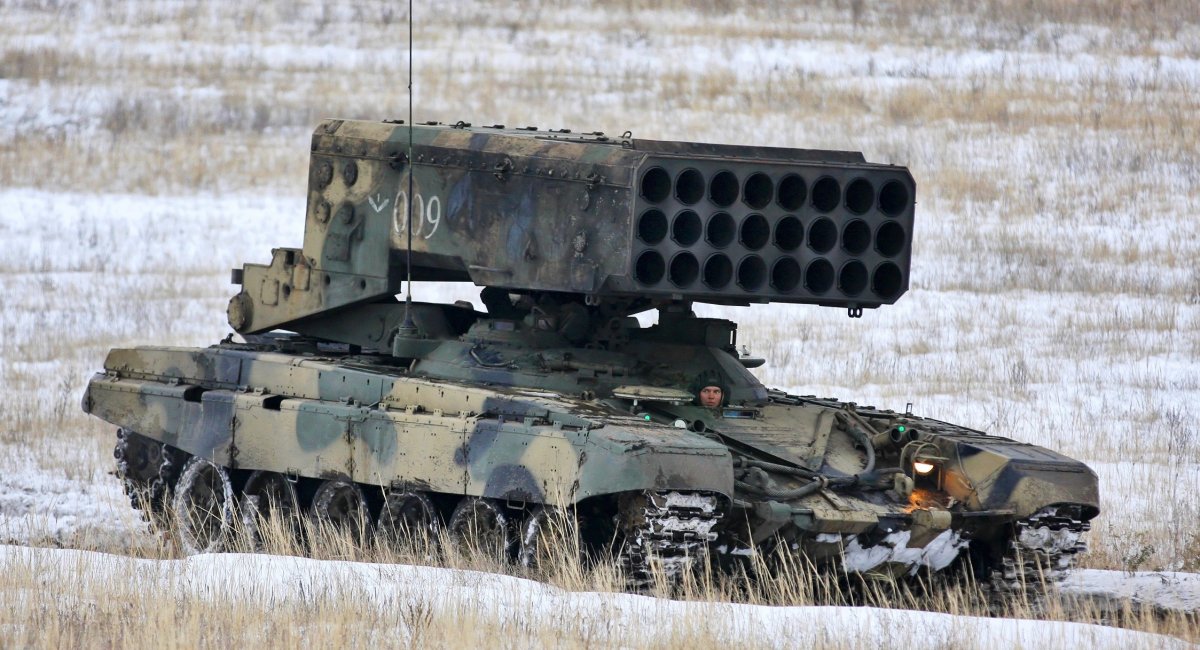
Moscow-based Robototechnichesky Inzhiniring company has developed a mini-version of the TOS-1A Solntsepyok, mounted on an unmanned ground vehicle. To be more precise, it's a special one-time-use turret, and it differs in some technical aspects from the original TOS-1A.
Btvt.info shares images from the patent registered by the manufacturer alongside some specifications.
Read more: Two Problems Faced By TOS-1, TOS-2 Systems on Ukrainian Battlefields
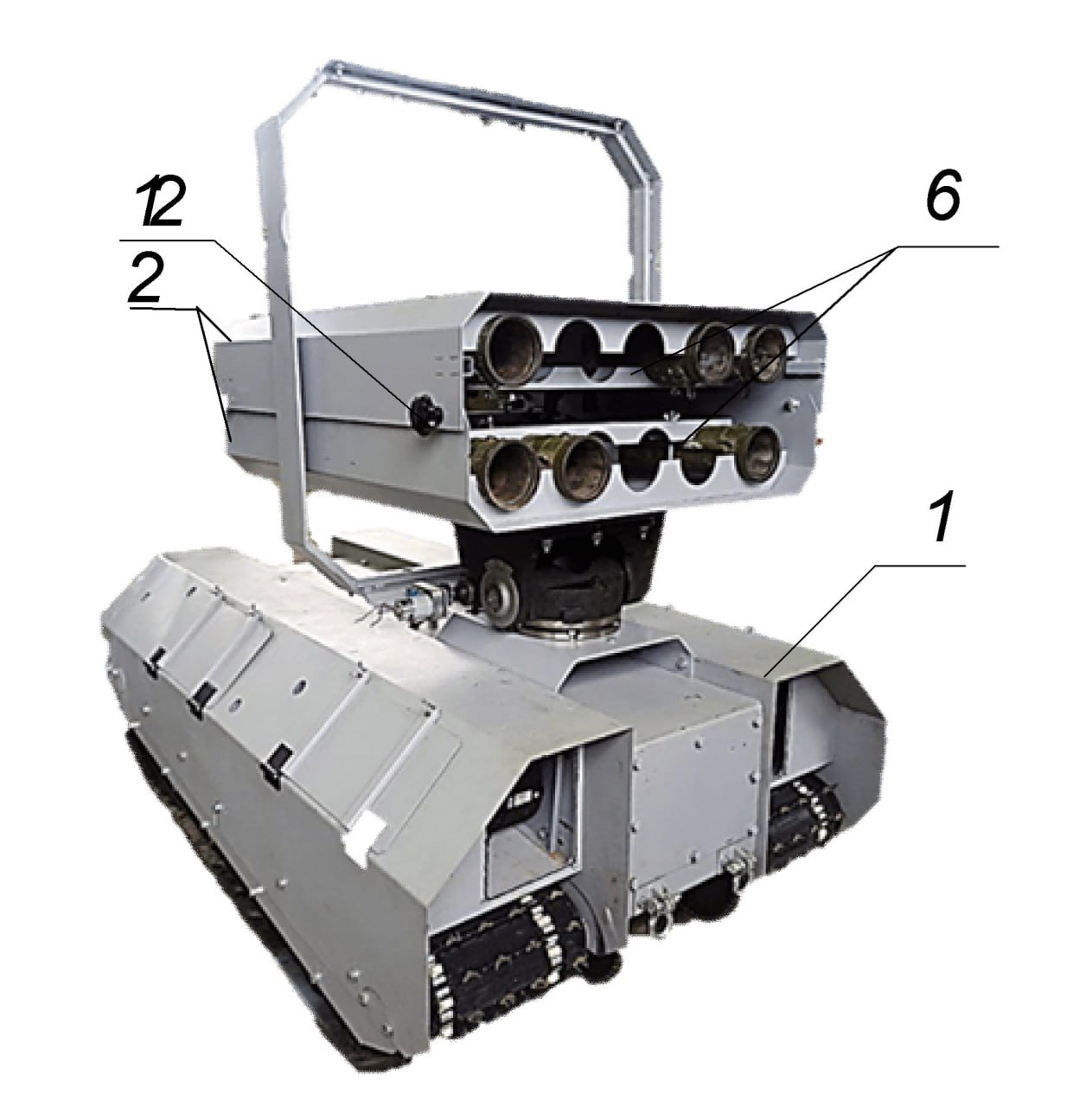
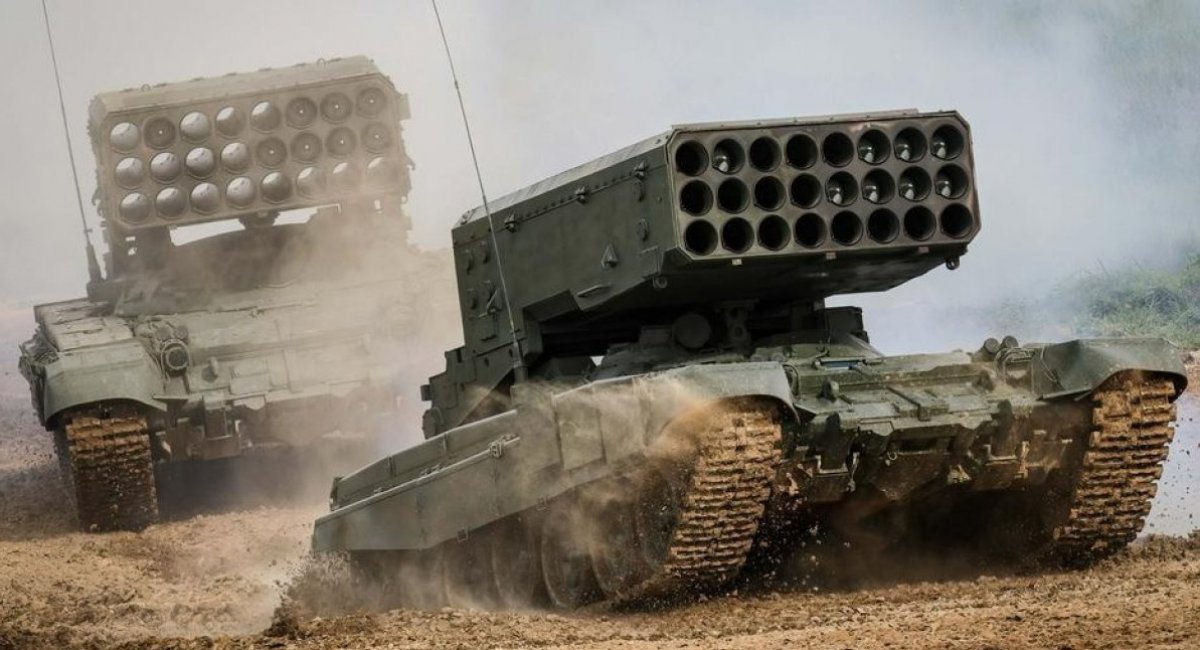
For starters, it has a rack for disposable rocket systems similar to the Shmel grenade launcher. In this detail lies the first distinction from the standard TOS-1 MLRS with its 220mm thermobaric rocket launchers on a tank chassis.
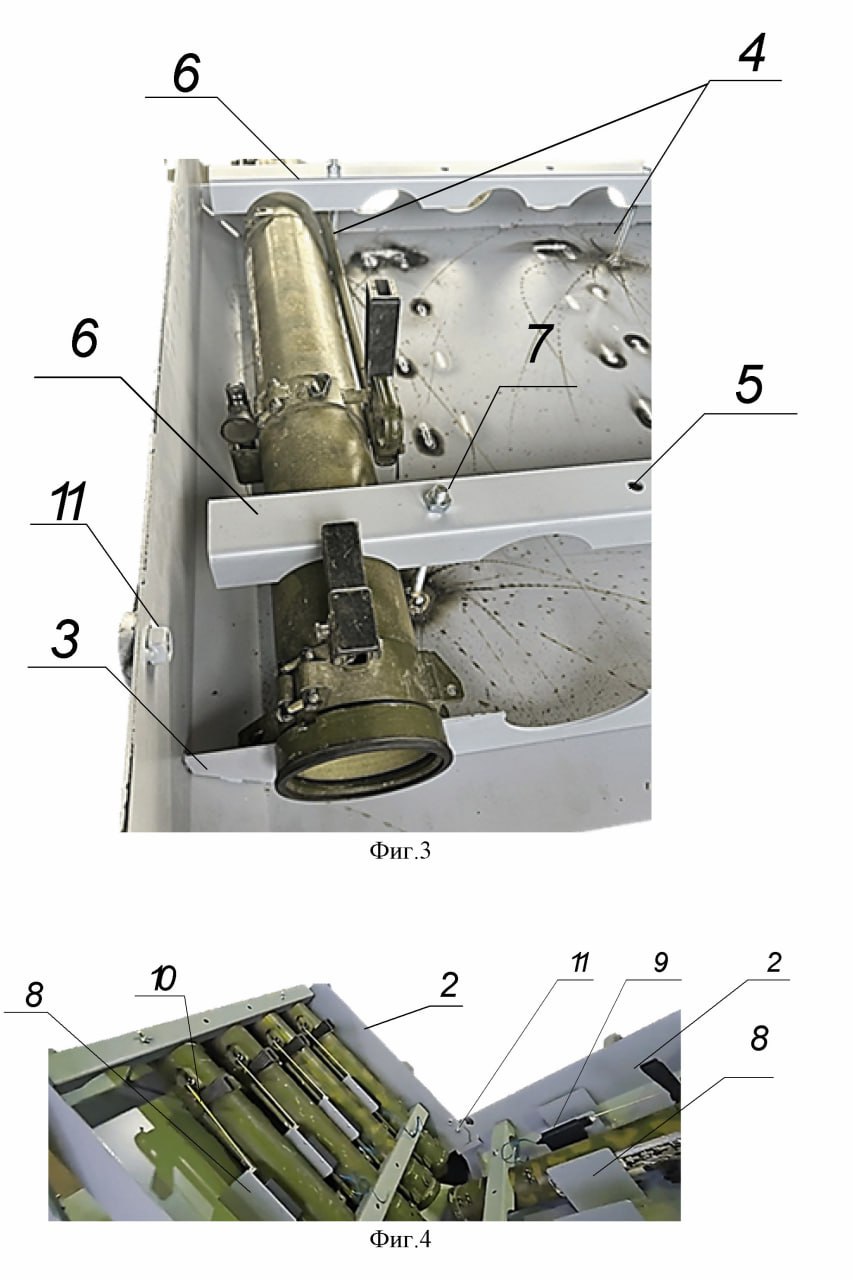
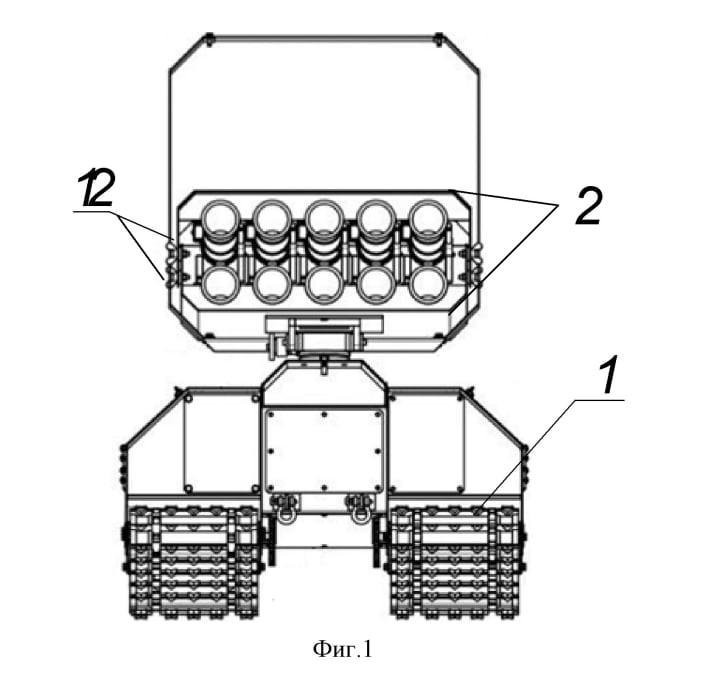
The "launcher" itself is a pair of metal casings with a box where the flamethrower grenade launchers are inserted. It is claimed that the system can fire all the weapon slots simultaneously or in an assigned order. The design makes reloading easy, and the use of standard infantry weapons instead of specialized ammunition reduces logistics costs.
The idea of placing man-portable weapons on a robot isn't new, of course. Even on Ukrainian battlefields alone, the nature of warfare gave push to the development of both ground-based and airborne solutions, both improvised and mass-produced.
The creators also offer an autonomous operating mode as a response to the threat of electronic warfare interference. After losing communication with the operator's control panel, the system proceeds with the mission independently based on data from the satellite and IMU sensor (inertial guidance).
Moreover, the designers claim the robot has automatic targeting: upon reaching the firing position, the system allegedly starts scanning the horizon for obstacles on the way to the target. Although this sounds quite promising, there are objective doubts about the possibility and efficiency of implementing such autonomous capabilities on a relatively cheap UGV.
The unmanned chassis also deserves attention, as it features no protection, not even against fragmentation. Another issue is the placement of the launcher closer to the rear end of the platform, which is likely to create problems with stability during firing. On the other hand, maybe such a layout was a deliberate decision on the part of the creators.
When all said and done, we need to take a look at the developer — the Robototechnichesky Inzhiniring company (stands for Robotic Engineering). Per official records, it had no revenue at all since 2018 and had a net loss of 7.7 million rubles in 2024. The number of employees, meanwhile, has remained at a stable 1–2 people.
According to open-source information, the company has high risks of defaulting on financial obligations and has been a defendant in a hefty pile of lawsuits filed against it. This sort of situation does not exactly align with an image of an enterprise capable of setting up production of at least something, let alone creating a whole new automated system.
However, it is worth noting that in 2024, the management was changed, so the company may try and promote itself as a contractor and manufacturer for supplying the army. Perhaps it's just an attempt to formalize a development already fully created on war frontlines, but there is no information to confirm it.
Still, regardless of whether the development itself enters production, its concept is in line with current trends in the general development of unmanned systems. Such a platform could help grenade teams, who usually operate flamethrowers with an effective range of 300 meters, take less risk in combat.
Read more: How Special Hidden Mortar Positions Work On The Example of Ukrainian Mortarmen