


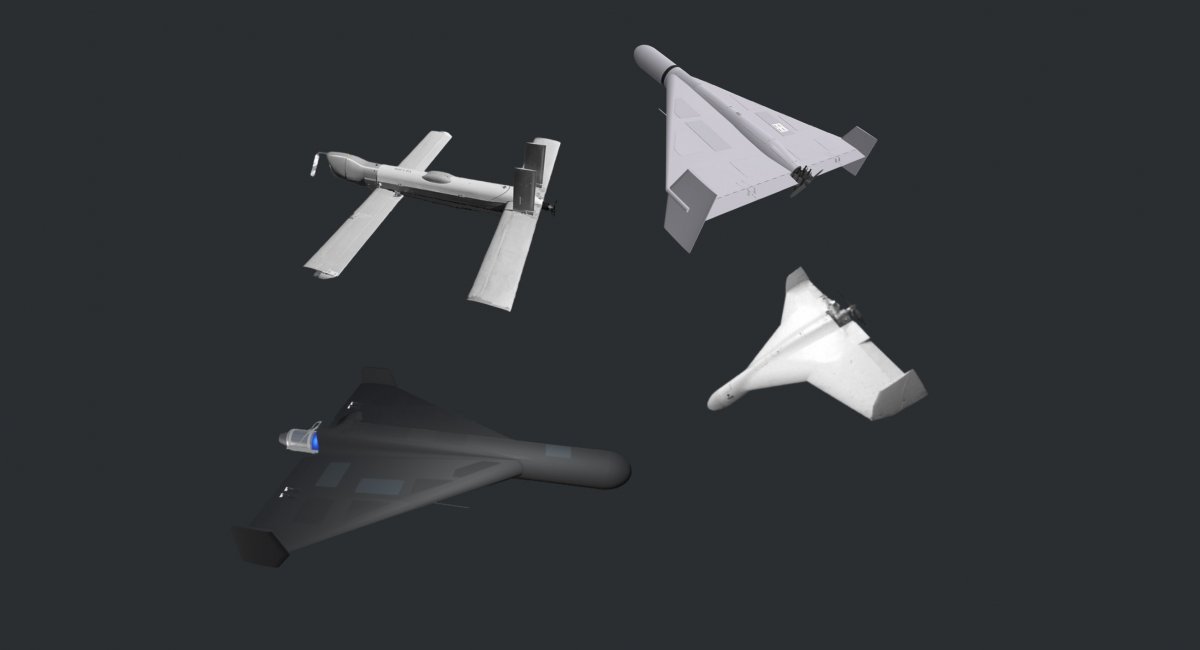
Ukraine already has a painful lesson: technologies first trialled by our developers were later scaled up faster and far more massively by the russians. That includes fibre-optic-linked drones, which Ukrainian teams began testing in summer 2023 — six months before similar capabilities appeared in russian field use.
Defense Express asked specialist Serhiy "Flesh" Beskrestnov to outline where the enemy is heading. He warned about trends he first publicly flagged in March 2024, trends that now look increasingly real. (A separate piece covers the Shahed vector and mesh-networking developments.)
Read more: russia's Relay Drone Plan Aims to Boost Fiber-Optic FPV Range x4
"First, note that "machine vision" — autonomous target acquisition and guidance, long touted as a breakthrough — must now be present on essentially every drone. There is no technical novelty left in this area; the enemy integrates it on both rotary and fixed-wing types.
Moreover, the adversary is advancing on several tracks simultaneously. The first track is range extension. Where previously drones were used at 20–30 km, the new aim is 50 km, and there is demand for systems operating at 70–100 km.
To achieve that, they need a different technological set: relay nodes and new radio-modem types. The drones themselves will grow larger to carry bigger batteries and thus achieve longer endurance.
The second vector is mothership systems: rotor or fixed-wing carriers that deliver and relay smaller UAS to greater distances. The mothership also functions as a relay. You can already see this in systems such as the Molniya: a 50-km mothership releases an FPV striker that then attacks a target 10–15 km away. These systems are evolving quickly.
Third, control via commercial mobile networks is emerging. Previously this was impractical because high-speed LTE coverage near the front was nearly zero, but growing 4G availability in rear areas now allows some systems to be controlled over mobile internet using 4G modems.
Next are AI-driven systems. russia has been actively testing V2U-type systems over the last year. This represents a future class of UAS that requires no remote commands or GPS: fully autonomous navigation based on terrain analysis, able to search for and engage targets independently.
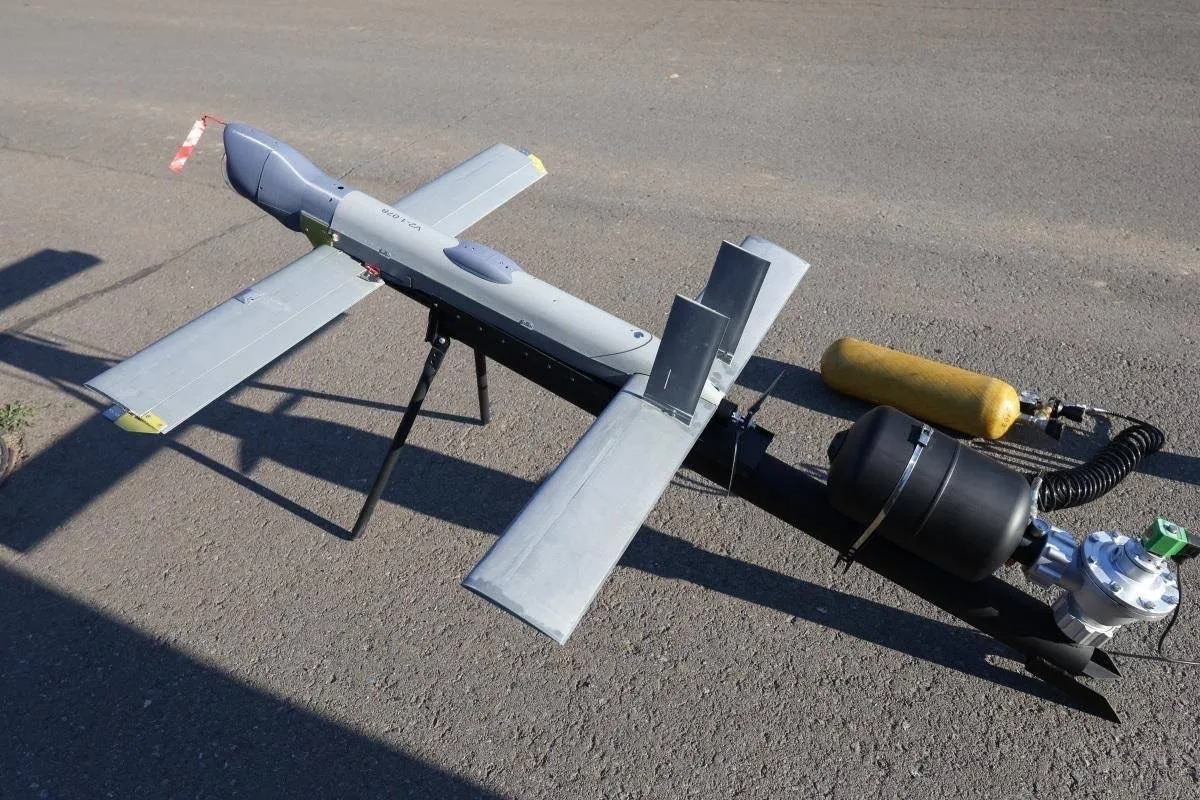
Imagine launching AI-driven UAS along a highway to find and strike military vehicles — the AI can be trained to recognize such targets. These algorithms can detect well-camouflaged objects more effectively than humans and can be programmed to attack personnel, equipment, trains, fortifications — anything.
The enemy has been training its combat AI for about a year. From analysis of downed V2U vehicles we have seen code updates literally every week.
There are also experiments with swarm employment. Today the enemy already launches seven or eight V2U units simultaneously in a staggered "stack"; each has a colored marking on the wing. If one disappears, the others execute counter-air-defense maneuvers because the algorithm recognizes a swarm member has been shot down.
Currently V2U drones lack radio data-exchange between vehicles, but even without it they monitor one another, assess threats, disperse and reform the swarm.
Importantly, nothing prevents the enemy from transferring this combat AI to other platforms, including long-range systems. For example, a Shahed equipped with onboard visual navigation and guidance independent of satellites would gain a potent capability.
Probably the russians are already experimenting with these drones to analyze enemy air-defense deployments. They fit cheap cameras — just enough to detect missile launches or tracer fire from mobile firing groups. Today that imagery is analyzed manually and used to re-programme flight routes for other Shaheds. But it could become autonomous."
Read more: russia Introduces Fiber-Optic Naval Drone, but Its Capabilities Remain Questionable