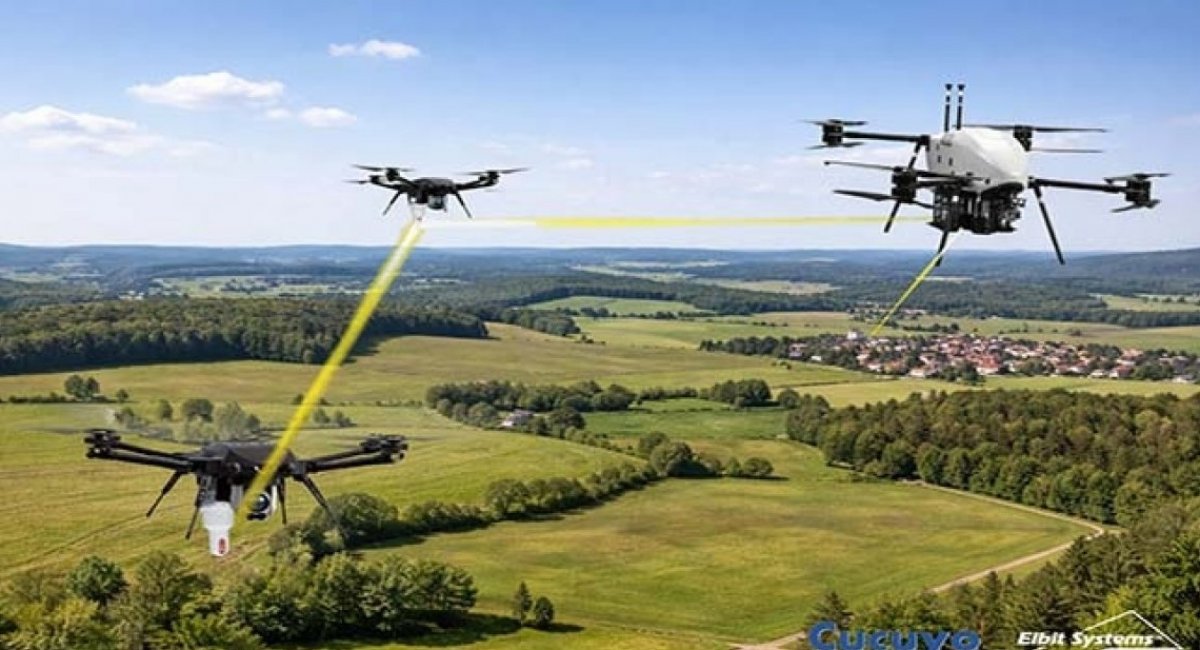
The German division of Israeli company Elbit Systems has signed an agreement with startup Cucuyo, securing an exclusive license to adapt laser communication technology for military drones.
Currently, startup Cucuyo's only product is the P-100 laser communication terminal. Elbit Systems will likely adapt it for their own drones. The main feature of this communication type is the absence of fiber optic and radio communication drawbacks.
Read more: Apache Tests 160km Loitering Munition Launch As U.S. Debates Whether Attack Helicopters Still Have Future
The company announces that their P-100 terminal can operate at ranges up to 40 km, while providing a bidirectional data transmission channel at speeds up to 1 Gbps. The P-100 terminal weighs only 1.5 kg, which is significantly less than fiber optic spools with similar range.

However, such a solution has its own quite significant drawbacks. Perhaps the main one is the requirement for direct line of sight between both P-100 terminals located on the drone and with the operator. Therefore, for normal P-100 operation, it's necessary to elevate it to a certain height.
It’s also important that this communication type will likely work only in good weather. Fog, dust, clouds, etc., can cause laser beam scattering, resulting in loss of communication.

Considering all the drawbacks, P-100 can be used, for example, on reconnaissance drones or large bomber drones. These still mostly use radio communication, which can be both detected and jammed.
However, using it on kamikaze drones will be extremely difficult due to the line-of-sight requirement. It's unlikely to be economically viable, since although the cost hasn’t been announced yet, it will likely be significantly higher than fiber optic.
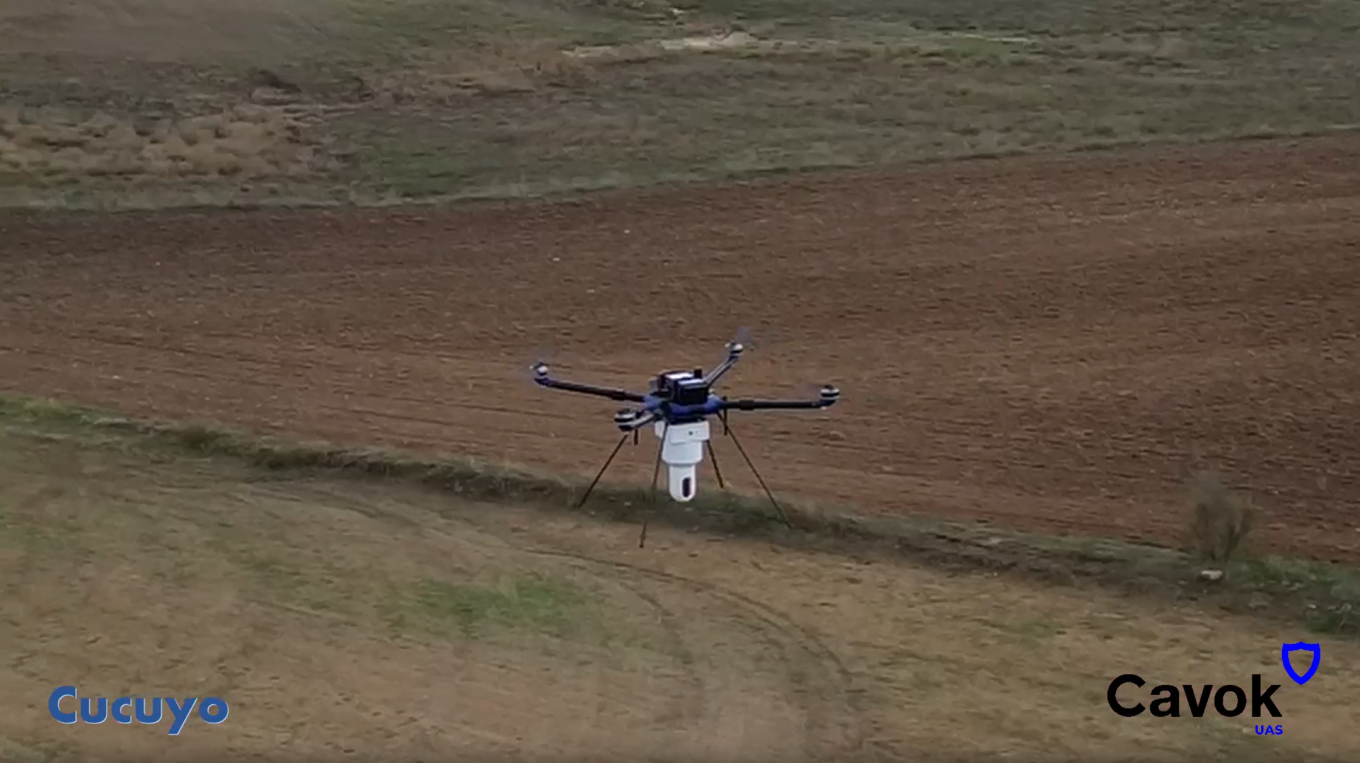
Besides aerial drones, P-100 can quite well be used for stationary data transmission, creating, for example, bridges to replace satellite communication or wired internet, which is already being used in the civilian sphere, by the way.
Read more: russian Ka-52 Attack Helicopter Shot Down by Ukrainian FPV Drone for the First Time