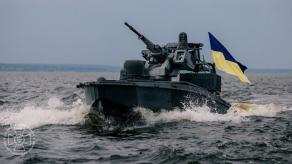



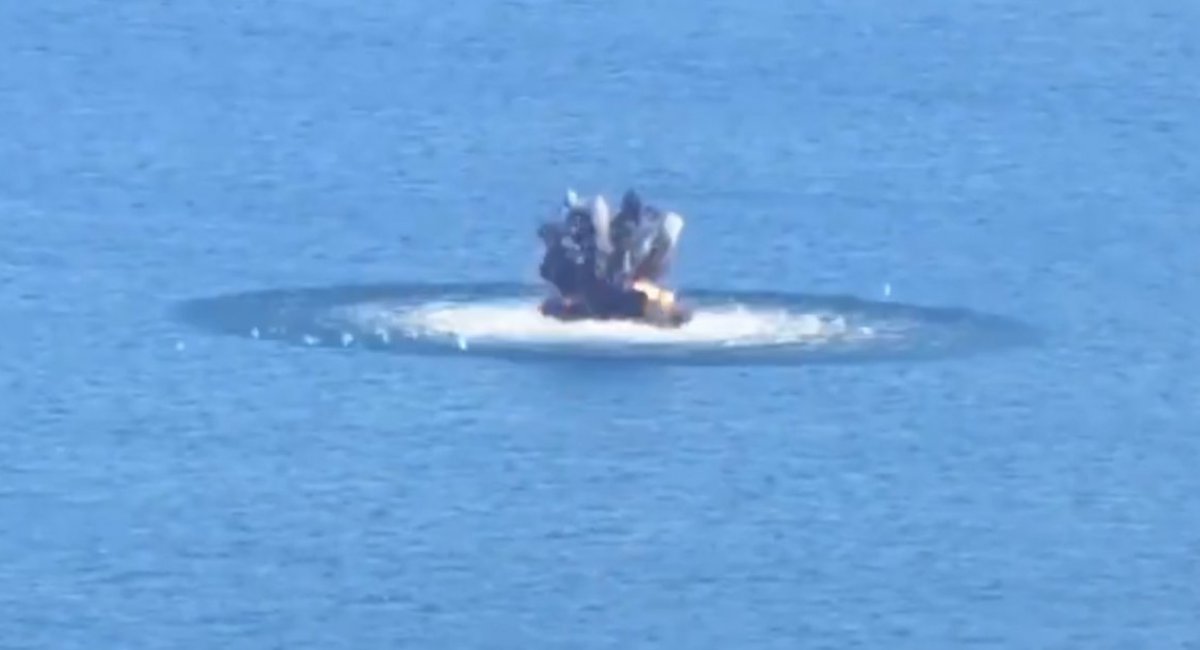
The Ukrainian Navy has for the first time released footage showing the destruction of a russian naval drone. According to the report, the unmanned vessel entered Ukraine's territorial waters and was operating near civilian shipping routes.
Its destruction helped prevent possible enemy provocations and minimize risks to civilian vessels. It remains unclear what weapon was used to neutralize the drone.
Read more: Ukrainian Drones Hit russian Azot Chemical Plant 1,700 km From Border
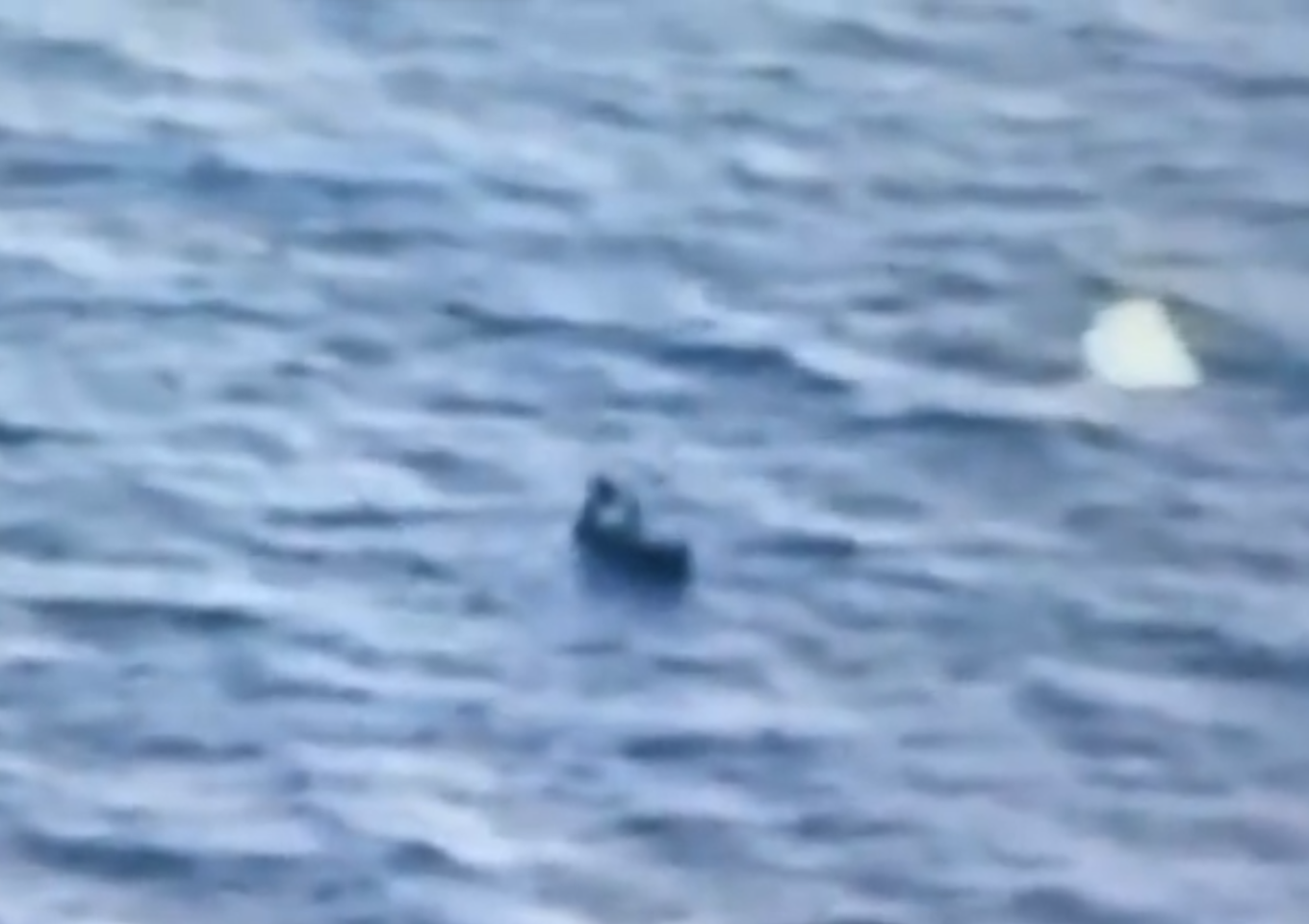
Based on the released video, the unmanned boat appeared stationary possibly waiting for a target or disabled. Another plausible explanation is that it was jammed by electronic warfare systems, as some russian naval drones rely on radio control rather than satellite communication, making them easier to disrupt.
The footage shared by the Navy is of low resolution, which makes it difficult to precisely identify the drone's type. However, certain details stand out it has a distinctive aft superstructure, likely housing a camera, antenna, and possibly a small radar (though that's less likely). Excluding the superstructure, the deck appears flat, and the drone itself seems relatively small, though the exact size is hard to determine from the video.
Judging by the powerful explosion, the drone carried an explosive payload. However, its also possible that the large blast was caused by the Navy using a high-impact weapon, while the drone itself might have been serving as a carrier for smaller FPV drones stored in compartments within its hull which could explain why it remained motionless.
Based on these features, none of the currently known russian naval drones match this design, suggesting this may be a new, previously unseen model or a heavily modified version of an older one.

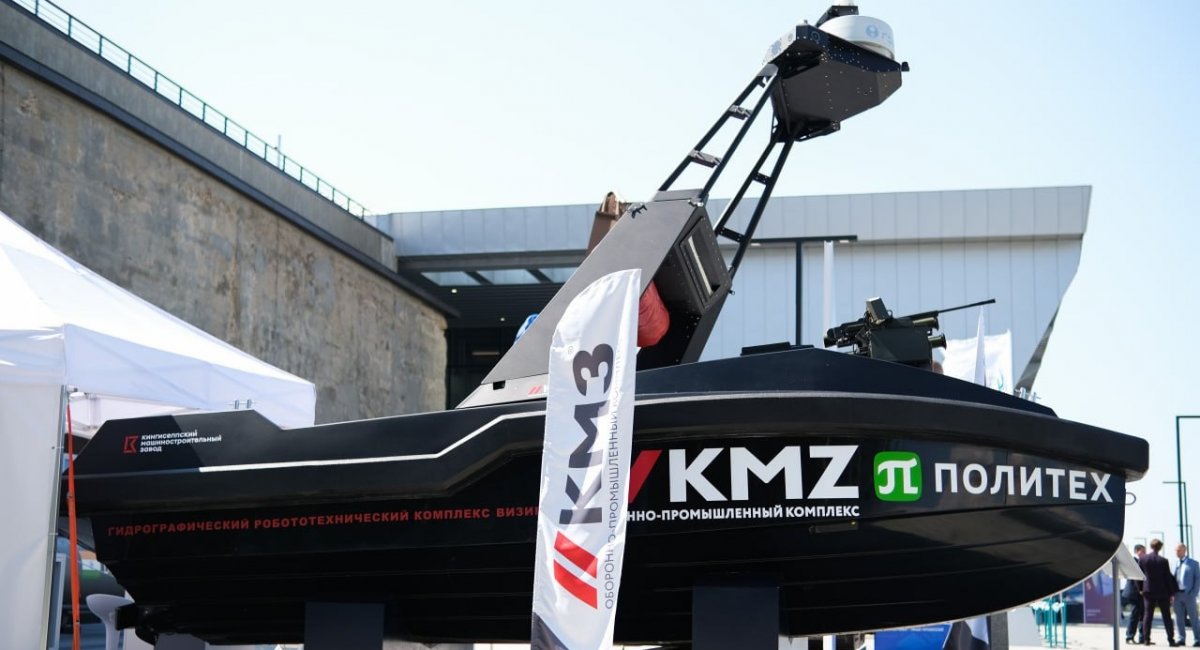
Among all currently known russian naval drones, only the GRK-700 Vizir, first unveiled in 2023, features a somewhat similar superstructure. However, its module is positioned at the front of the hull and has a distinctly different shape.
Overall, this first recorded instance of a russian naval drone being destroyed combined with the recent attack on the Ukrainian Navy ship Simferopol by another naval drone clearly shows that russia continues to develop and refine its unmanned sea systems. This is happening despite its ongoing struggle to find a viable alternative to Starlink, which remains a major bottleneck for russian drone operations.
For Ukraine, this serves as a warning and a call to action: to strengthen the protection of all port infrastructure through electronic warfare systems and boom barriers, and to expand capabilities for detecting and neutralizing such drones long before they approach the coast.
Read more: Auterion Shows Test Footage of the Artemis ALM-20 – the AI-Guided Drone Used in Attacks on russia