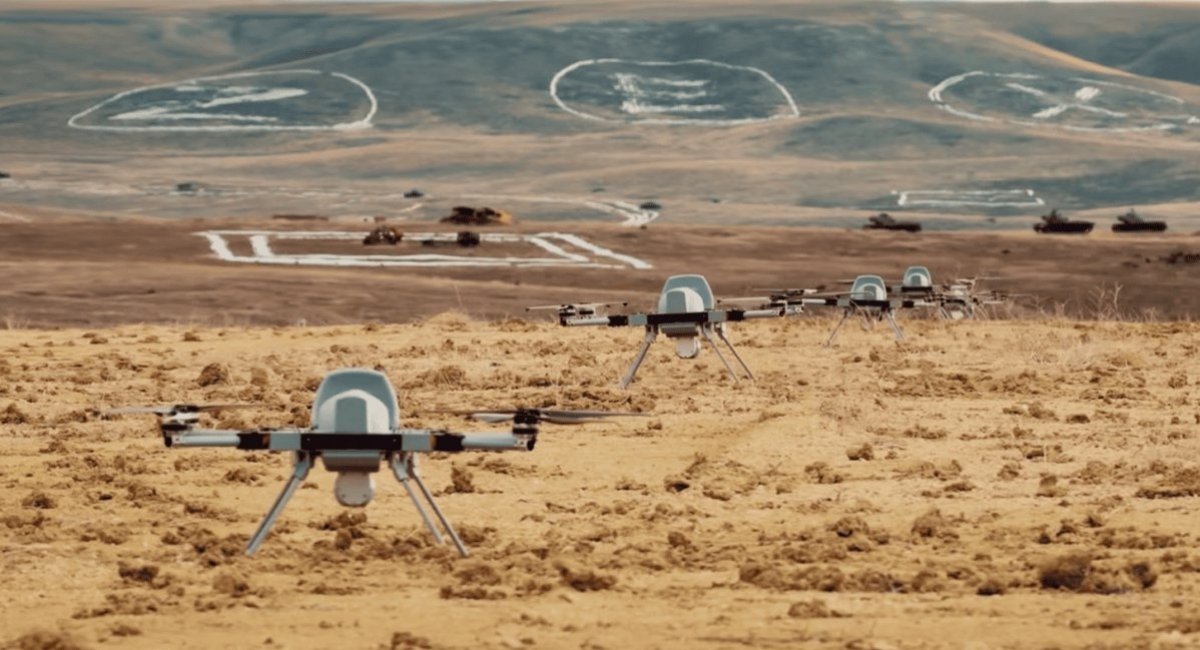
Türkiye's leading defense company STM has announced that it conducted the first-ever tests in the country's history of a swarm of unmanned aerial vehicles equipped with warheads. The trials took place in the presence of senior Turkish military officials and the President of Türkiye's Defence Industry Agency (SSB), Haluk Görgün, at the General Nahit Şenoğul Test and Training Range in the Polatlı district of Ankara.
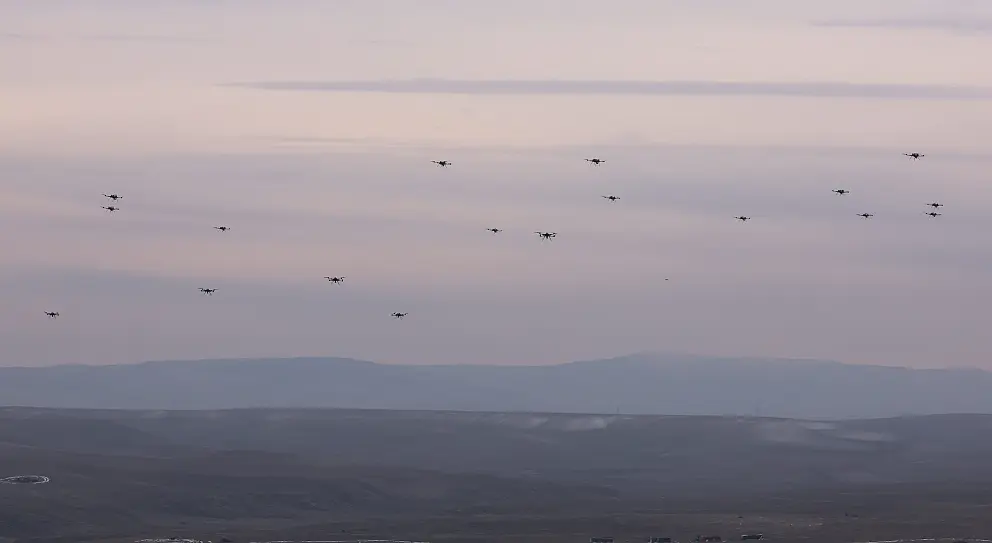
In its official press release, STM stated that the company had achieved a historic milestone in the development of drone swarm technology. According to STM, the swarm intelligence with a distributed architecture used to control the drones during the demonstration trials was developed entirely on the basis of Turkish-made algorithms.
Read more: Türkiye Proposes Bayraktar TB2/TB3 to Country With Only 3 Global Hawks, Rented Sea Guardians
As for the details of the tests, a total of 20 Kargu drones, each equipped with a warhead, were integrated into a single swarm and operated by just one operator.
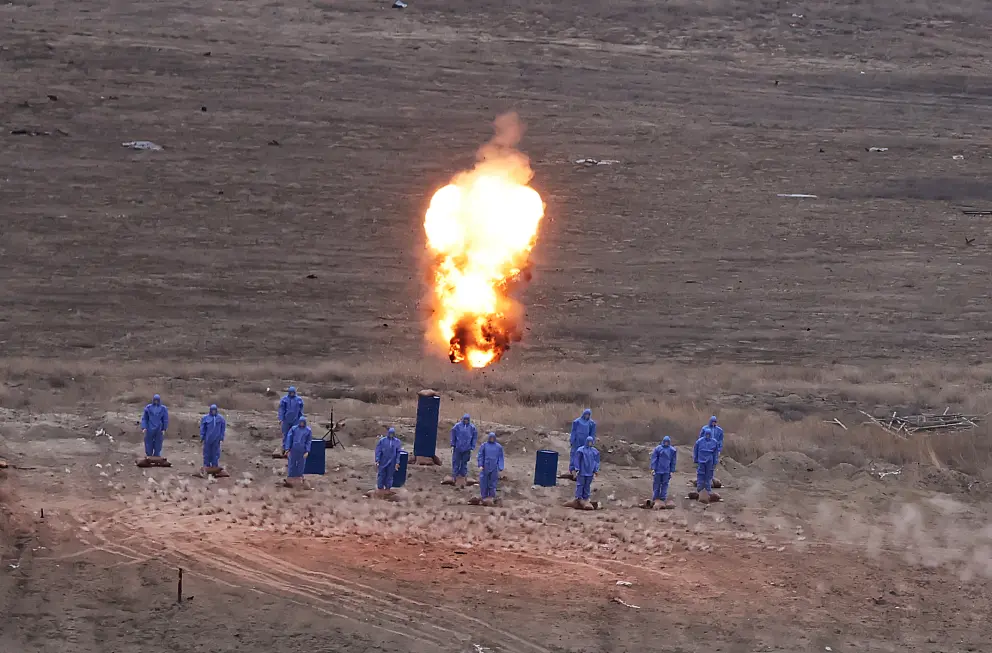
After launch, the drones autonomously reached the designated mission area, split into three subgroups, and, following a command from the operator, simultaneously attacked three separate targets.
From Defense Express’s perspective, publicly released photos and video footage indicate that the targets represented notional infantry groups positioned relatively close to one another. This setup is, of course, less visually impressive than scenarios involving targets at greater distances or of different types, such as a combination of infantry and armored vehicles.
Nevertheless, it is important to emphasize that these were the first trials of this kind, with the primary objective being the demonstration of the technology itself. It is also worth noting that, for engaging infantry-type targets, the drones were fitted with highly effective warheads featuring an airburst function.
Regarding the swarm technology as a whole, STM states that its architecture enables each individual drone to make autonomous decisions. As a result, the mission can still be completed even if one drone, multiple drones, or an entire subgroup is unable to perform its assigned task for any reason.
Moreover, according to STM, drones within the swarm can be equipped with different types of warheads or munitions and are expected to be capable of distinguishing between targets, selecting the most suitable one for engagement based on their specific payload—whether that target is infantry or armored equipment.
In addition, mission parameters for the drone swarm can be changed in real time during an operation, while subgroups can be further divided into smaller elements to carry out new tasks as required.
Previously, Defense Express reported that the United States had tested a system designed to deploy a swarm of surface-based air-defense drones intended to protect naval vessels.
Read more: Türkiye's Unmanned Fighters Just Made History They're Ready for Air Defense Missions