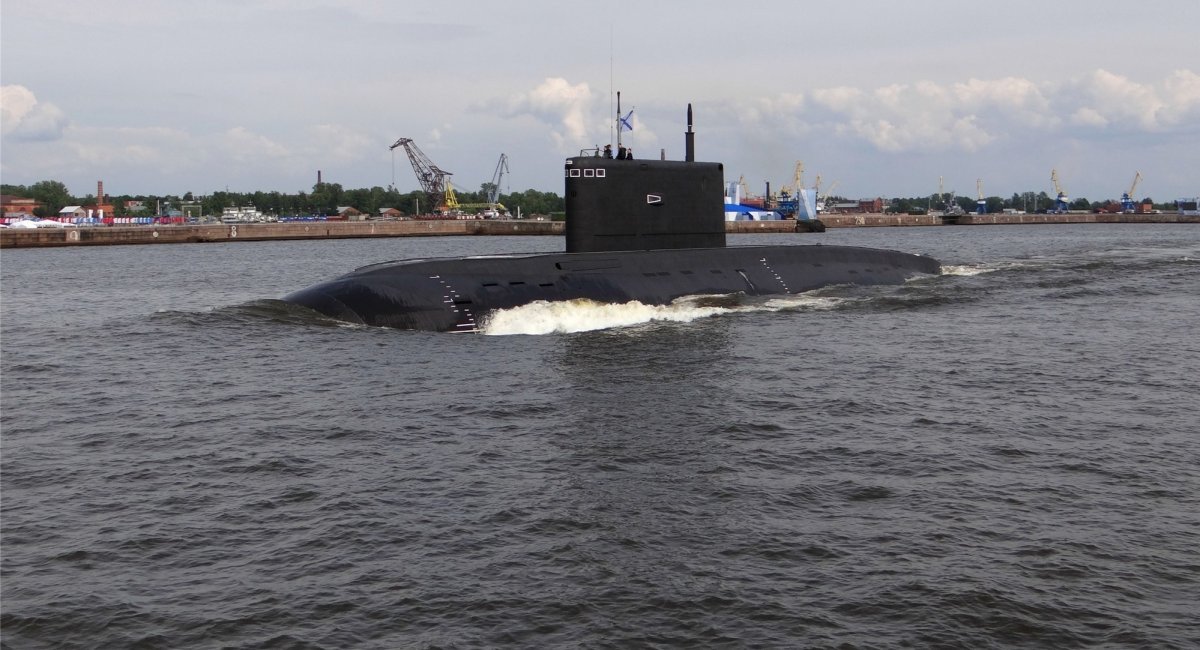
This is indeed the first such episode in history. Moreover, it was immediately effective, as reports indicate that the submarine sustained critical damage and was effectively put out of action.
Read more: Why Damaged russian Kilo-Class Submarine Is Effectively a Total Loss
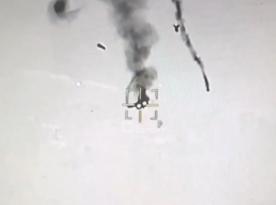
Video footage clearly shows an explosion near the stern section of the submerged submarine. As a result, the propellers, shaft, steering mechanisms, and several other critical systems and components were likely damaged.
Ultimately, Operation Spiderweb once again demonstrated that the SSU knows exactly where to strike. The red crosses painted on Tu-95MS and Tu-22M3 bombers were not placed there without reason.
What remains off-camera is how the Ukrainian underwater drone managed not only to enter Novorossiysk Bay, but also to pass directly through boom barriers and other defensive obstacles at the entrance to the naval base itself. Such facilities are typically protected against underwater threats by nets and other countermeasures. At the same time, russia was well aware of the existence of Ukrainian underwater drones.

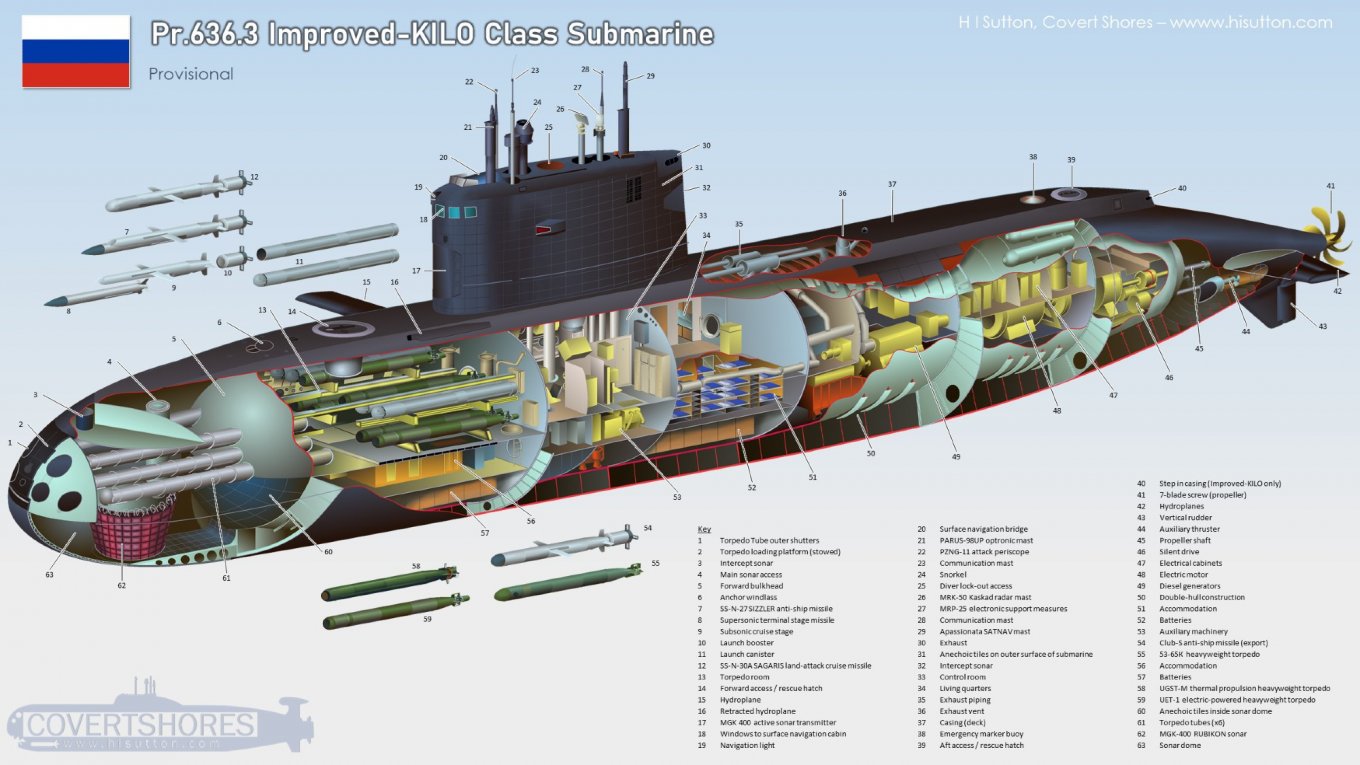
Nevertheless, the successful strike against a Project 636.3 Varshavyanka submarine in Novorossiysk highlights another critical point. As of now, 50 percent of these submarines are no longer combat-capable compared to the number russia had at the time of the full-scale invasion. On 24 February 2022, four such submarines were deployed in the Black Sea: B-237 Rostov Na Donu, B-265 Krasnodar, B-268 Veliky Novgorod, and B-271 Kolpino.
It is also worth recalling that B-237 Rostov Na Donu was hit twice. The first strike occurred on the night of 13 September 2023 and became the first-ever case of a submarine being successfully struck by a cruise missile. The second strike took place on the night of 2 August 2024, after which official reports stated that the submarine "sank at its mooring."
Which of the three Project 636.3 Varshavyanka submarines that russia had in the Black Sea until recently was hit by the Sub Sea Baby underwater drone remains unknown. However, overall this means that the enemy now has no more than two combat-capable submarines of this class remaining. It also represents the loss of another Kalibr cruise missile carrier.
It should also be noted that the Project 877 Paltus submarine B-871 Alrosa is formally listed as operational. However, according to available information, it is not a Kalibr cruise missile carrier, and its overall usability in this war remains questionable.
Read more: Irreversible Fate: russia Cannot Repair Its Submarines in the Black Sea - Loss Is Just a Matter of Time