


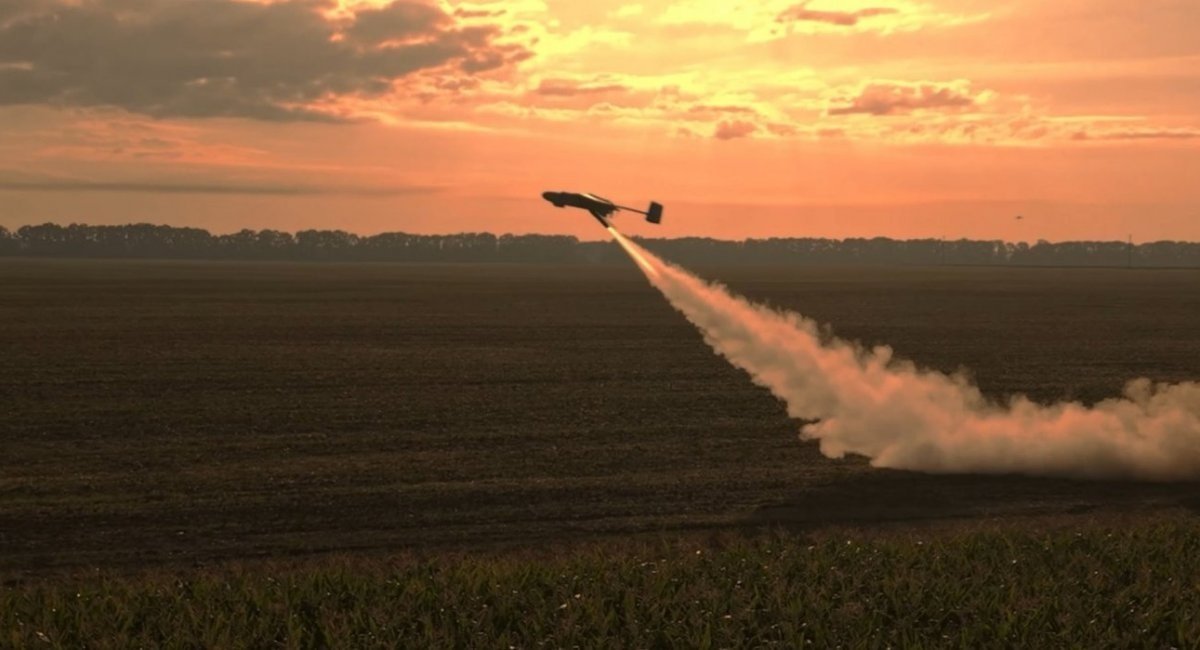
The headline figure is based on a report by the authoritative British analytical institute RUSI, which estimates that more than 100 deep-strike drones in a single salvo are needed to penetrate russian air defenses.
This figure should not be considered absolute. This estimate is drawn from material analyzing the structural features of air defense system production in the russian military industry. However, this figure can be used as a reference to illustrate the effectiveness of Ukrainian strikes deep into enemy territory.
Read more: Ukrainian Bohdana Howitzer Could Become the Single Artillery Platform of Ukraine's Armed Forces in the Future
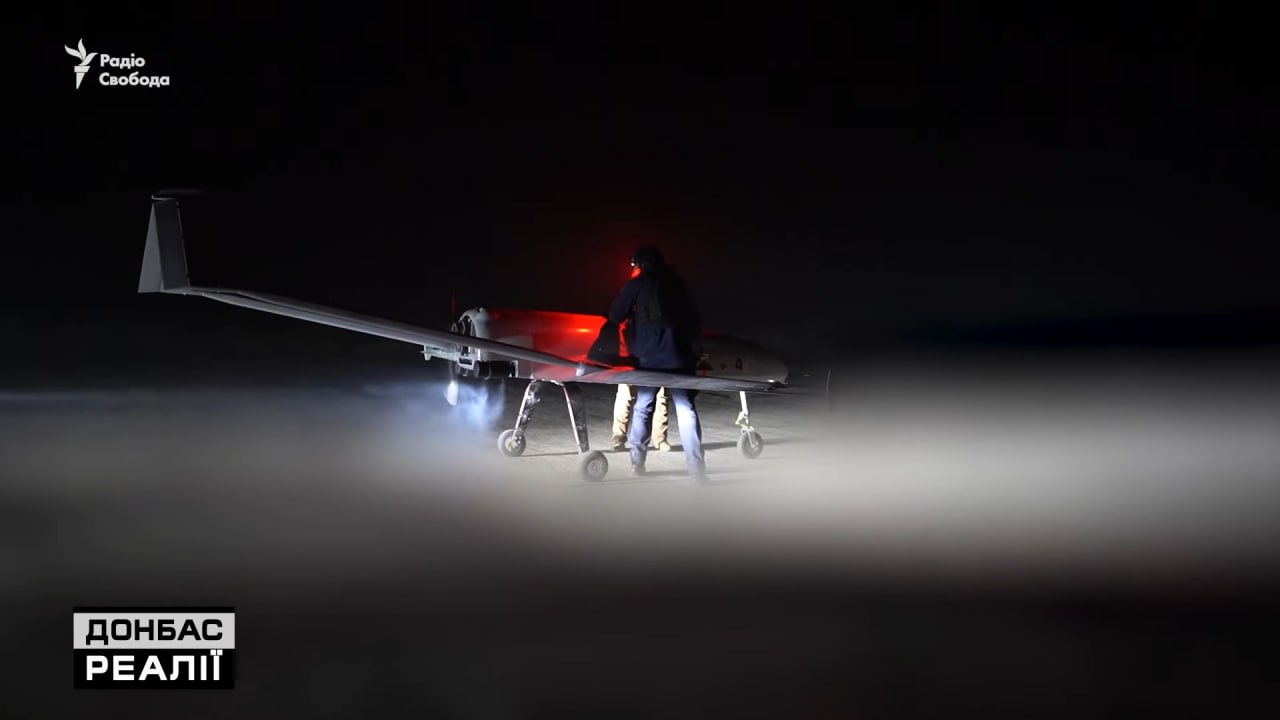
How far does a deep strike reach?
First of all, we should include a link to the original source. Next, we should highlight the key points relevant to the Ukrainian Defense Forces' deep-strike UAVs.
The calculations presented by the authors of the RUSI report are as follows. If a single salvo consists of 100 to 150 long-range drones, approximately 10% of them reach their target. At first glance, such an approach may appear inefficient, given the estimated cost of $20,000–$80,000 per Ukrainian deep-strike drone.
From Defense Express we would like to note that It is not entirely clear where the authors of the RUSI report derived the lower cost of $20,000 per long-range UAV. For instance, The cost of one FP-1 is $55,000, while an An-196 Liutyi costs roughly three times higher.
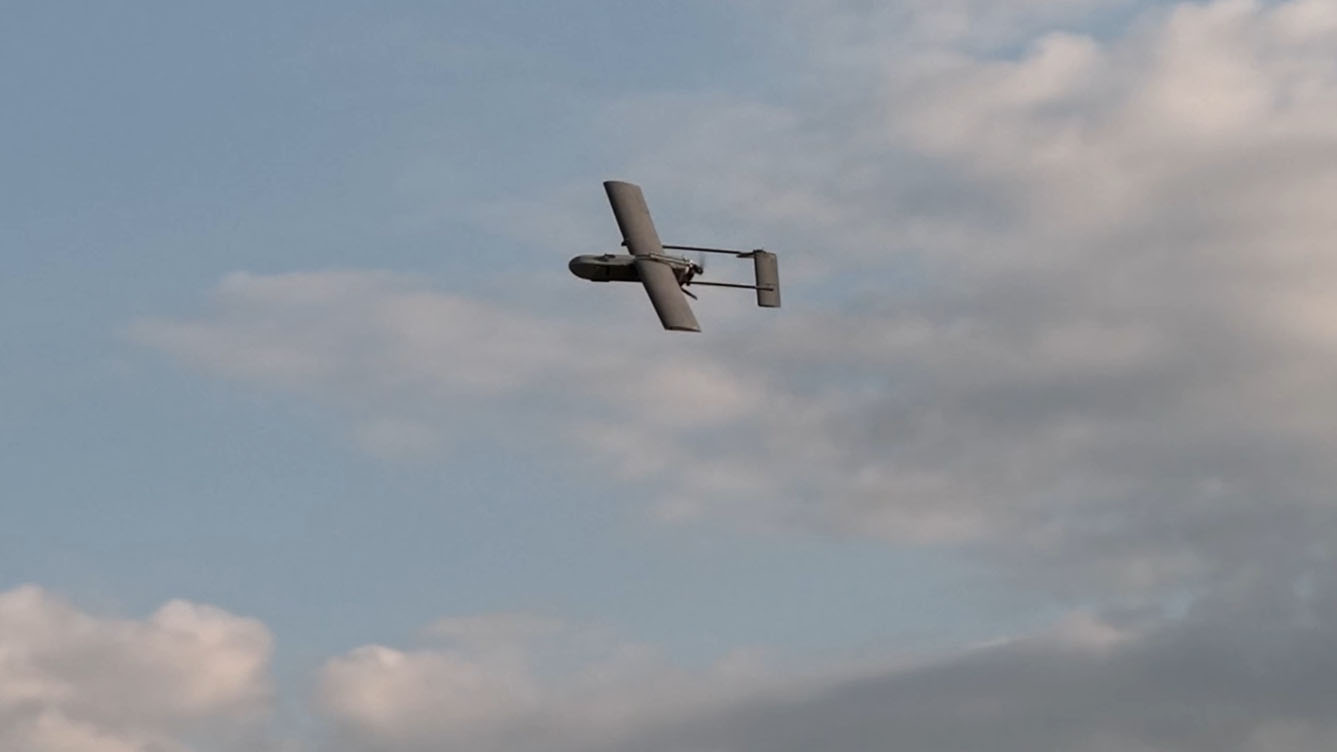
When this approach is combined—using only long-range UAVs in the first wave and a mix of drones and missiles in the second—up to 50 percent of the weapons reach their targets. Such combined attacks not only produce unique results, but are also objectively difficult to repeat immediately.
The question remains not only how many drones and other assets can be accumulated for a new strike on the aggressor's territory, but also how data on vulnerabilities in russia's air defenses protecting key targets was collected and processed.
How many strikes occurred, and how many oil refineries were hit in 2025?
It is important to consider the context of the RUSI report, which cites effectiveness rates of 10% for deep strikes alone and 50% for combined drone-and-missile attacks. The context was outlined as follows: russian air defenses remain strong, so ways must be found to weaken them, including the application of sanctions and kinetic pressure against russia's military industry producing air defense systems.
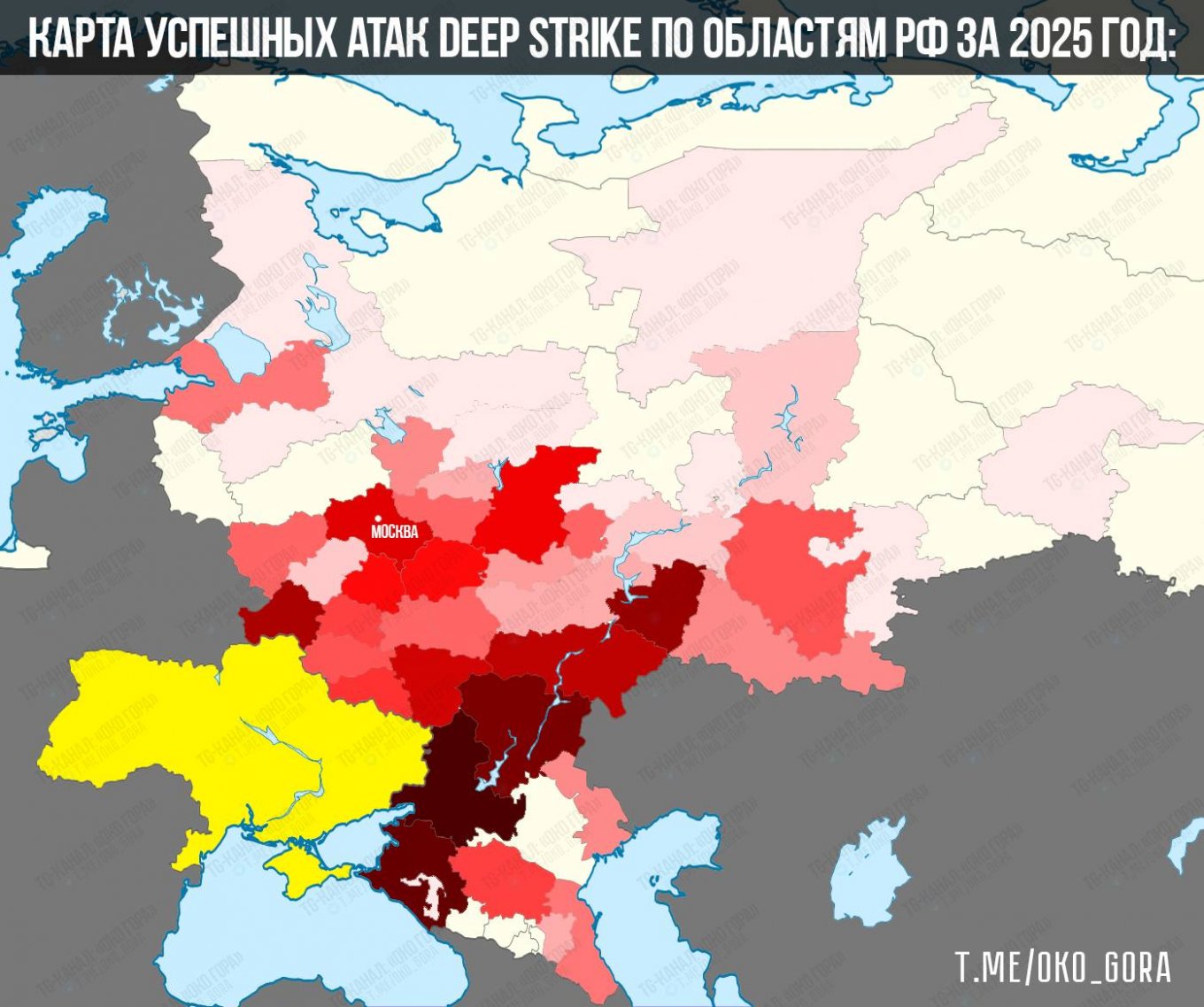
The issue should be viewed from another perspective: even a 10% success rate for deep-strike assets produces tangible damage to critical infrastructure.
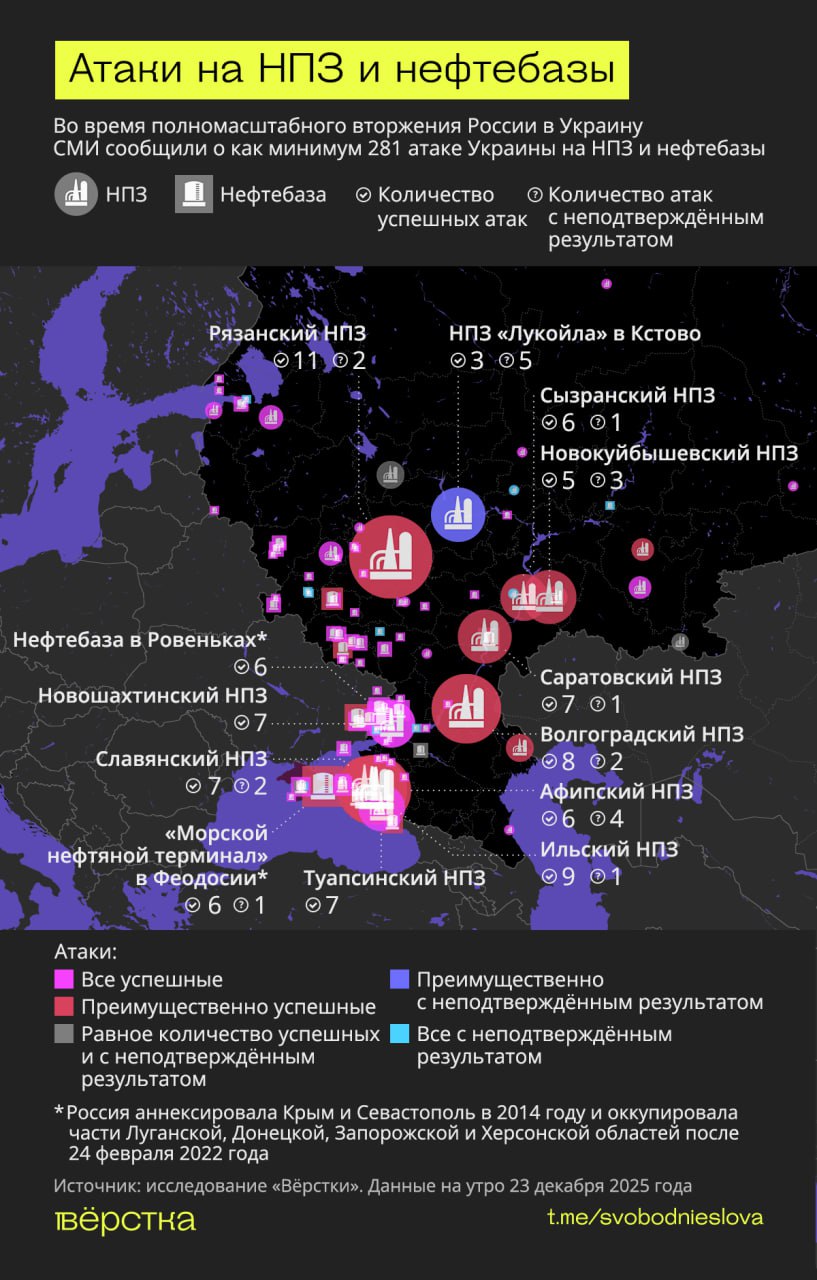
This is illustrated by Oko Gora community estimates showing more than 350 successful Ukrainian deep strikes on russian territory in 2025. Estimates from russian media indicate that in 2025 the Ukrainian Armed Forces carried out 142 strikes on oil depots in temporarily occupied Ukrainian territories and russia, representing a 50% increase.
Conclusions
This highlights that Russia faces an unusual dynamic, where anti-aircraft missiles are more expensive than kamikaze drones. No matter how many interception systems are produced, up to 10% of Ukrainian deep strikes still reach their targets.
Even if only one in ten long-range UAVs reaches its target, this has proven sufficient to inflict damage on critical infrastructure at an unprecedented rate. This leads to a clear conclusion: if Ukraine's defense industry can produce more deep‑strike assets, the number of strikes on russian territory will increase and the range of targets will expand.
Ivan Kyrychevskyi, serviceman of the 413th Raid Regiment of the Unmanned Systems Forces of Ukraine and weapons expert at Defense Express.
Read more: Ukrainian Laser-Guided Artillery Rounds Are Being Tested for the Armed Forces: Capabilities and Key Nuances of the Barvinok Program