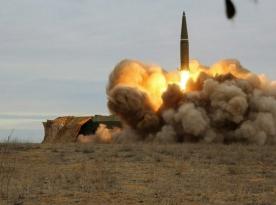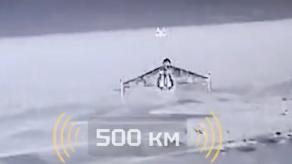
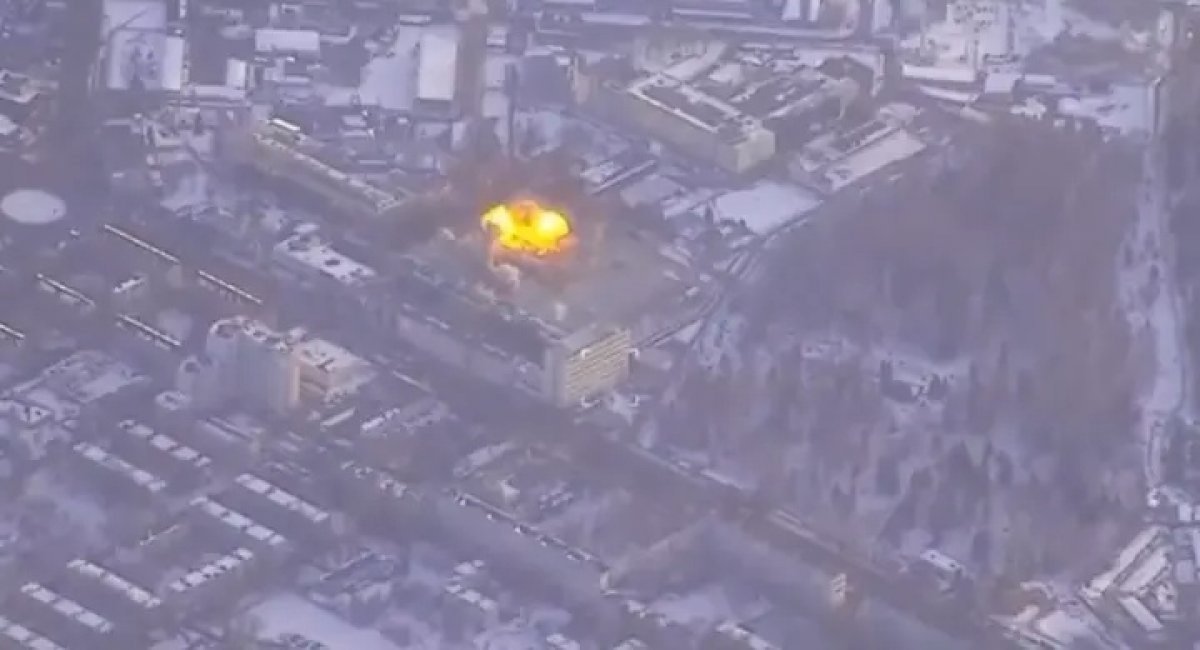
In the story of the strike on russia's Kremniy El plant in Bryansk, the country's second-largest military electronics producer, special attention should be paid to the visual aspect. The missile strike on this facility was accompanied by real‑time UAV reconnaissance carried out by operators from the 413th Raid Regiment of Ukraine's Unmanned Systems Forces.
The video, which surfaced online, quickly confirmed that Ukraine had struck Kremniy El. The strike also highlighted capabilities that may warrant further study by Ukraine's Western partners.
Read more: If Destroyed Kremniy El Plant in Bryansk Was russia's Second-Largest Microelectronics Producer, Where Is Largest One?
This appears to be the first known case in the history of full-scale warfare where a long-range strike on an aggressor's territory was supported by UAV reconnaissance.
The type of drone used is currently unknown. It can be assumed that a reconnaissance UAV with a range exceeding 100 kilometers (the approximate distance from the nearest point on the Ukrainian border to the Kremniy El plant) was used.
There are two aspects worth noting here: 1) the UAV flew more than 100 kilometers deep into enemy territory, overcoming possible air defense and electronic warfare countermeasures, 2) the specialists of the 413th Raid Regiment of Ukraine's Unmanned Systems Forces demonstrated operational skill, which was one of the factors in the success of the strike on Kremniy El.
The use of UAVs for aerial reconnaissance during the strike on the Kremniy El plant in Bryansk could warrant a separate study by Ukraine's Western partners. This point becomes even clearer in light of earlier incidents.
For instance, during the strike campaign against the Ansar Allah group in Yemen in March–April 2025 alone, the United States lost at least six MQ-9 Reaper drones to Houthi air defenses, which is an unusually high loss rate for the U.S. military. This undermined the effectiveness of the U.S. military's actions in this campaign.
In May 2025, inspired by the experience of the Armed Forces of Ukraine, the United Kingdom considered using aerostats or satellites to replace its troubled Watchkeeper drones and restore its reconnaissance capabilities.
Ivan Kyrychevskyi, serviceman of the 413th Raid Regiment of the Unmanned Systems Forces of Ukraine and weapons expert at Defense Express
Read more: From Ukraine's Tochka-U Strike on Saratov Landing Ship to U.S. HIMARS Ballistic Missiles Attacks on Iran's Fleet