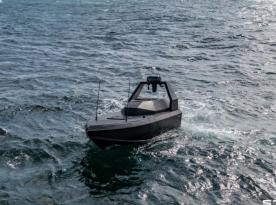



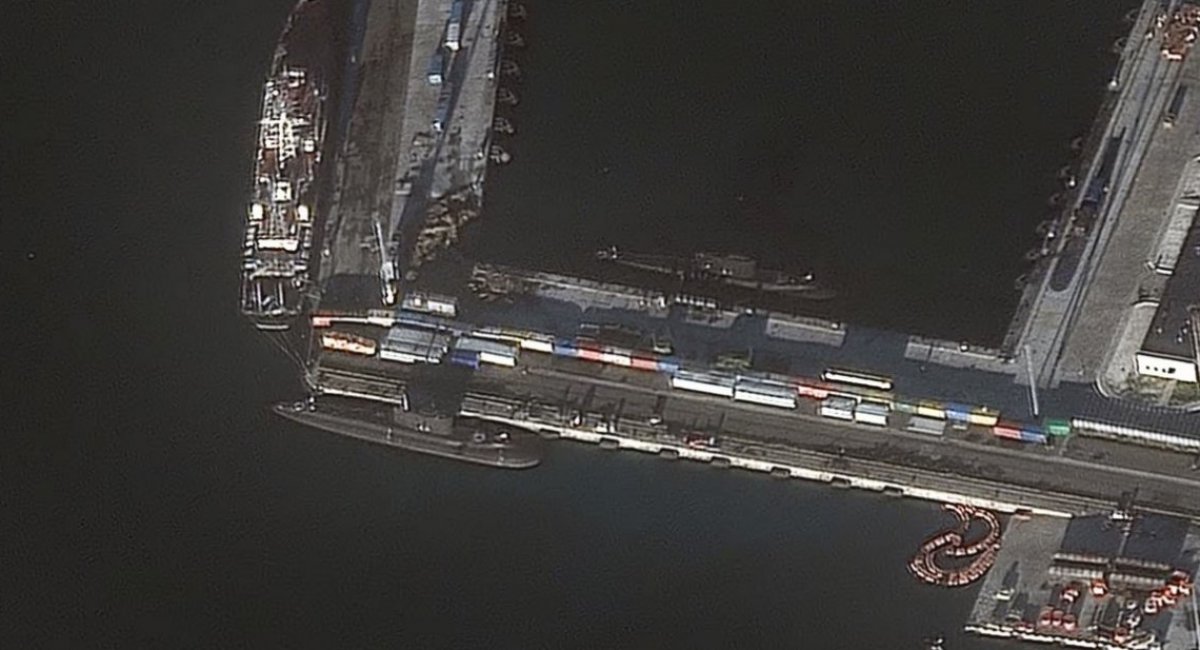
The success of the Ukrainian Sub Sea Baby underwater drone attack on December 15 on a russian Navy Project 636.3 Varshavyankasubmarine in Novorossiysk bay received another confirmation.
A high-resolution satellite image captured the submarine itself and a huge crater in the pier. The image was taken on December 16, the day after the SBU operation jointly with the Ukrainian Navy.
Read more: russia Exploits Patriot's Blind Spot U.S. Develops 360-Degree Launcher, New Missiles
Attention should be paid to the draft of the struck submarine, which is significantly greater than standard.
This is clearly visible in comparison with another intact submarine of the same Varshavyanka type, which in the image stands on the other side of the pier. And an excellent reference point is the aft hatch, which is marked in white.
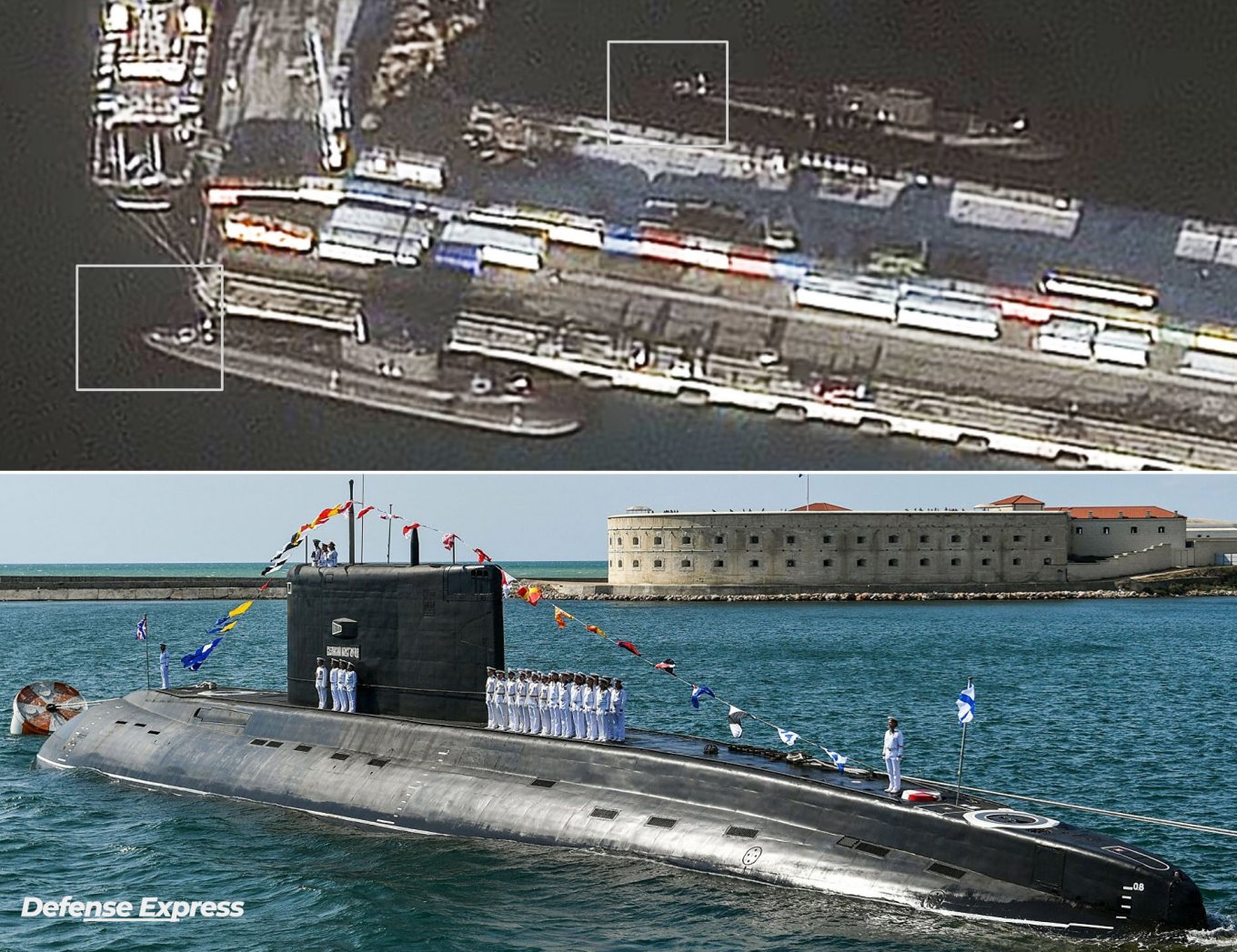
On the damaged submarine it's at water level, which means the submarine is more than a meter deeper in the water than the waterline. The only logical reason for this is flooding of internal compartments, which means damage to both the light and pressure hull of the submarine.
This information also follows available insider information about precisely this nature of damage and flooding of two compartments.
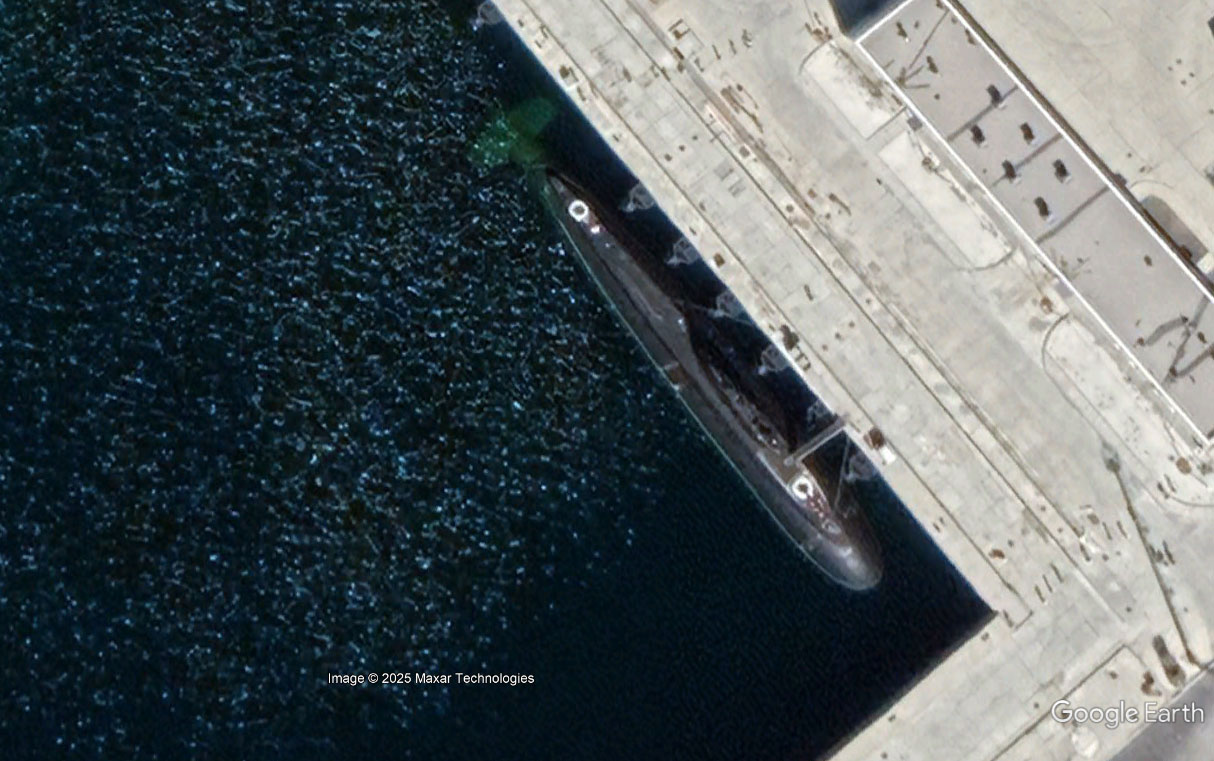
It's also quite possible to assess the degree of explosion impact. Ultimately, one way or another, the underwater drone missed slightly and the explosion hit the concrete pier. Considering the scale of the image, we're talking about a crater in the pier with a diameter of about 9 meters. This directly indicates a very powerful warhead. And it exploded directly next to the submarine.
It's necessary to consider that even when a Project 636.3 Varshavyanka submarine is intact, its tail section is underwater. An excellent illustration of this is a 2021 image of a Varshavyanka in the same Novorossiysk.
And now, considering that the damaged submarine sits significantly deeper in the water, it's possible to show where exactly it ends. And also at what distance from the submarine's stern the Sub Sea Baby exploded about 12-14 meters. And an explosion at such a distance of a warhead that leaves behind a crater in a concrete pier with a diameter of 9 meters undoubtedly led to critical consequences for the russian submarine.
Moreover, it could quite well have damaged another submarine, which at the moment of explosion stood several dozen meters further, for example the second submarine could have been left without a sonar. It’s also worth recalling that russia has a critical problem with the ability to repair submarines, because in the Black Sea they can only be repaired in still-occupied Sevastopol. And complex repair work was always conducted only in Kronstadt on the Baltic Sea.
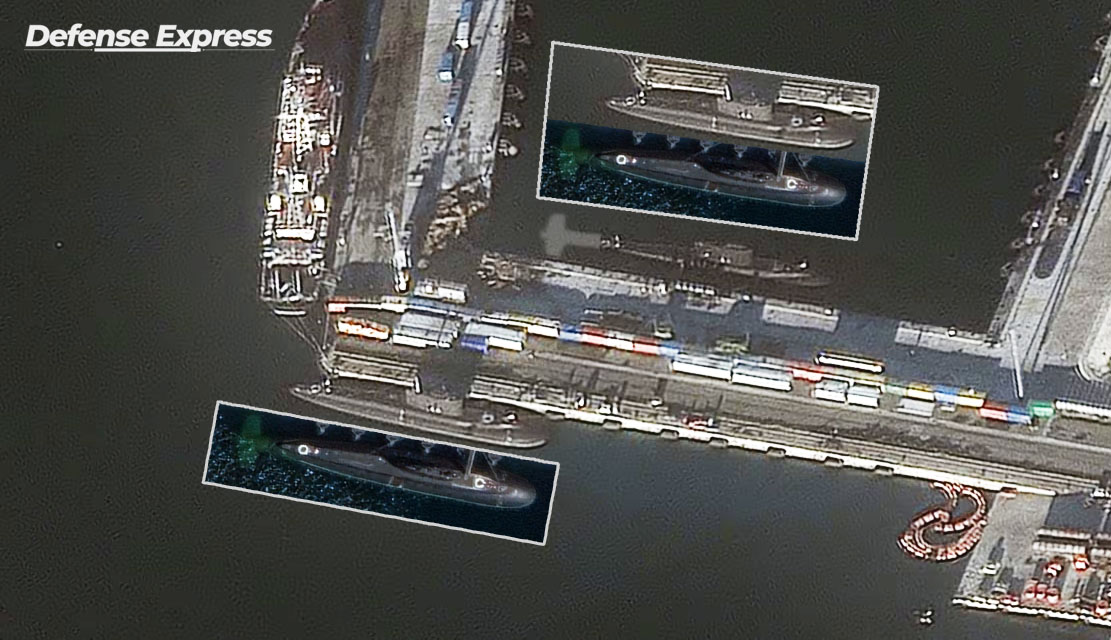
Thus, in the current situation, partial flooding of the submarine's internal compartments, explosion damage to steering mechanisms, shaft, propeller, hydroelectric motors and other equipment means that this submarine, most likely, is easier for the russians to scrap, because currently they definitely have no possibility to repair it.
Although starting repairs, conducting them for decades, and then sending for needles this is already a russian tradition. For example, after 24 years of repair and modernization of nuclear K-132 Irkutsk for Tsirkon and Kalibr, its simply being scrapped.
Read more: Ukrainian F-16s, Unmanned Surface Vehicles, SAM Systems to Get More AIM-9 Missiles from German Stocks in 2026