



Ukrainian forces carried out a series of coordinated long-range strikes against key military and industrial facilities in russia on the night of November 29, as part of an ongoing campaign to degrade the Kremlin's war-fighting and economic capabilities. The attacks targeted sites directly involved in sustaining russia's military aviation and fuel logistics, two pillars of Moscow's ability to wage its war against Ukraine.
One of the primary targets was the Beriev Taganrog Aviation Science and Technology Complex in Taganrog, Rostov region. This facility plays a central role in the repair, overhaul and modernization of some of russia's most valuable aircraft, including the Tu-95 strategic bomber and A-50 airborne early warning and control platform.
Read more: russia Carries Out Another Terrorist Combined Attack on Ukraine Launching 36 Missiles, Almost 600 UAVs at Night at Saturday
According to preliminary information, a fire broke out inside a workshop responsible for the Tu-95 maintenance. Ukrainian officials noted that damage assessments are ongoing, but any disruption to this facility carries significant operational implications for the russian Aerospace Forces.
Ukraine has repeatedly emphasized that russia's strategic bomber fleet is a critical component of long-range strike operations, particularly the regular cruise-missile attacks on Ukrainian cities and infrastructure. By hitting a plant that supports the Tu-95 aircraft, Kyiv aims to increase maintenance burdens, slow repairs, and reduce the availability of bombers used in these attacks. In recent months, Ukraine has increasingly targeted logistics, production sites and rear infrastructure supporting russia's air power.
The latest wave of strikes also hit the Afipsky oil refinery in Krasnodar Krai, an facility that has been targeted multiple times throughout the war due to its role in supplying refined fuels to the russian military. Ukrainian forces reported explosions followed by a fire at the site, indicating another successful penetration of russia's air defense belt. Damage assessments are still being clarified, but repeated strikes on the Afipsky site suggest a sustained effort to disrupt fuel production and distribution for russian forces deployed in the south of Ukraine.
In addition, Ukraine confirmed that the RV-5000 vertical storage tank was destroyed at the Tuapse oil terminal, also located in Krasnodar Krai. The damage resulted from Ukrainian strikes conducted on November 25, 2025, against the port's marine oil infrastructure. Vertical tanks of this type typically hold thousands of cubic meters of crude or refined product, meaning their destruction can significantly disrupt port fueling operations and export flows.
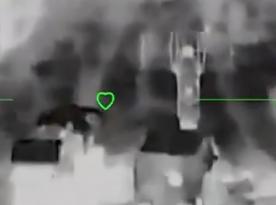
As Defense Express previously reported, operators from the Requiem Group of the Balista unit within Ukraine's Special Operations Forces have conducted a successful strike on russian territory, destroying two KOP-2 electronic warfare systems, according to a video released on November 28. The operation marks another precise and highly coordinated Ukrainian action aimed at degrading russia's battlefield awareness and drone countermeasures.
Read more: Ukrainian Special Operations Forces Destroy Two russian KOP-2 EW Systems in Cross-Border Strike (Video)