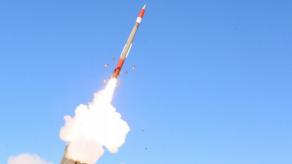
Europe has begun withholding air defense missiles that are critically important for Ukraine, largely due to fears of potential russian drone attacks. This trend is unfolding against the backdrop of persistent reports of sabotage and diversionary acts across Europe targeting critical infrastructure and defense-industrial facilities. Many of these incidents are believed to be linked to the Kremlin.
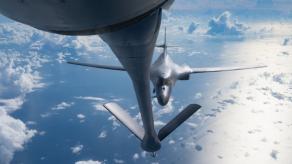
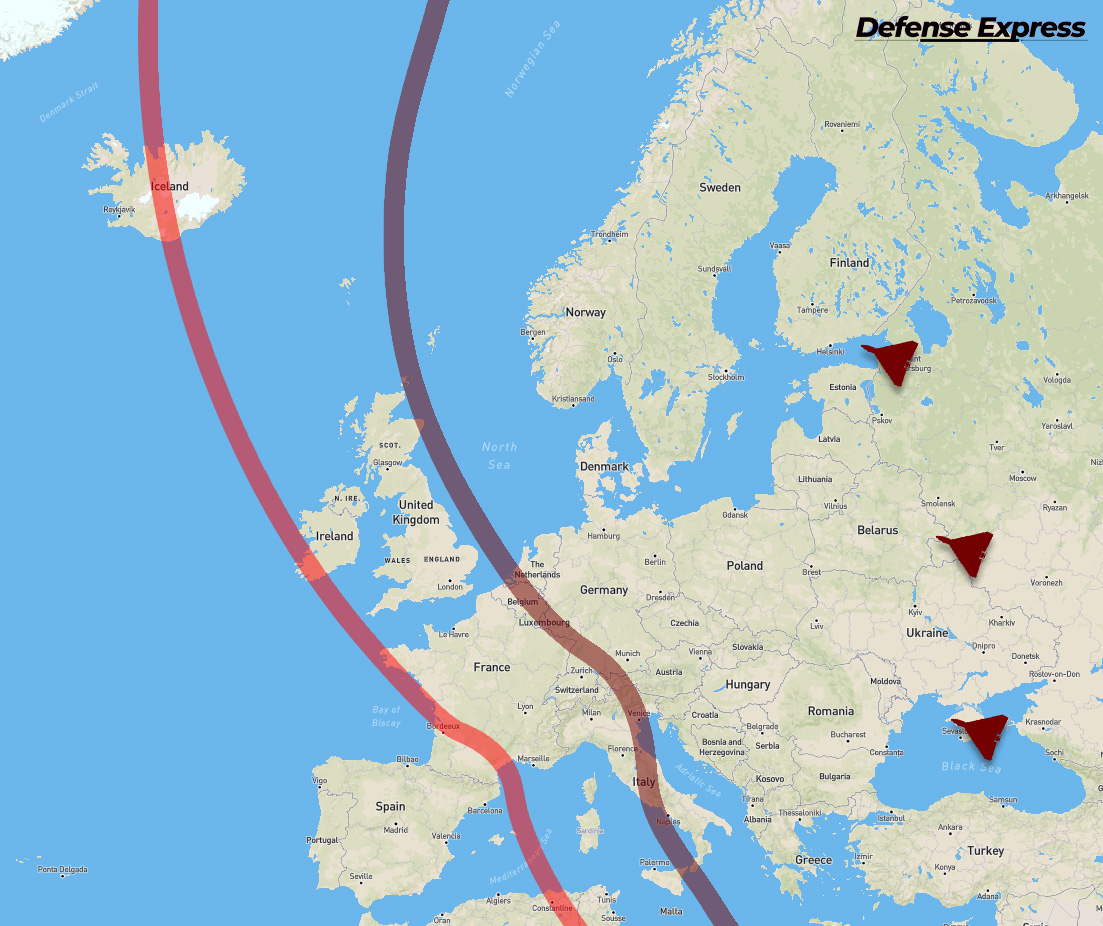
These developments inevitably recall the Soviet sabotage doctrine for Europe formulated in the 1960s, long before the Kremlin possessed strategic aviation armed with so-called "conventional" cruise missiles. Platforms such as the Tu-95MS, which today form the backbone of russia's long-range aviation within the russian Aerospace Forces, simply did not exist in their current role at that time.
Read more: Why russia Launches Five Tu-95MS Bombers from the Ukrainka Air Base to Simulate Kh-101 Strikes on Japan
Why a "Hybrid Instrument" Was Needed
This topic has been addressed previously in one of our publications, but its sharply increased relevance makes a return to it necessary. In the 1960s, as Kremlin planners prepared for a potential large-scale war against NATO in Europe, they faced a specific challenge. They needed a conventional means of striking enemy infrastructure without immediately triggering the massive use of nuclear weapons.
At the same time, Moscow sought an instrument capable of targeting critical infrastructure not only during open hostilities, but also under conditions that could formally be described as "peacetime." At first glance, this approach may not seem fundamentally new. However, the concept had two defining features: the choice of executors and the sequencing of target engagement.
It is important to note that in the 1960s the primary missile-carrying version of the Tu-95 was the Tu-95K, armed with the Kh-20 missile. Each bomber could carry only a single missile, which had a launch weight of 11.8 tons. The Kh-20 was designed exclusively for a nuclear warhead and had a range of no more than 600 kilometers.

Executors and Priorities
As for the first component, Soviet doctrine of the 1960s explicitly envisaged the use of saboteurs operating under diplomatic cover to conduct diversionary acts in Europe during nominally "peacetime" conditions. From the outset, this approach removed almost all constraints, including moral ones.
Such limitations were also absent in the preparation of operatives for sabotage operations in Western Europe. The USSR trained not only its own citizens, but also nationals of other socialist bloc countries, including the GDR (East Germany) and Czechoslovakia, which no longer exists as a unified state.
The second component concerned the prioritization of targets. The sequence was defined as follows:
- power plants and oil pipelines;
- transport infrastructure facilities and elements of their control systems;
- municipal infrastructure facilities;
- public organizations and mass media;
- specialized military facilities of NATO member states.
The concept assumed that a direct strike on a target would be followed by the deliberate exploitation of its psychological impact, maximizing the effect of a successful attack.

Conclusions
In its war against Ukraine and its broader aggression against the civilized world, the Kremlin is drawing on a conceptual foundation developed decades ago during the Cold War. These approaches may be outdated in origin, but under current conditions they have proven to be disturbingly effective.
In this context, it is hardly productive to argue that European states fail to understand the real scale of the threat posed by russia. They clearly do. However, this understanding is directly affecting Ukraine's ability to receive critically important air defense missiles on a sustained basis.
Therefore, discussions with European partners should focus less on abstract assessments of the russian threat and more on practical, joint measures to counter sabotage and provocation. This includes addressing the growing use of UAVs and other asymmetric tools that russia is increasingly employing.
Ivan Kyrychevskyi, serviceman of the 413th Raid Regiment of the Unmanned Systems Forces of Ukraine and weapons expert at Defense Express.
Read more: Ukraine Is Developing an Analog of the U.S. AN/TPQ-36 Radar and Modernizing Zoopark-3