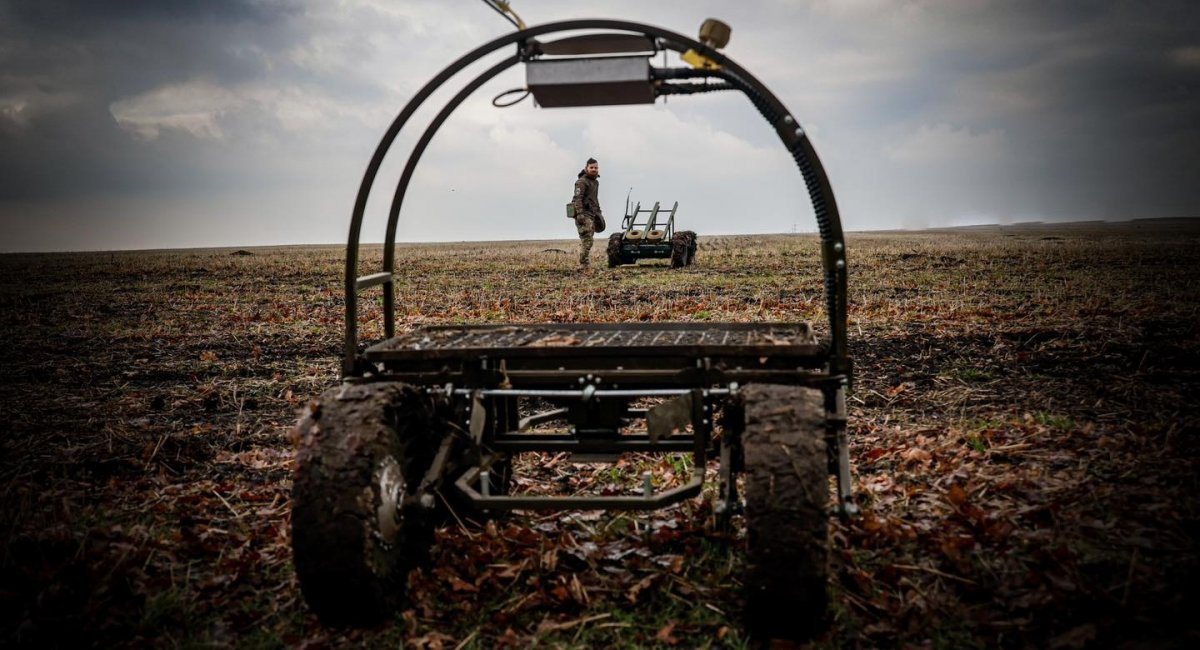
In 95% of cases, unmanned ground vehicles (UGVs) are used for logistics — a mission that is critical for any frontline unit. Without resupply, ammunition delivery, and casualty evacuation, sustained combat operations are simply impossible. But this does not mean that no work is being done on combat-capable UGVs, nor that the field lacks promise.
Defense Express spoke with "Mathematician," head of the UGV division of the 2nd Corps of the National Guard of Ukraine Khartia, about where UGV development is heading. This conversation continues a broader, in-depth discussion of unmanned ground systems.
Read more: Ukraine Approves New Anti-Drone Ammo for Frontline Troops
UGV Control
The first major direction of progress is UGV control systems. Communication between the platform and the operator must be digital, jam-resistant, redundant, and independent of terrain — meaning either satellite-based or supported by a wide mesh network.
At the same time, using fiber-optic cable for UGVs on a permanent basis makes little sense. The cable is expensive, and a ground robot would likely tear it while returning along the same route. Still, this method may be useful for certain specialized missions.
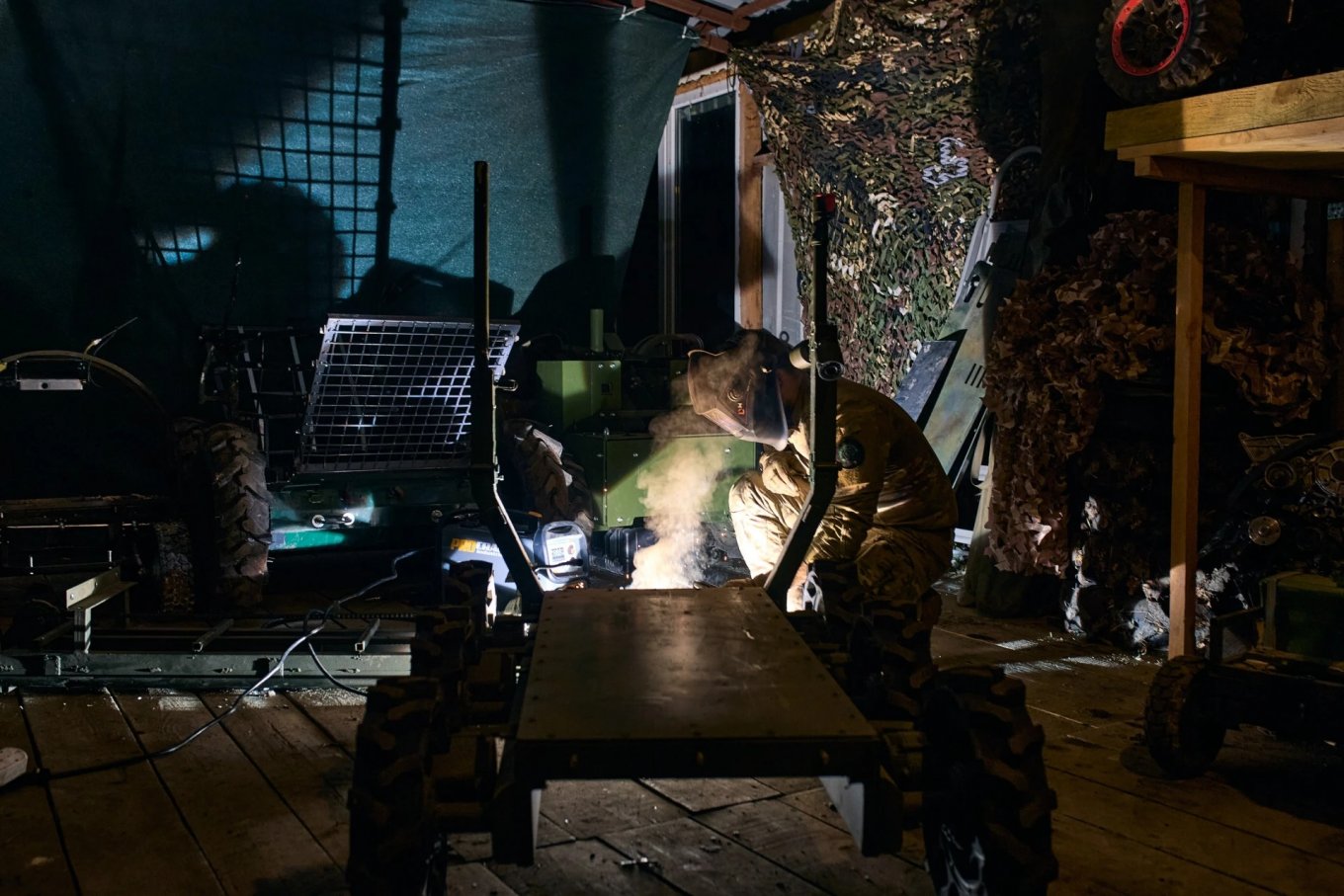
The next step is transitioning to machine vision, visual navigation, and fundamentally new control methods. A critical issue for any UGV is signal delay — the so-called ping. When latency reaches 150 milliseconds, operators typically stop the vehicle and wait for it to drop to 60–80 milliseconds.
Another challenge is the operator's limited situational awareness due to narrow camera views — further complicated by tall grass, a lack of visual landmarks, and the absence of GPS. But there is a solution that can address both challenges simultaneously.
"We are trying to make UGV control resemble a computer game. We can generate a 3D model of both the UGV and the surrounding terrain. The operator will be able to choose any viewing angle — essentially a "third-person view" — which gives a far better understanding of the vehicle's position.

Latency will also be much lower. This will allow us to increase UGV speed and improve overall control quality, which is especially important for evacuation missions. And it may almost completely eliminate the need for a UAV to provide overhead observation in difficult situations," Mathematician explained.
To make this possible, the UGV must be able to scan its environment. LIDAR, radar, ultrasound, and stereo cameras are all viable options — as long as the solution is inexpensive and aligned with the short life cycle of frontline UGVs. The system must also provide extended autonomous mobility if the operator loses connection.
The Logistics Database
Another largely invisible but crucial area of development is logistics optimization — the basic questions of what, where, when, and to whom supplies must be delivered. The effectiveness of the entire logistics chain depends on accurate answers to these questions.
"These are very serious, systemic issues. And even when we worked with major logistics companies, these tasks remained highly nontrivial.
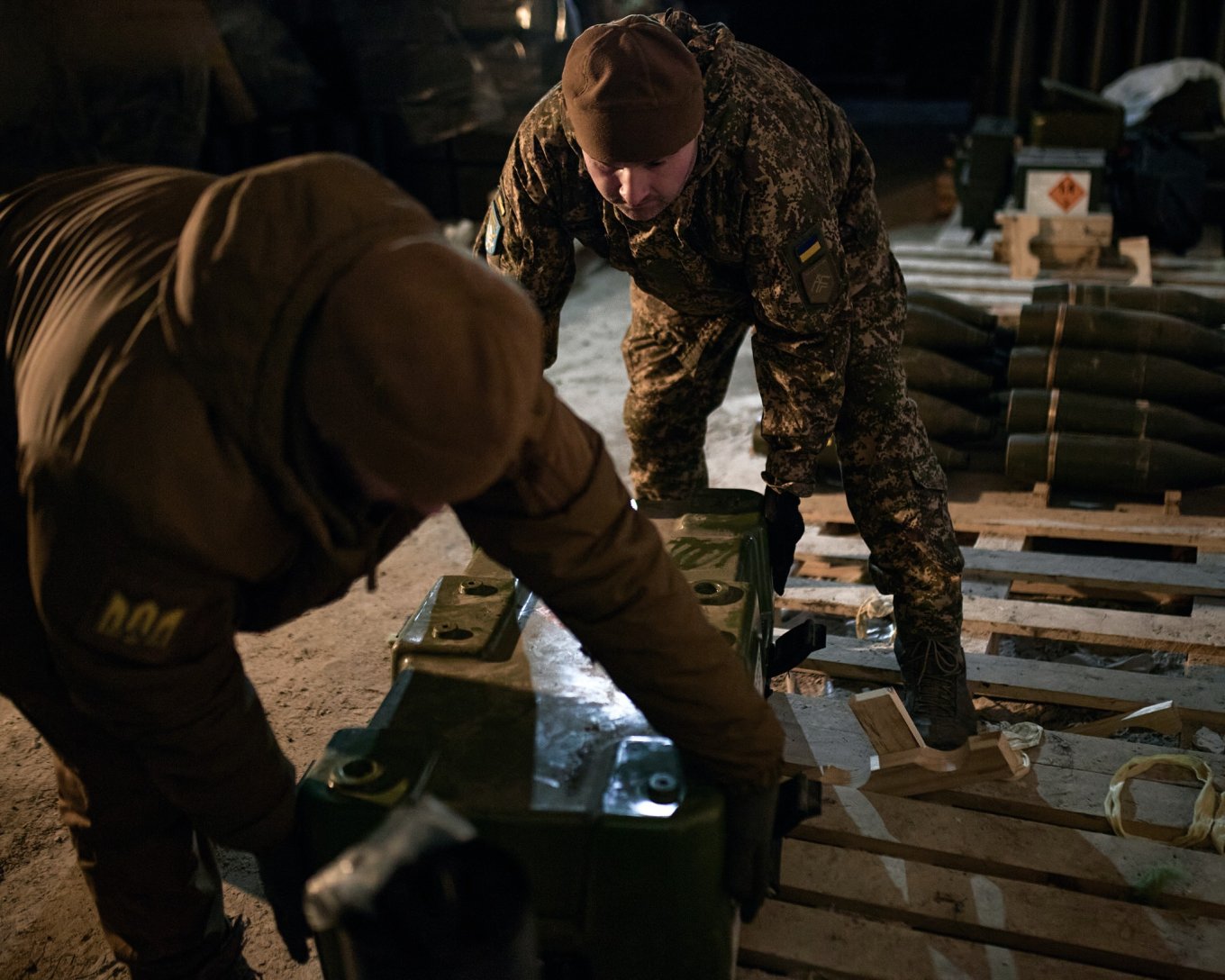
What we need is to consolidate this experience. Even if we focus on a narrow range of logistics vehicles and analyze how they are used — organizing a system of requests, determining what needs to be delivered, to whom, in what quantity, and how different logistic flows can be integrated — our frontline would benefit enormously," said the head of the Khartia UGV division.
How Long Until Combat Robots Arrive?
Five years ago, discussions about combat artificial intelligence or drone-versus-drone battles belonged to science fiction. Today, they are routine. This means that fully autonomous ground combat UGVs — "combat droids," in effect — are not far away.
"We should expect such systems to appear within three years. Whether their chassis will be humanoid, wheeled, or something in between — including "robot dogs" or "robot buffaloes" — does not really matter. My estimate is three years.
Based on what I see — production capabilities, platform modules, machine-vision systems, sensors, and how they work — early versions could appear in 1.5 years.
But integrating everything into a stable product that can be delivered to units, training personnel, and creating command systems requires another 1.5 years.
Broad deployment across the military is something for the early 2030s," Mathematician noted.
Read more: Which of Ukraine's Neighbours Has Set Its Sights on the "Baguette" Anti-Drone Missile and Plans to Produce 10,000 a Year?