


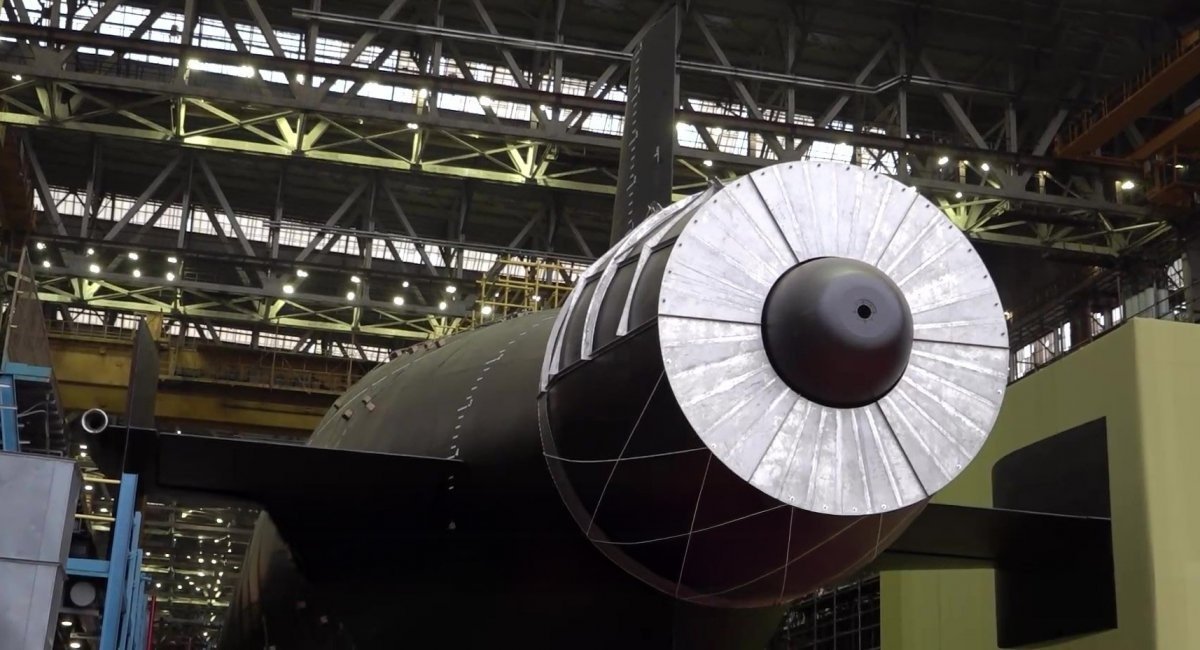
In November 2025, russia launched the Project 09851 Khabarovsk nuclear submarine, expected to become the second carrier of the Poseidon nuclear mega-torpedo system.
At the time, publicly available imagery of the submarine's stern section allowed for preliminary assessments of the vessel's design and several apparent technical peculiarities.
Read more: russia Sends Missile Corvette and Kalibr-Capable Submarine to Indonesia Amid Earlier Plans for Tu-95MS Base
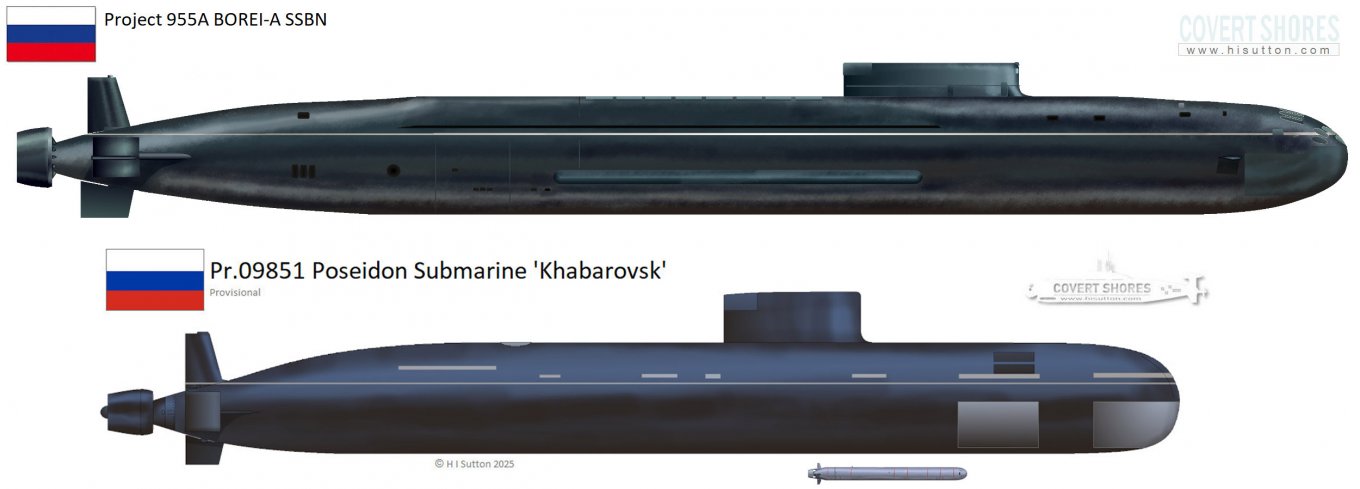
Now, naval analyst H I Sutton has published a more detailed assessment of the Khabarovsk in an article for Naval News, outlining several notable design features.
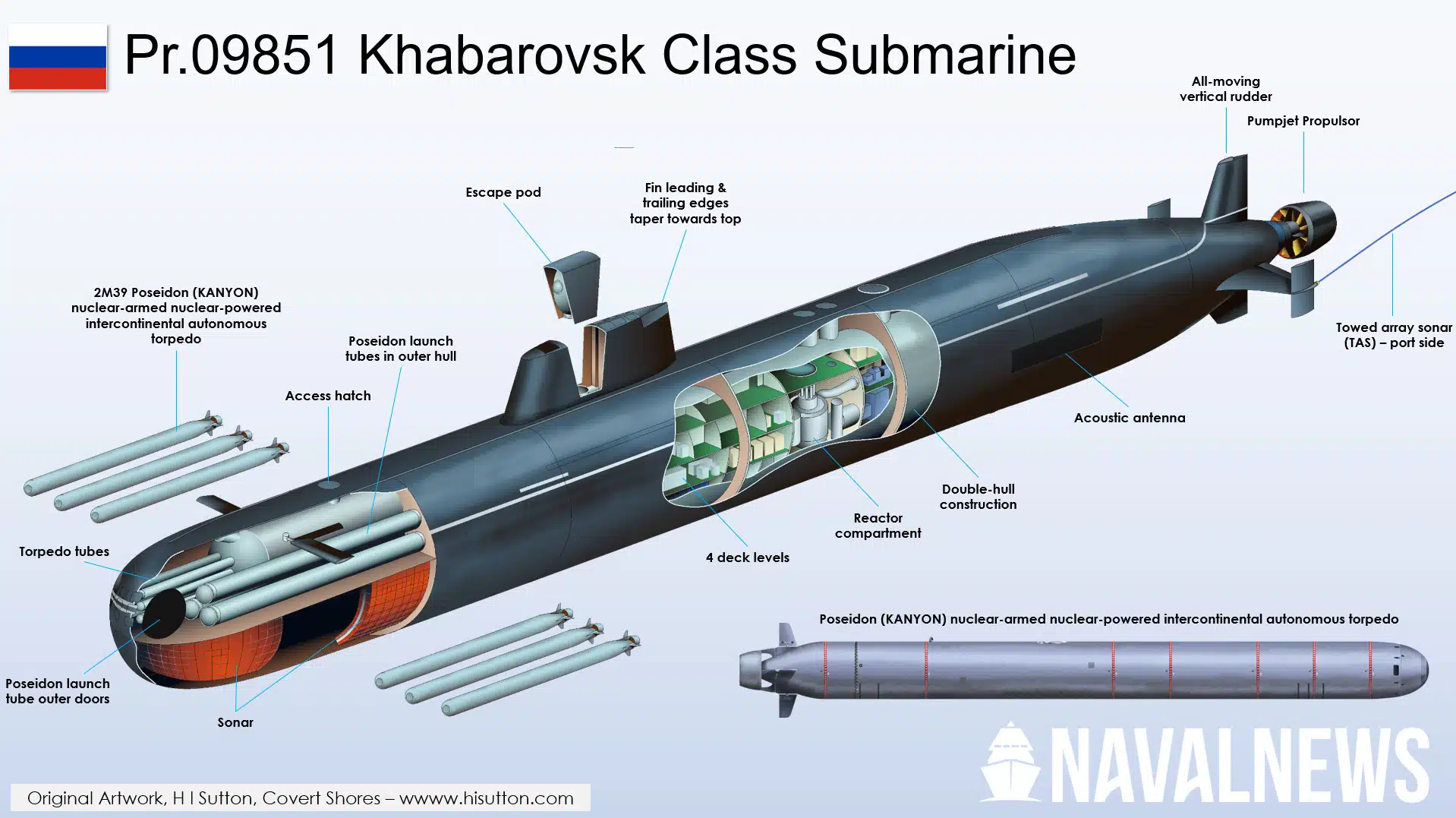
According to Sutton, the Khabarovsk appears to combine elements from two different classes of russian nuclear submarines.
The bow section resembles that of the Belgorod, the first Poseidon carrier and currently the largest submarine in the russian fleet, with a hull length of 184 meters. Meanwhile, the stern section appears similar to that used on Project 955 Borei-class ballistic missile submarines.

The Khabarovsk itself is estimated to be 135 meters long with a beam of 13.5 meters.
The forward section likely houses six launch tubes for Poseidon systems, apparently arranged three on each side. This assessment is based on visible access hatches in the bow section of the submarine.
Whether the submarine will also carry standard 533 mm torpedo tubes remains unclear. If conventional torpedo armament is included, it will likely be more limited than on russia's standard nuclear attack submarines.
The reactor compartment is reportedly located near the center of the hull, while the emergency crew escape capsule is integrated into the sail. This differs from the configuration used on Project 955A Borei-A submarines, where the escape capsule is positioned closer to the stern.
The propulsion system also appears to be borrowed from the Borei-A class, including pump-jet propulsion and a nuclear reactor from the OK-650 family. No reliable estimates of the submarine's maximum speed have been published so far.
From Defense Express' perspective, the most interesting question concerns why russia is building a second dedicated submarine carrier for the Poseidon system in the first place.
russian sources continue claiming that the Poseidon nuclear torpedo has virtually unlimited operational range. If that were truly the case, russia could theoretically deploy the system from fixed coastal launch facilities rather than investing in highly specialized submarines.
The decision to build the Khabarovsk may therefore indicate two important issues.
First, russia itself may not be fully confident in the actual operational range of the Poseidon system. Second, Moscow may also have concerns regarding the reliability of the weapon's guidance and control systems.
Ivan Kyrychevskyi, serviceman of the 413th Raid Regiment of the Unmanned Systems Forces of Ukraine and weapons expert at Defense Express.
Read more: After Ukraine Hit Kalibr-Carrying Karakurt in Primorsk, russia Commissioned Another Corvette, but Diesel Problems Persist