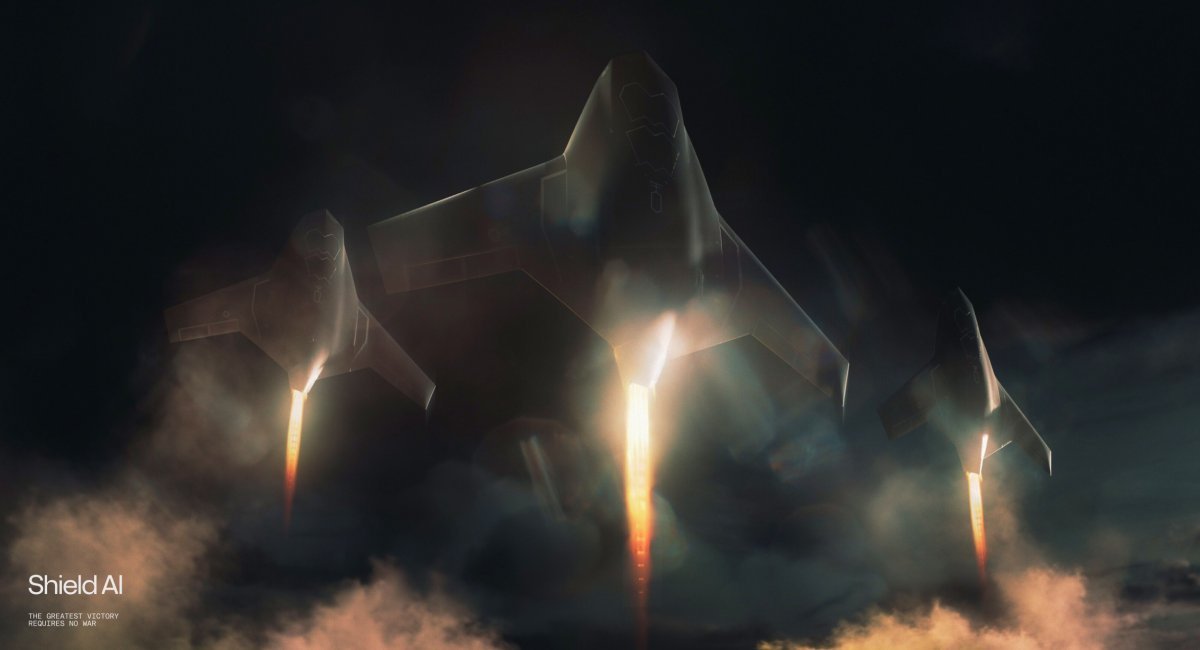
The X-Bat unmanned autonomous fighter jet, developed by Shield AI, is scheduled to begin flight testing in 2026. These trials are intended to validate the viability of its unmanned fighter concept. The core feature is vertical takeoff and landing using a single conventional jet engine that also powers horizontal flight.
Shield AI CEO Brandon Tseng announced the plans, according to TWZ. The tests are expected to take place near Newton, Kansas.
Read more: X-Bat to Get F-15/F-16 Engine New Jet Fighter Drone That Could Interest Ukraine
Previously, the company confirmed that it would use Newton City-County Airport as a testing site. Although the exact start date has not been specified, earlier reports indicated that flight trials were planned for the third or fourth quarter of the year.
Shield AI publicly unveiled the X-Bat in October 2025. The drone is a relatively large platform with a wingspan of 11.8 meters. It is expected to have a range of approximately 3,700 km and the capability to carry full-scale aviation weapons deployed in internal bays and on external hardpoints.
In cooperation with General Electric, the company is adapting the F110-GE-129 engine, currently used on the F-15 Eagle and F-16 Fighting Falcon, adding a thrust-vectoring nozzle. This modification, combined with a high-precision flight control system, is intended to enable the X-Bat to perform vertical landings while balancing on its jet exhaust.
For Ukraine, Shield AI's progress with the X-Bat has broader significance than the emergence of another unmanned fighter program in the United States. The concept offers advantages in mobility, rapid deployment, and reduced reliance on airfield infrastructure, which is particularly relevant under conditions of repeated strikes on air bases.
Shield AI has already tested its systems in Ukraine. Its serial V-Bat reconnaissance UAV, which also features vertical takeoff and landing capability, has reportedly been used by the Armed Forces of Ukraine. Several systems were delivered for evaluation in real combat conditions, including assessment of resilience against russian electronic warfare.
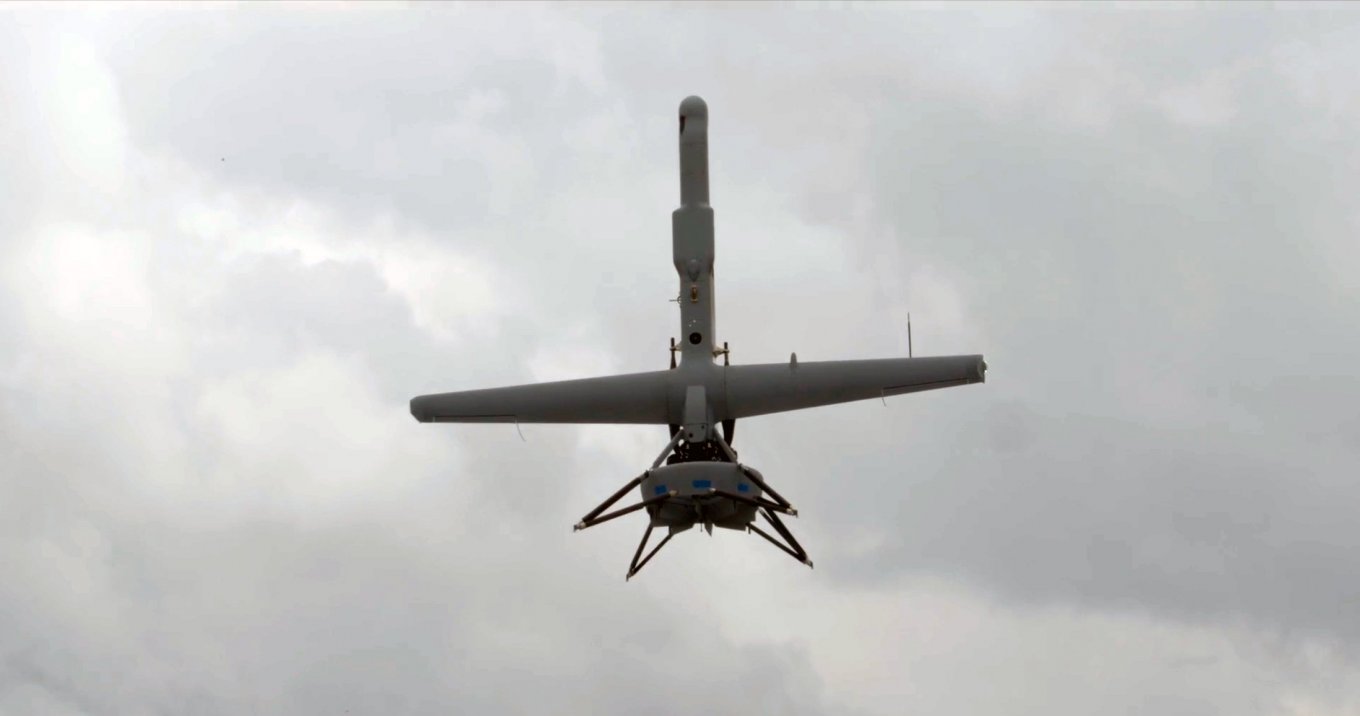
Reports indicate reconnaissance missions conducted at distances of up to 100 km, with target coordinates transmitted for strikes by M142 HIMARS systems.
At the same time, operational testing of a jet-powered unmanned fighter such as the X-Bat in combat remains a distant prospect. Nevertheless, Shield AI appears to be advancing the program at a relatively rapid pace.
From the Defense Express side, we urge readers to join a fundraiser for a solution that is already proving effective: the One United Fundraiser, organized by the Serhiy Prytula Charity Foundation to support interceptor drones.

Read more: Developers of Ukraine-Tested V-Bat Reveal Jet-Powered X-Bat VTOL Fighter Drone