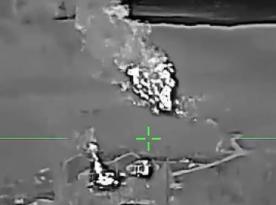
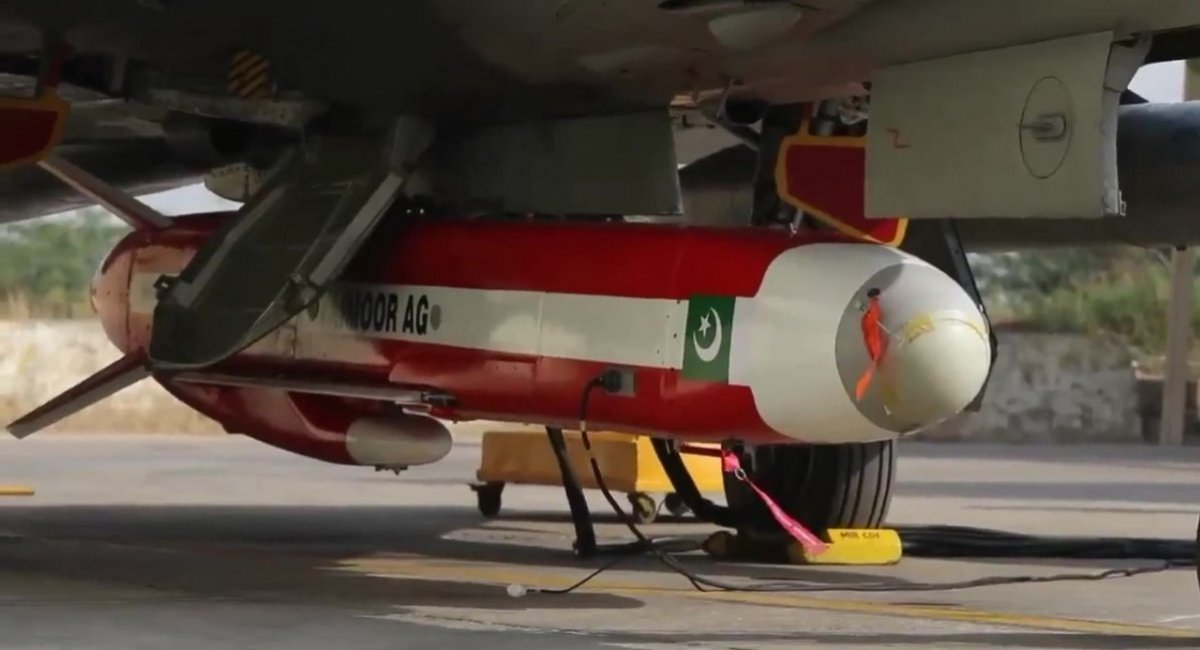
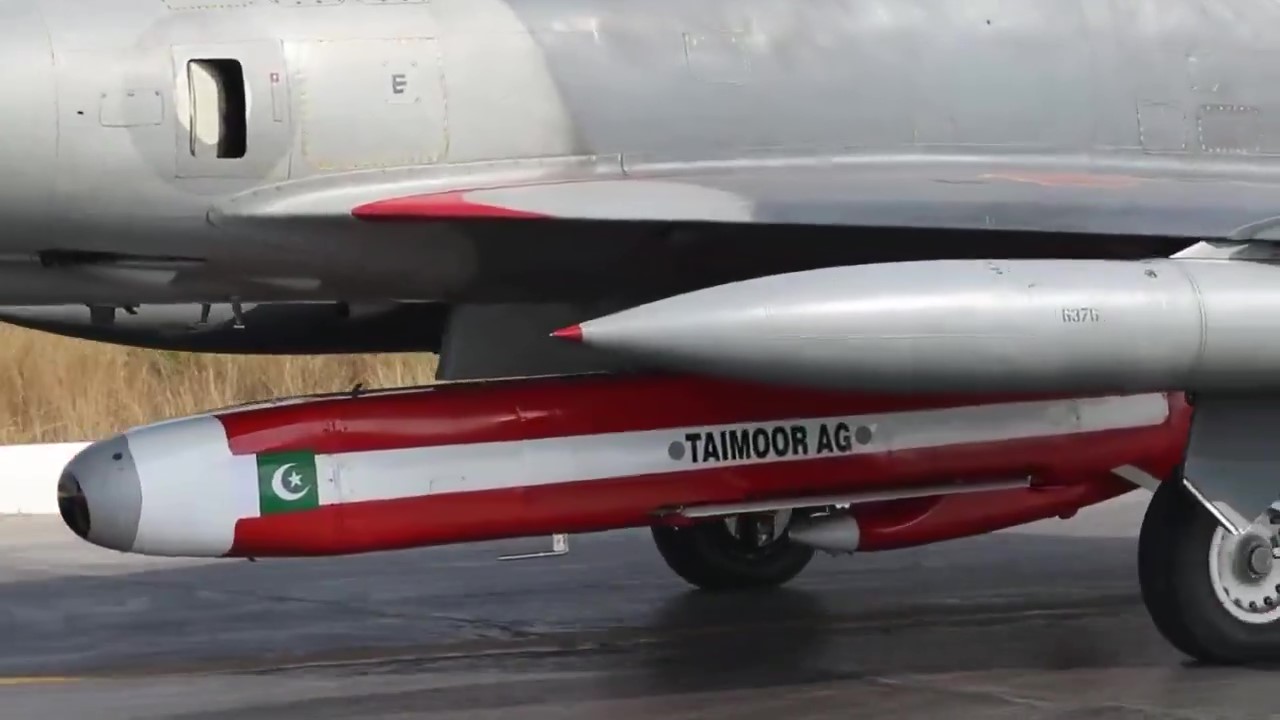
The released video shows the launch of the Taimoor missile from a Mirage III fighter jet. During the test, the missile successfully separated from the carrier aircraft, started its engine, flew an undisclosed distance, and struck a designated target.
Based on the available footage, during this first publicly known flight the Pakistani side opted not to demonstrate a low-altitude flight profile. Nevertheless, the accuracy demonstrated during the strike deserves recognition.
Read more: Pakistan Shows Evidence of Indian Su-30MKI and Rafale Takedown in Dogfight

Development of the Taimoor missile is being carried out in Pakistan by Global Industrial & Defence Solutions (GIDS). A mock-up of the missile was first unveiled in 2022. According to declared specifications, the missile has a launch weight of approximately 1,200 kg and a range of up to 600 km, explicitly stated to apply to its conventional configuration. It is equipped with a multi-channel navigation system combining inertial navigation, satellite navigation, DSMAC, and TERCOM, as well as an imaging infrared seeker for terminal guidance.
This is not Pakistan's first indigenous cruise missile. Since 2012, the country has operated the Ra'ad (also known as Hatf-8), with a claimed range of 550 km (or 350 km, according to other sources). Since 2020, Pakistan has also fielded the Ra'ad II, with a declared range of 600 km (or 550 km, according to alternative assessments). However, the use of an imaging infrared seeker has not been reported for these earlier missiles.
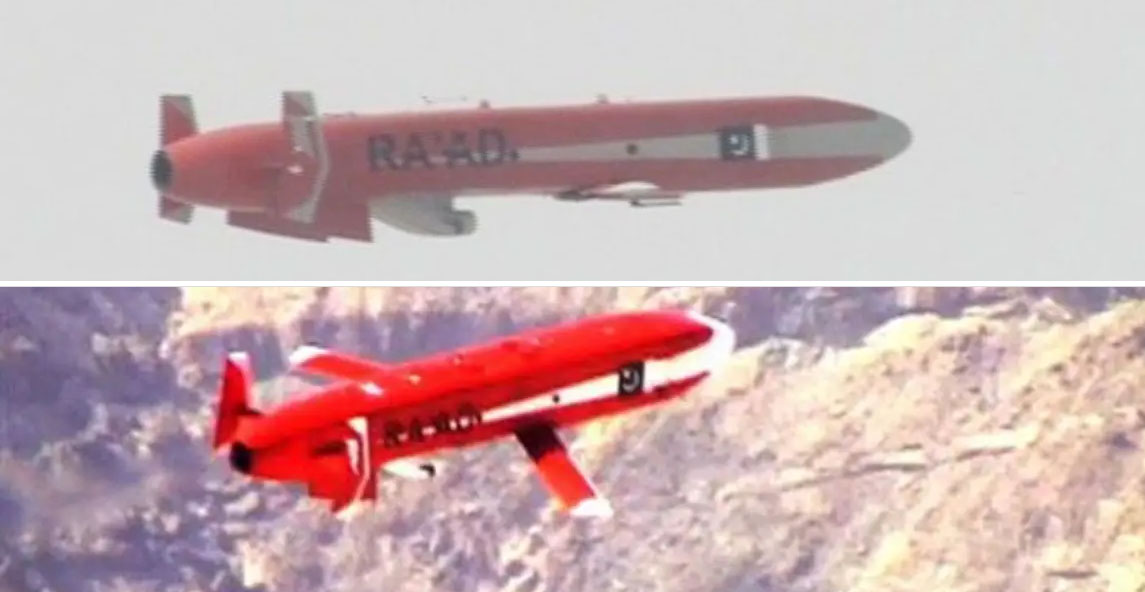
At the same time, Taimoor appears to be a logical continuation of the Ra'ad development line, retaining several design solutions from the earlier missile. A key difference is a completely new tail assembly. The adoption of an X-shaped tail configuration is expected to have a positive effect on the missile's low-observable characteristics.

At present, Pakistan has not disclosed timelines for completing development. In any case, the new cruise missile remains at an early stage of flight testing. Nevertheless, acquisition of this missile is of considerable importance for Islamabad, indicating a high priority for the program. In terms of its intended capabilities, Taimoor is positioned as broadly comparable to the European Storm Shadow / SCALP cruise missile in service with the Indian Air Force.
It should also be noted that, beyond missile development itself, Pakistan is likely to face a potentially complex phase of integrating the new missile onto multiple aircraft types, a process that will require assistance from other countries.
In particular, if Taimoor is to be integrated onto the JF-17 (more than 150 aircraft in service), a joint Chinese-Pakistani fighter, cooperation with Beijing will almost certainly be required. The same applies to the Chinese-built J-10CE fighters (around 20 aircraft in service). At the same time, integrating this missile onto F-16 fighters (up to 75 aircraft in various versions) would require U.S. approval, which represents a highly challenging task. This is precisely why, at least for now, Taimoor testing is being conducted using the Mirage III. Together with the Mirage 5, Pakistan operates between 120 and 160 aircraft of these types in varying states of combat and flight readiness.
Read more: russia Loses Libya: Haftar Orders $4B Worth Of Pakistani JF-17s Over russian Jets