


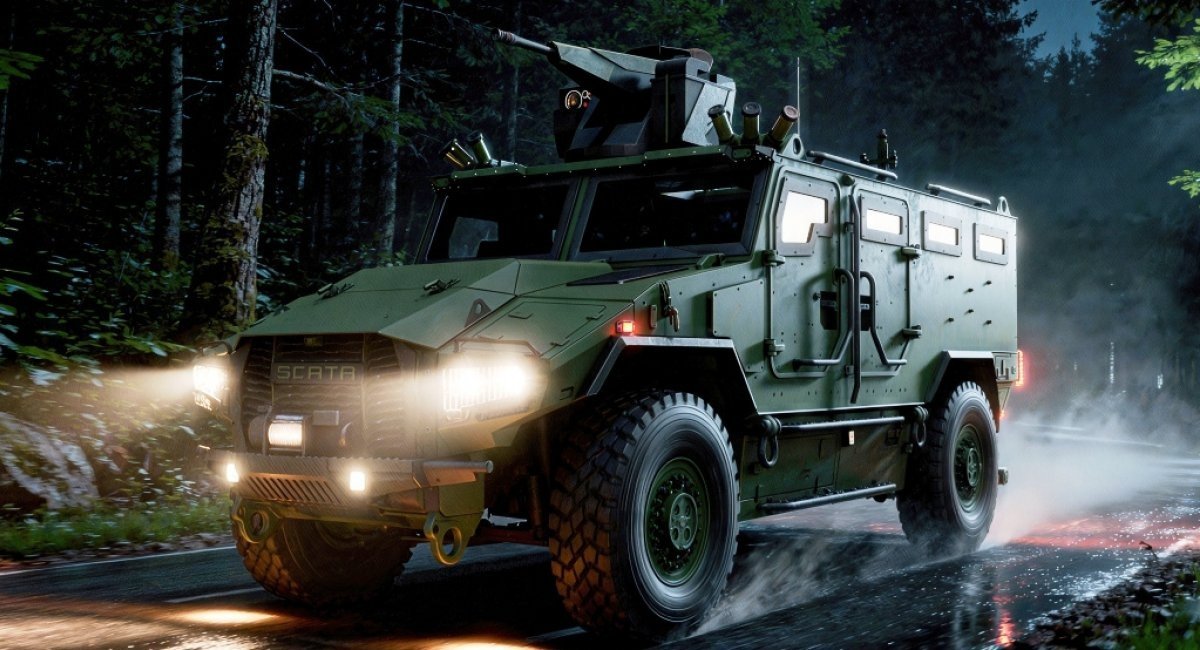
The company announced its entry into the armored vehicle market during a meeting between French and Finnish industry representatives in March 2026, as reported by European Defence Review. Notably, the company was founded only in 2025.
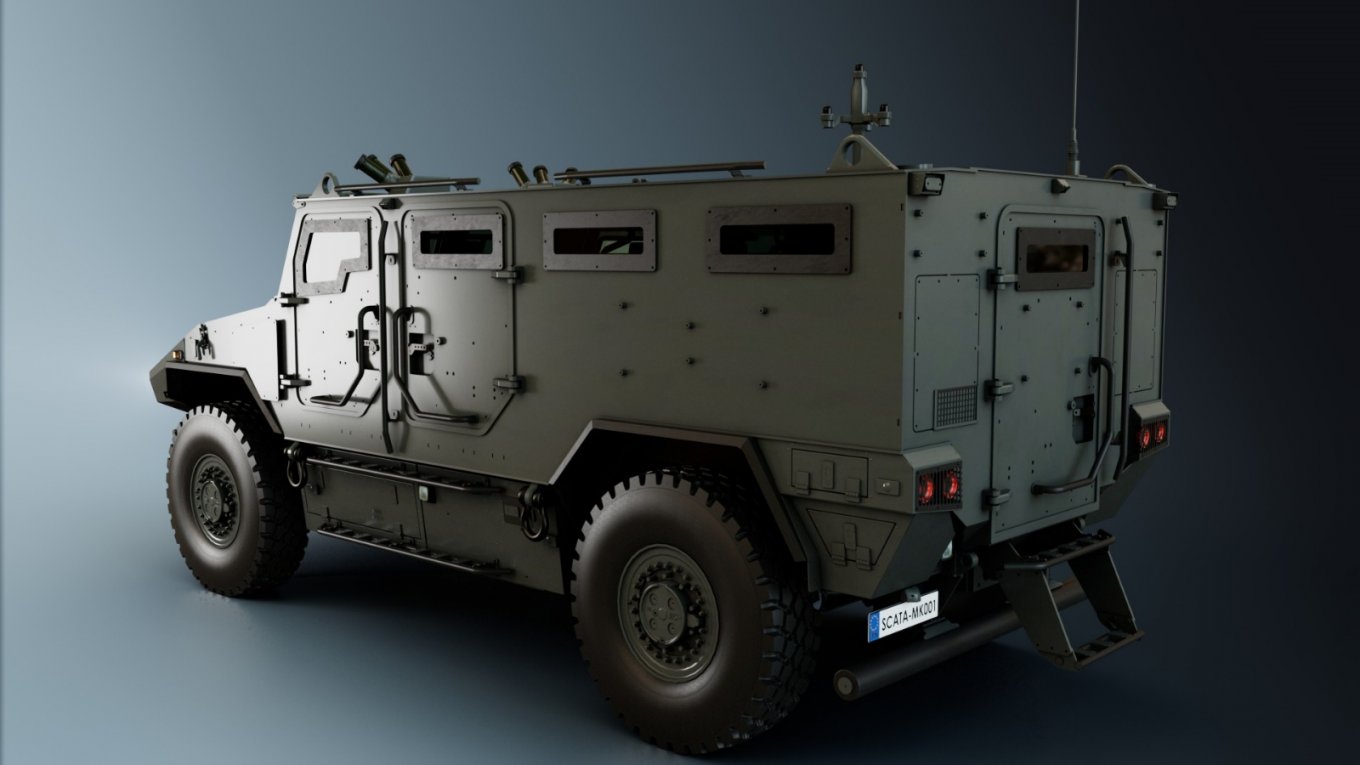
The vehicle, designated SCATA Mk1, is a typical platform for its class, offering ballistic and mine protection at Level 2a/b under STANAG 4569. This allows it to withstand 7.62×39 mm API BZ armor-piercing rounds at a distance of 30 meters, as well as a blast of up to 6 kg of explosives under a wheel or the hull.
Read more: Canada Continues Support for Ukraine with 383 More Senator Armored Vehicles After 2,000 Delivered Earlier
The vehicle's gross weight is rated at 18 tons. In an armored personnel carrier configuration, it can carry up to eight troops and a crew of two. In this configuration, the curb weight is 13–13.5 tons, with a payload capacity of up to 4.5 tons. Other planned variants include a medical vehicle, an air defense platform, and a pickup-type version.
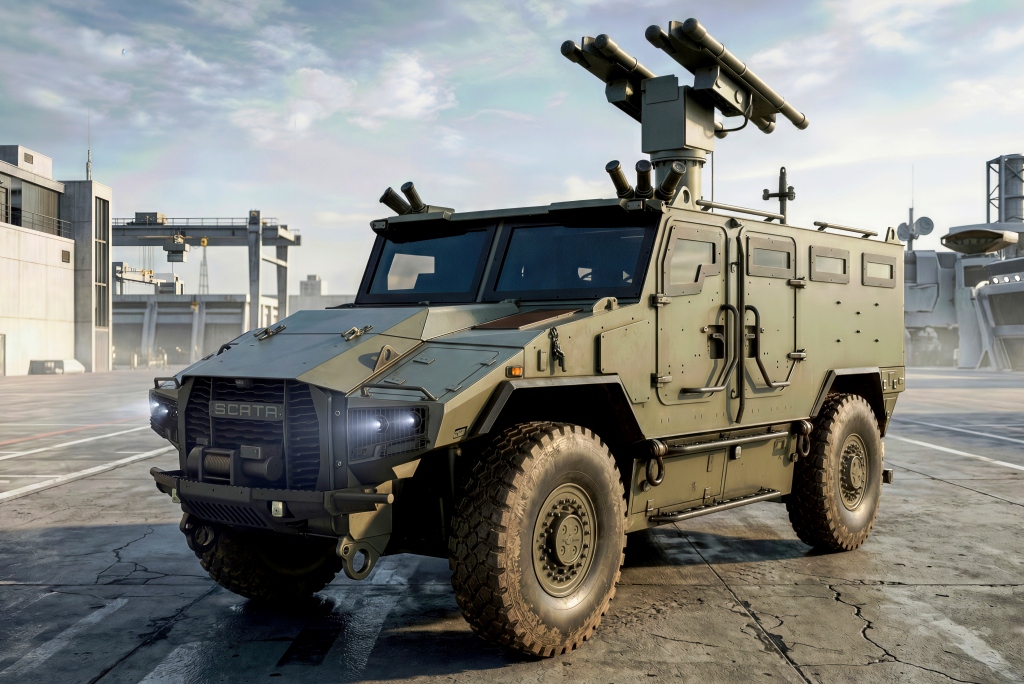
From the Defense Express perspective, this is a clear example of what can be built on the Celeris chassis. In other words, it is a fairly typical armored vehicle whose main distinguishing feature is the use of a specialized military platform.
Compared to existing Ukrainian developments, the Finnish vehicle is closer in concept to the UAT.GYURZA-02. However, the latter offers better mine protection while also using a purpose-built chassis.
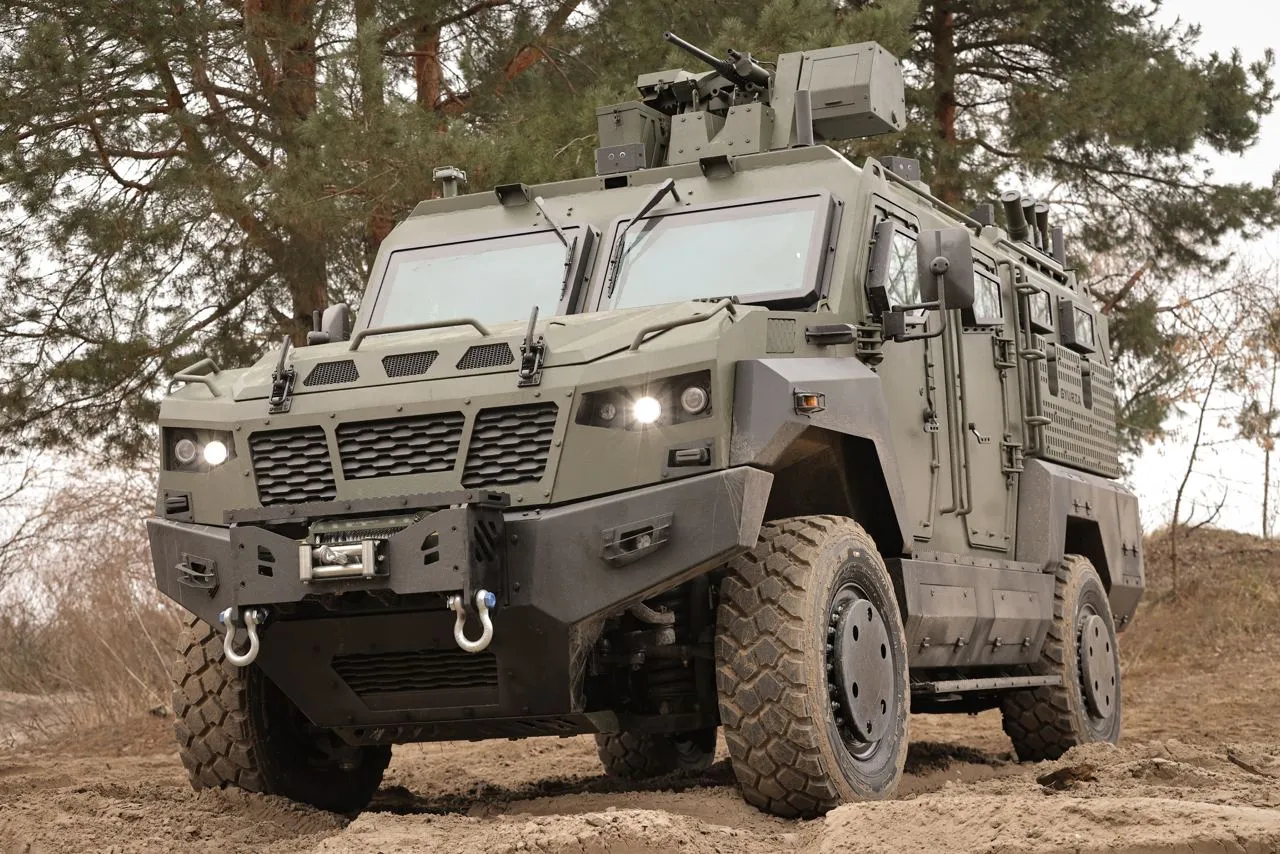
The SCATA Mk1 in its baseline troop transport configuration is expected to be presented at Eurosatory. This suggests that the prototype was developed and built in roughly one year, or possibly even less.
As for the Ukrainian project based on the Celeris chassis, no details have been disclosed so far beyond the fact of cooperation. As this Finnish example shows, the result may be a fairly standard vehicle, so further information is awaited.
Read more: Ukrainian Lasar's Group Gets New Pickup Truck Based on Inguar-3 Armored Vehicle