


The Ukrainian Air Force released a compilation video showing aerial interceptions during the repulsion of a russian air attack on the night of February 16–17. In total, the enemy employed 425 aerial attack assets, of which 392 were shot down or suppressed.
Specifically, Ukrainian forces intercepted 367 enemy UAVs of various types, 20 Kh-101 cruise missiles, four Iskander-K cruise missiles, and one Kh-59/69 guided air-launched missile. Alongside striking footage of aerial target destruction, the video featured one interception that drew particular attention.
Read more: APKWS Gains Popularity as a Counter-Drone Weapon Thanks to Ukraine, but the UK Has Other Uses in Mind
Бойова робота протиповітряної оборони під час комбінованого удару у ніч на 17 лютого 2026 року.Відео - Повітряні Сили ЗСУ pic.twitter.com/sfe2GD3UrA— Генеральний штаб ЗСУ (@GeneralStaffUA) February 17, 2026
In this segment, a targeting system can be seen locking onto an unnamed aerial target, most likely an iranian-russian Shahed drone. Just seconds later, the target is struck by a relatively slow-moving missile.
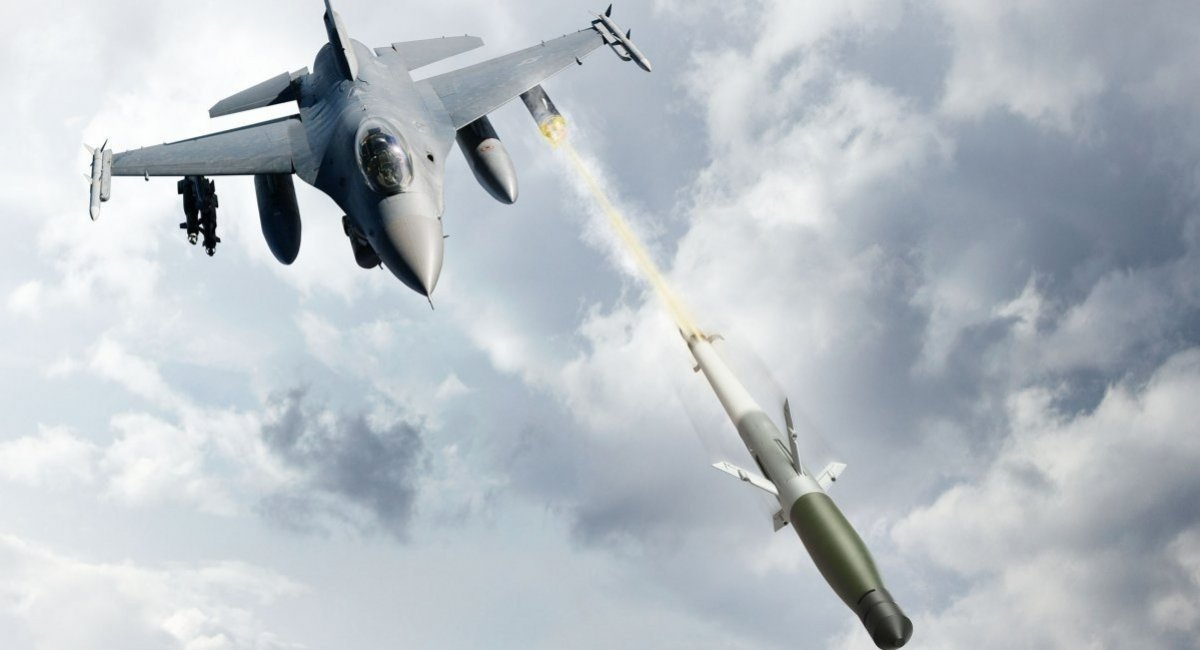
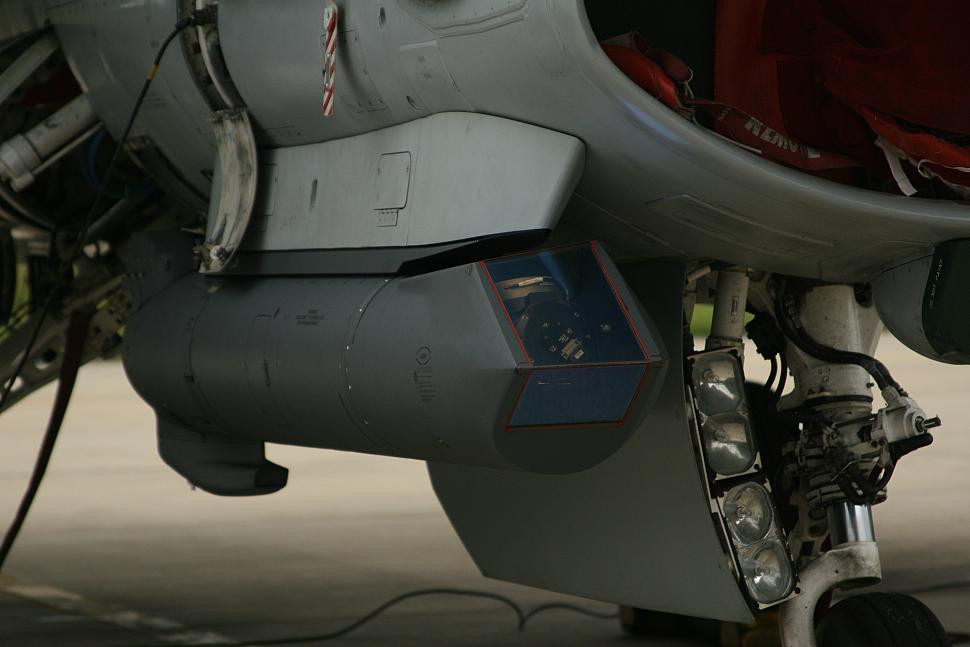
Based on the available evidence, it can be assumed that at this moment a Ukrainian F-16 shoots down the Shahed using an APKWS II guided rocket. The interception was likely filmed using the AN/AAQ-33 Sniper Advanced Targeting Pod.
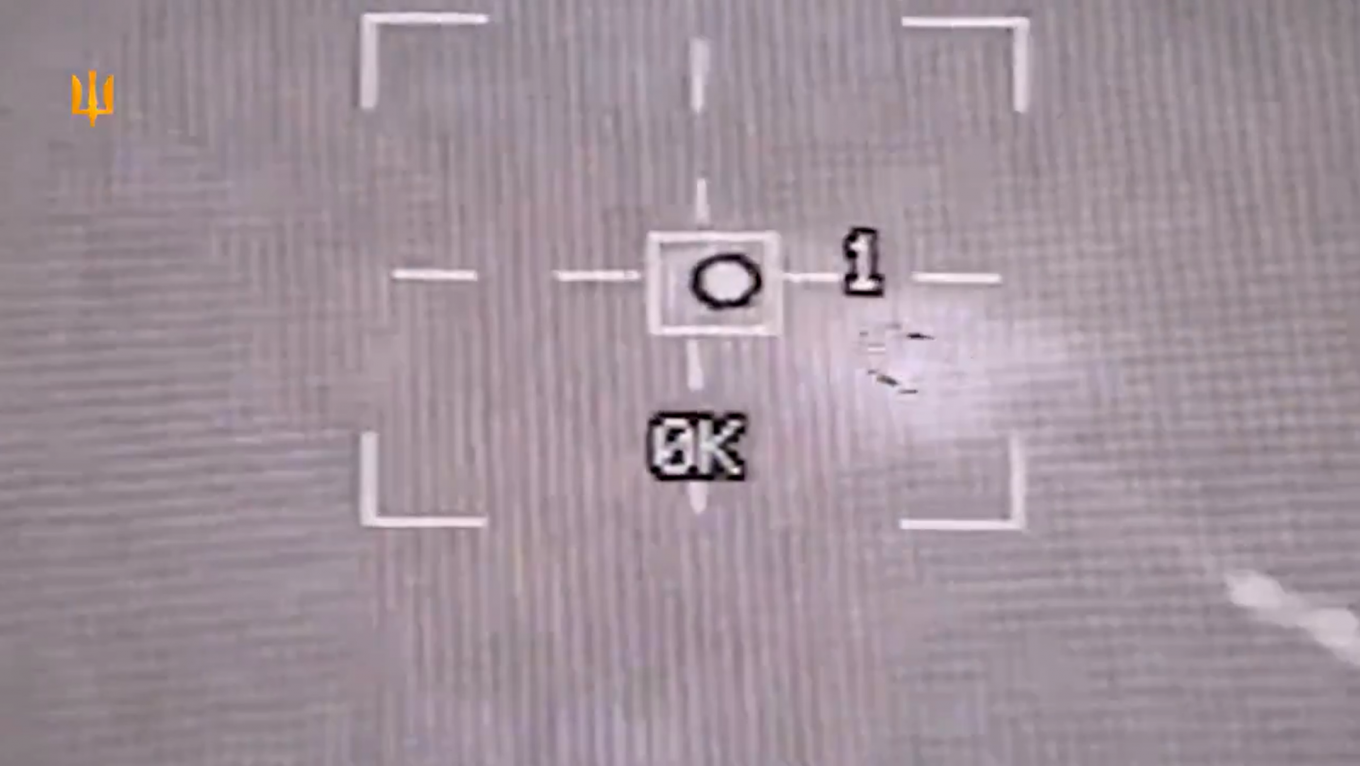
This assessment is supported by the interface visible in the released footage, which closely resembles that of the AN/AAQ-33 targeting pods produced by Lockheed Martin. Apparently, only the central portion of the display was shown in the published clip, with other interface elements remaining outside the frame.
The weapon used was most likely the APKWS II guided rocket, as indicated by its relatively low flight speed compared to conventional air-to-air missiles. In addition, the Shahed appears to have been illuminated by a laser designator, which is required for guiding this type of rocket.
Ukrainian F-16s were first spotted carrying the AN/AAQ-33 pod and APKWS II rockets in early December 2025. However, until now, no footage had emerged showing aerial interceptions using these rockets from Ukrainian F-16s — although APKWS II had already proven effective in ground-based applications.
The presence of APKWS II rockets and AN/AAQ-33 targeting pods in the arsenal of Ukrainian F-16s is significant because standard air-to-air missiles such as the AIM-9 or AIM-120 cost millions of dollars per unit.
By contrast, APKWS II rockets cost approximately $30,000–31,000 each, according to recent contracts. Moreover, an F-16 can carry only six AIM-9 or AIM-120 missiles, whereas it can carry up to 28 APKWS II rockets, or potentially more, depending on the configuration of the rocket pods.
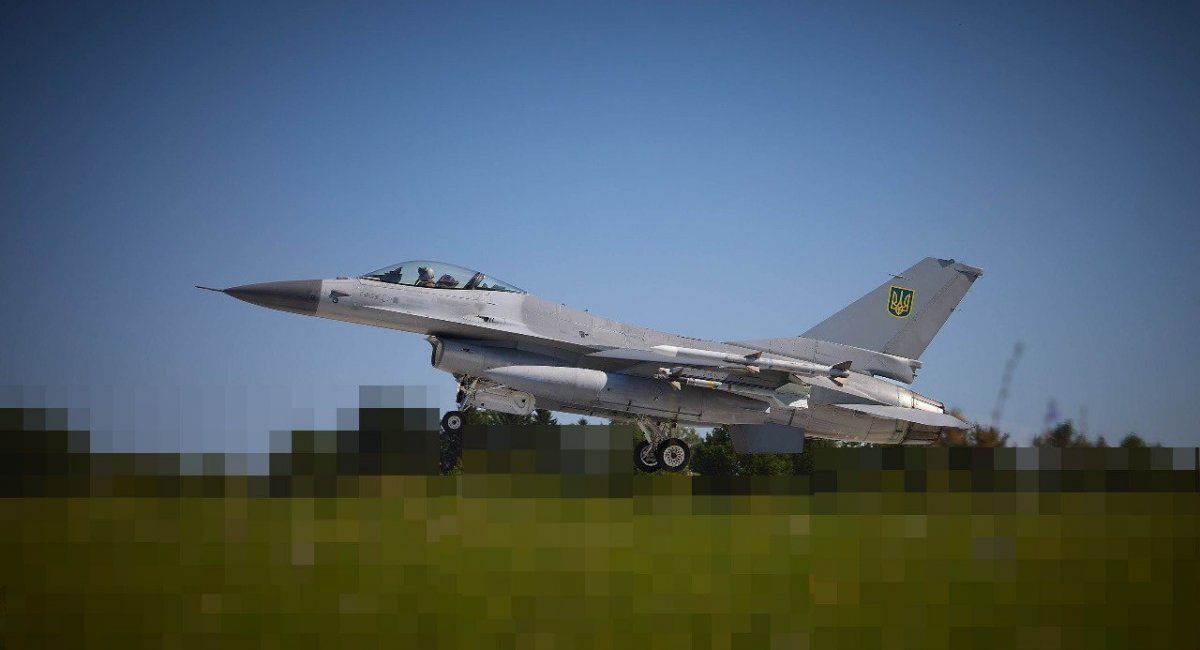
This theoretically enables the destruction of up to 28 targets in a single sortie instead of six, not counting the 20mm M61 Vulcan automatic cannon with its 511-round ammunition load.
Of course, these calculations are purely theoretical and would only be achievable under favorable conditions.
Read more: The Alpha Special Operations Center Destroys 4 HQs, Ammo Depot and UAV Production Facility (Video)