


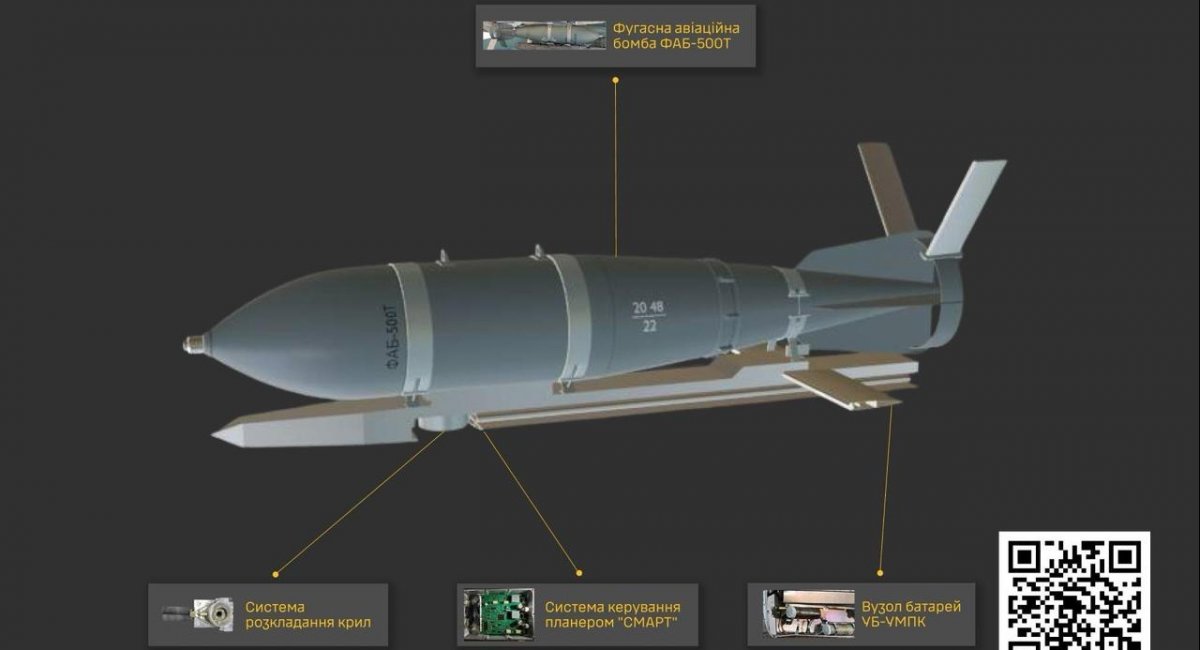
Ukraine's Defense Intelligence has published a new set of detailed materials exposing russia's production chain for UMPK (universal gliding and correction module), which are widely used to convert unguided aerial bombs into precision-guided munitions. The information was released on War&Sanctions portal and includes an interactive 3D model, a breakdown of key components, and data on 31 enterprises involved in the program.
UMPK modules are a central element of russia's air campaign against Ukraine, enabling the mass use of so-called glide bombs, commonly referred to as KABs. By attaching these modules to legacy Soviet-era bombs, russian forces are able to strike targets from standoff distances while reducing risks to carrier aircraft.
Read more: Drone Warfare: How Ukraine Is Countering Massive Shahed Attacks
The modules are used to upgrade a wide range of unguided munitions, including FAB-500M62, FAB-250, RBK-500, ODAB-500, ODAB-1500, and even heavy FAB-3000. Once fitted with UMPK module, these bombs gain limited guidance and extended range, allowing them to be launched outside the effective envelope of many Ukrainian air defense systems.
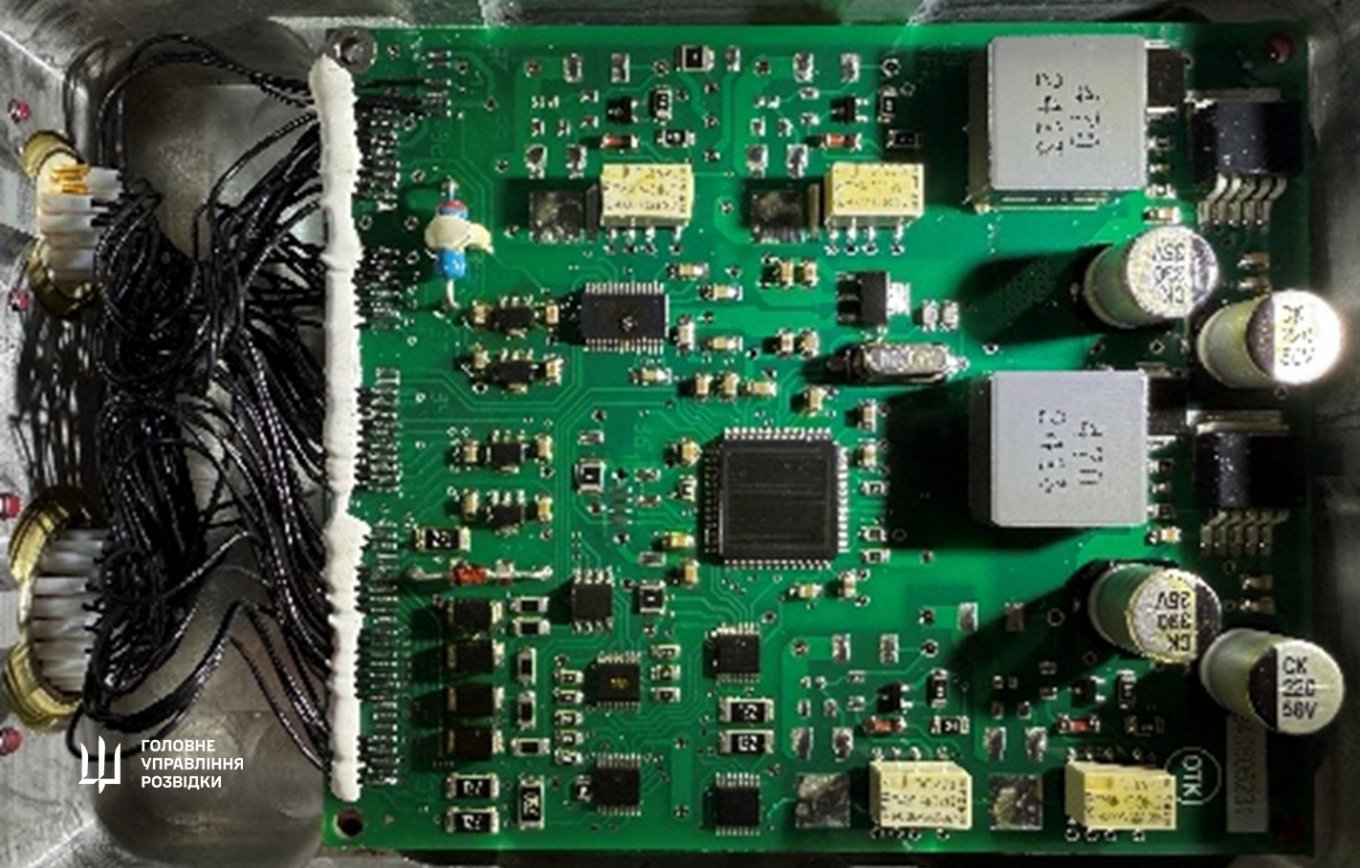
Structurally, UMPK module consists of a power frame, nose fairing, folding wings, elevons, and stabilizers, which are attached to the bomb body using specialized clamps. This relatively simple mechanical design allows for rapid installation and large-scale production, making the system attractive for mass deployment despite its limited accuracy compared to purpose-built precision weapons.
Guidance is provided by a combination of systems, including Smart glider control unit, a satellite navigation system equipped with Kometa jam-resistant adaptive antenna, available in four- or eight-element configurations, and a strapdown inertial navigation system. This layered approach allows the bomb to retain basic navigation capability even under conditions of electronic warfare.
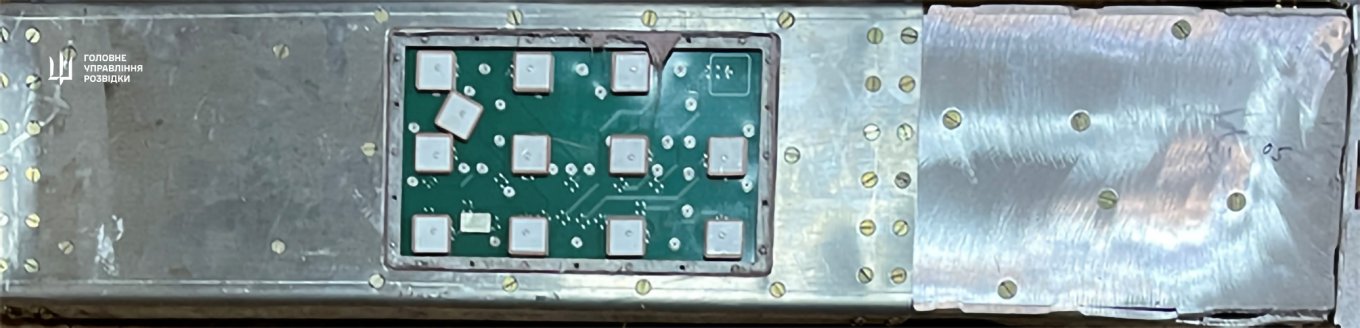
In 2024, russia began deploying an extended-range variant, UMPK-PD, paired with FAB-500T bombs. This version features a larger wing area, a longer power frame, an upgraded 12-element Kometa-M12 antenna, and an improved Smart control block, all of which significantly increase glide distance and operational flexibility.
Tactical Missiles Corporation is a key developer of UMPK modules and the primary contractor fulfilling russia's state defense order. The disclosure highlights the industrial depth behind the program and underscores its strategic importance for russia's ongoing air operations.
Notably, six companies involved in UMPK production remain unsanctioned by any country within the sanctions coalition. Among them are JCS Kurganpribor, responsible for final assembly of UMPK-250 and UMPK-500 modules, and Gefest&T, which develops and installs SVP-24 Gefest computing subsystems on aircraft such as Su-34, Su-35S, and Su-24M.
The absence of sanctions allows these firms to continue sourcing foreign components and conducting international financial operations, highlighting persistent gaps in enforcement mechanisms aimed at limiting russia's military-industrial capabilities.
Read more: International Units of Ukraine`s Defense Forces Turn russian Positions Into Nightmares with Darts UAVs