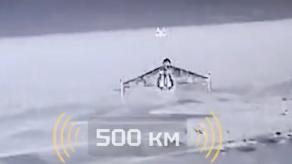



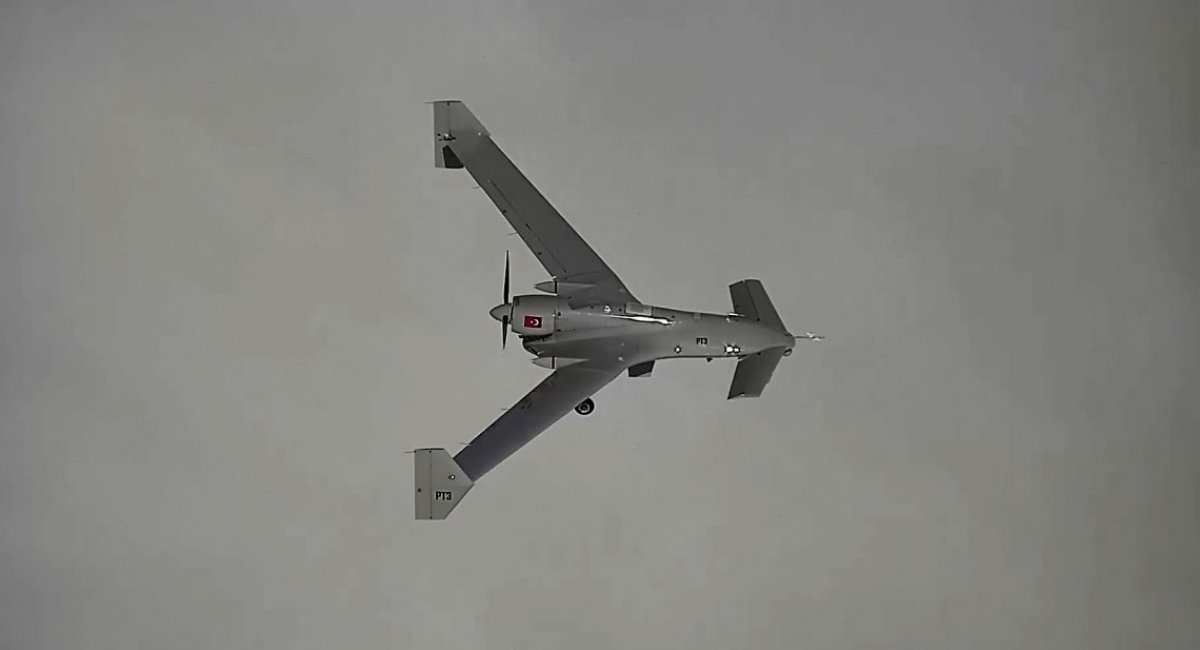
Turkish company Baykar presented its long-range strike unmanned system K2 for the first time. It is capable of covering over 2,000 km, is equipped with 200 kg warhead for engaging targets, speed over 200 km/h, and total mass of 800 kg.
K2 is capable of operating in conditions of active enemy electronic warfare systems and even in absence of GNSS signal. Additionally, navigation can be conducted by terrain relief comparison, likely thanks to cameras located in an additional suspended container.
Read more: U.S. Considers Seizing Iran's Kharg Island — How Soon It May Happen?
It can be employed in swarms of several such unmanned systems maintaining formation. Launch can be conducted from a short unprepared runway. Interestingly, from published video one can see K2 is capable of engaging air targets by ramming them.
Turkish K2 is not simply a disposable one-way attack drone. It can be used as a reusable strike unmanned system that drops munitions on target and returns. The front landing gear, like Bayraktar TB2, is retractable, with engine located in rear section.
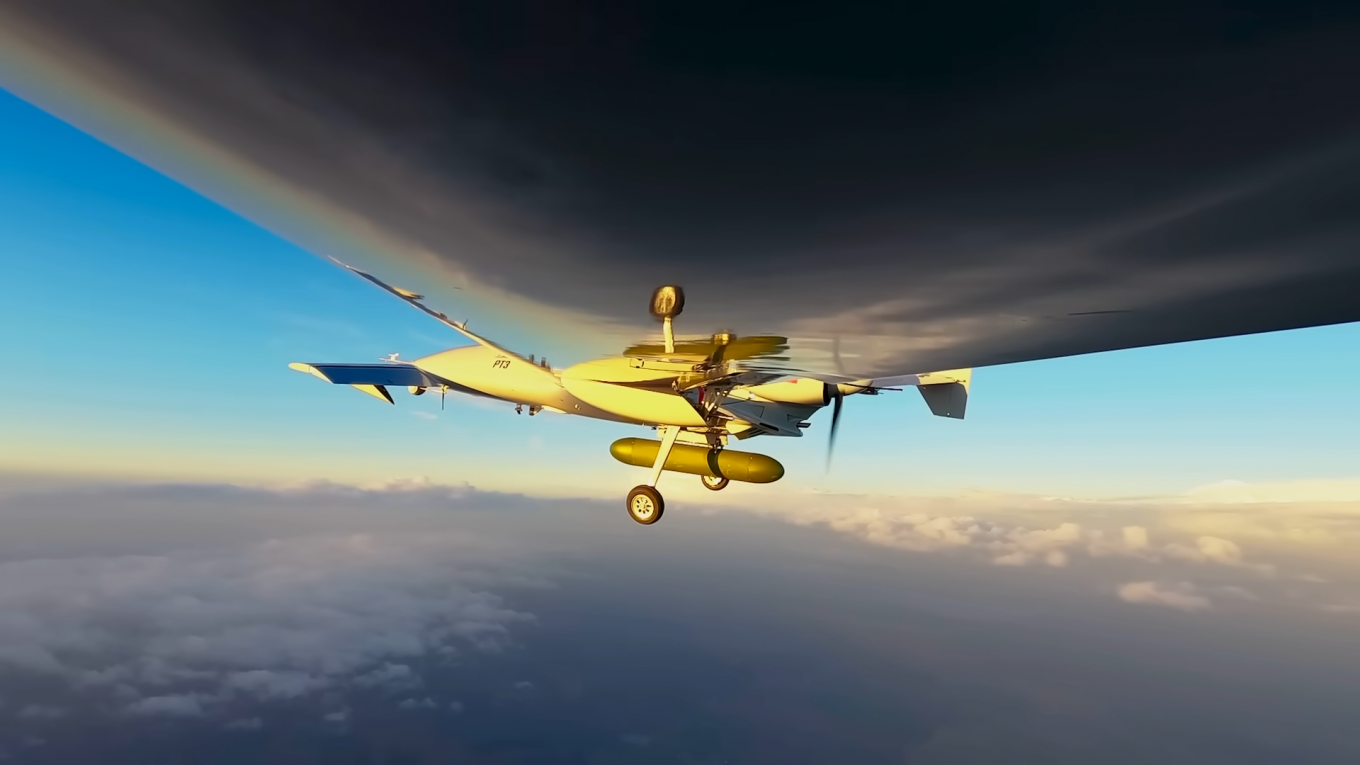
However, K2 has quite significant dimensions which, putting it mildly, does not add stealth. Specifically, wingspan is 10 meters and length 5.1 meters.
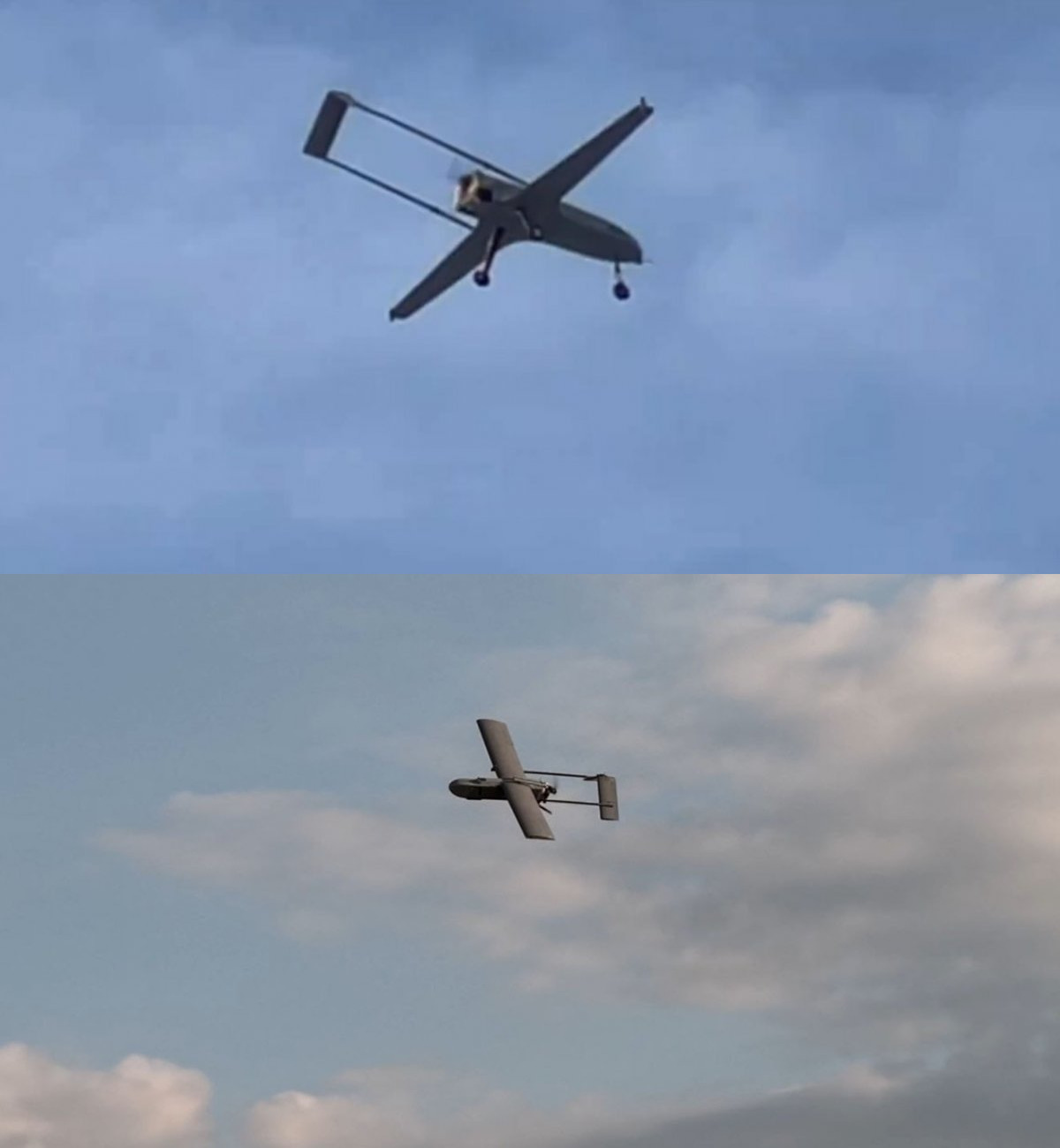
For comparison, Ukraine's An-196 Liutyi has 6.7 meter wingspan and 4.4 meter length, while its mass is over twice smaller fluctuating around 300 kg, though warhead is only 75 kg.

Overall by its characteristics it appears as genuinely powerful unmanned system for deep strikes, with wide functionality and capabilities. K2 is also equipped with satellite communications antenna, likely enabling control at any distance with precise guidance even on moving targets, like for example Ukrainian medium-range FP-2 strike unmanned system.
However, there is one extremely important moment, specifically its cost. Currently it has not been announced, but evidently it will be significantly higher compared to Ukrainian long-range unmanned systems, such as FP-1 at approximately $55,000 or somewhat more expensive but still likely cheaper than K2, An-196 Liutyi.
The point of such unmanned systems is that they should be as cheap as possible and able to be mass-produced for conducting massed attacks, otherwise their employment turns out not very expedient. Long-range drones are created with entire structure calculation for single one-way flight.
However, there are great doubts about K2 cost and genuine mass production capability due to design complexity, which must be calculated for multiple use, as well as heaps of expensive onboard systems.
Nevertheless, it should be noted this is only assumption based on available K2 information. In reality it may quite turn out K2 can be manufactured in large quantities with cost lower than believed, so additional details about this unmanned system from the company should be awaited.
Read more: Ukraine Gives Allies Access to Real War Data to Train AI Drone Systems