


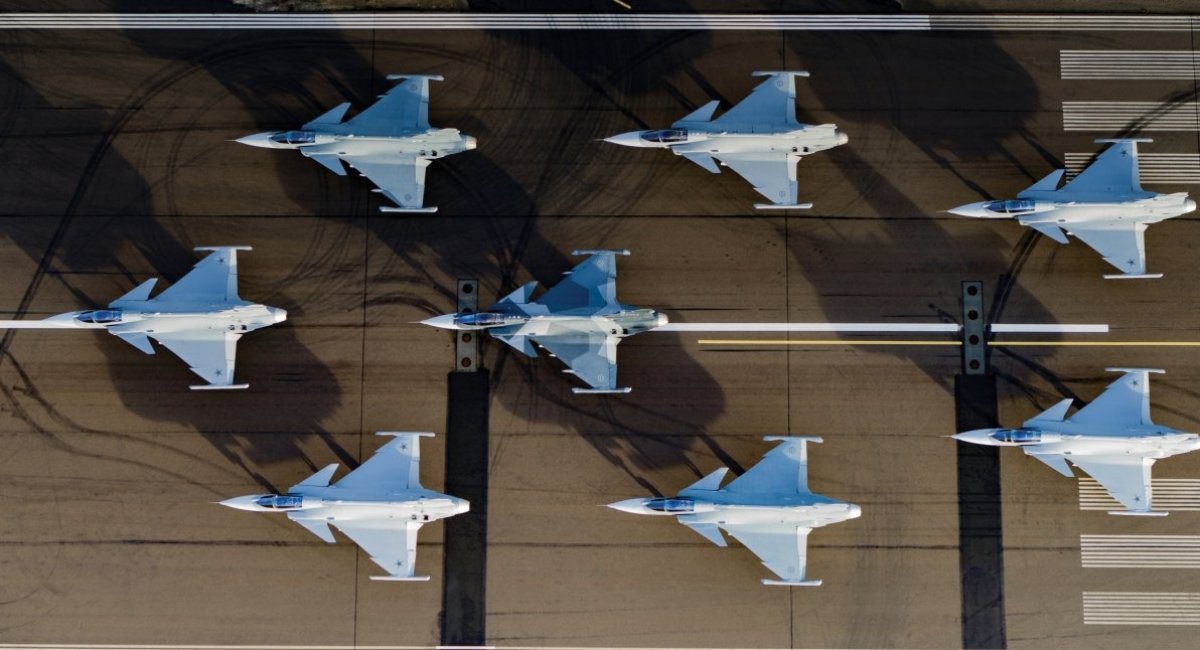
The Swedish defense company Saab, which in recent years has secured several firm contracts for the supply of its latest Gripen E/F fighters, maintains a broad list of prospective customers. Some of them, such as Ukraine, are widely viewed as near-certain future buyers. Others, however, represent potential contracts with varying probabilities that Gripen will ultimately prevail in competitive tenders.
Based on statements by Mikael Franzén, Head of Marketing for Saab's Gripen fighter division, published by The Aviationist, as well as information from open sources, it is possible to make a rough estimate of the potential order book for the JAS 39 Gripen E/F.
Read more: How Many Gripen E/F Saab Can Actually Produce, What It Means for Ukraine, Why 36 Jets per Year Remains a Stretch
First and foremost, this concerns Ukraine, which plans to procure 100–150 fighters for its Air Force. We have previously detailed the expected costs, delivery timelines, and a critically important prerequisite. For now, however, Ukraine remains a potential customer only, as no firm contract for the supply of Gripen fighters has yet been signed.
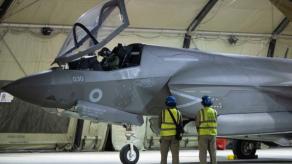
Canada comes next, and the situation there remains highly uncertain. On the one hand, Ottawa has the option of continuing procurement of U.S.-made F-35 fighters. On the other hand, in light of current political developments and statements by Donald Trump, debates are ongoing about suspending the deal with the United States and instead returning to the Gripen option. Saab has actively sought to capitalize on this opportunity by promoting its fighter to Canada through participation in Gripen production for the Ukrainian Armed Forces. In this case, the discussion concerns up to 72 aircraft.
The Philippines should also be mentioned, where the potential volume could reach around 40 fighters, delivered in one or several batches. As of September last year, Saab confirmed that negotiations with the Philippines were ongoing. However, Manila may ultimately opt for the F-16, especially given that the U.S. Defense Security Cooperation Agency (DSCA) has already approved the sale of 20 aircraft at a price ceiling of up to USD 279 million per F-16V.
As for Peru, Saab states that its Gripen campaign there is at a final stage and refers to a potential order of 24 fighters. At the same time, Peruvian officials indicate that the country is close to acquiring U.S.-made F-16s, with the reported number standing at 14 aircraft, ten fewer than Saab's estimate.
Portugal may also emerge as a potential Gripen customer. On the one hand, Lisbon is considering a European fighter option. On the other hand, it is interested in a fifth-generation aircraft, where there is effectively only one choice, the U.S.-made F-35. Portugal needs to replace its fleet of 28 F-16s, so a procurement of a similar number of aircraft appears likely.
Austria could also become a promising direction for Saab, although a formal competition there is expected to begin only this year. In addition, Sweden is considering Ireland as a possible location for Gripen fighter production.
Even if only Ukraine and Canada are taken into account, the potential volume already ranges from 172 to 222 fighters. If, under an optimistic scenario, the Philippines, Peru, and Portugal were also to join the list, the total could exceed 300 aircraft, assuming Peru procures 14 fighters. However, this remains a highly optimistic outlook that could easily collide with reality, including strong competition from U.S. aircraft and the influence of American lobbying.
Read more: Saab Nears Completion of First Hungarian Gripen Amid Pending Order for Ukraine