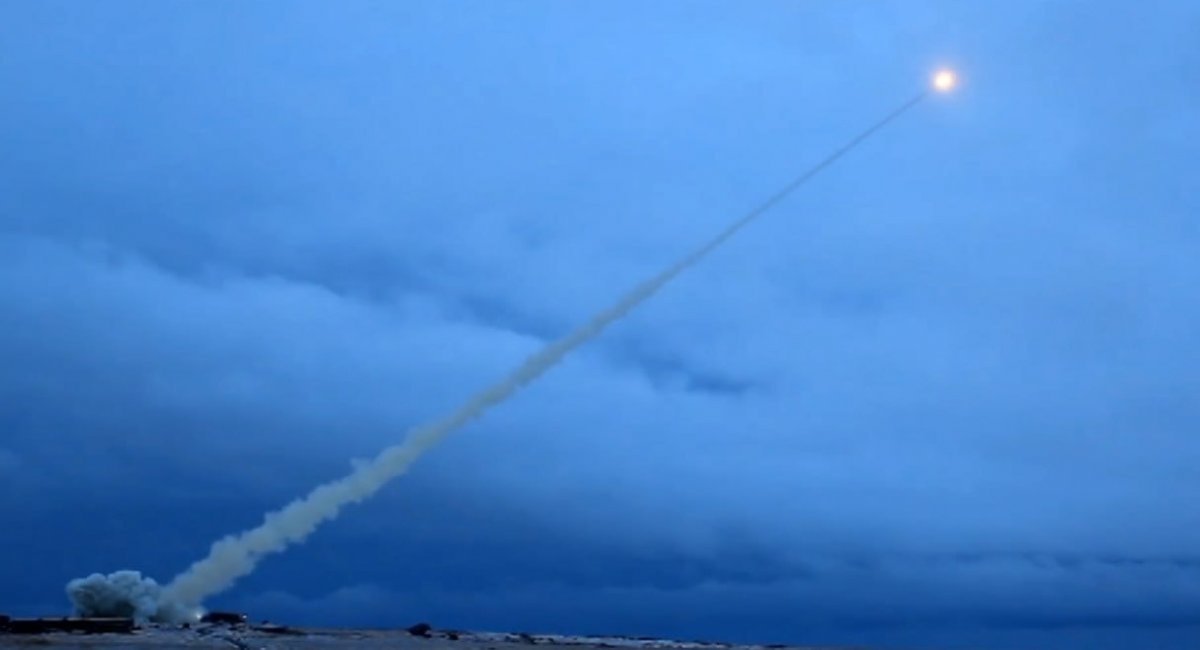
russia has been developing the 9M730 Burevestnik nuclear-powered cruise missile since 2001. Its nuclear propulsion system is intended to provide the missile with a virtually unlimited flight range. The project was first publicly unveiled in 2018, after which a significant amount of data on the russian wunderwaffe known as Burevestnik was accumulated.
Now, The War Zone reports that researchers from the Massachusetts Institute of Technology (MIT), Jake Hecla and Robert Scott Kemp, have published a study on the 9M730 Burevestnik. This naturally raises the question: what new information can U.S. researchers actually provide about this project?
Read more: America's Answer to russia's Poseidon, Burevestnik Systems: Stealth Nuclear Cruise Missile Spotted under a B-52H
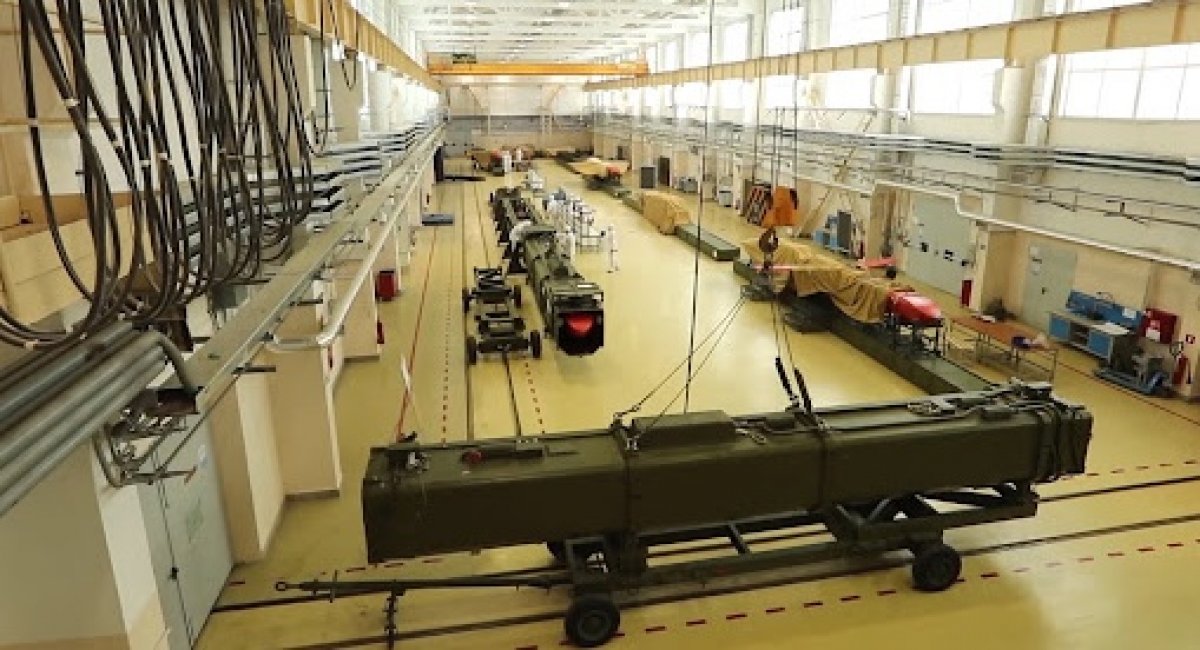
The key conclusion of the report is that, according to its authors, russia’s nuclear-powered 9M730 Burevestnik is supposedly only a "technology demonstrator," or, in more simple terms, an expensive "toy" designed to satisfy the ambitions of Kremlin dictator vladimir putin.
In other words, MIT researchers appear to believe that Burevestnik does not pose a threat to the United States or other Western countries, despite the fact that the missile's “unlimited range” capability is specifically designed to overcome the geographic limitations faced by russia’s existing strategic weapons.
At the same time, Hecla and Kemp believe that, despite a series of failures beginning in 2017, the russian Ministry of Defense’s claim of a successful 15-hour test flight of the 9M730 Burevestnik in October 2025 is likely accurate. The missile is also assessed to have a subsonic flight speed of approximately Mach 0.75 (around 800 km/h).
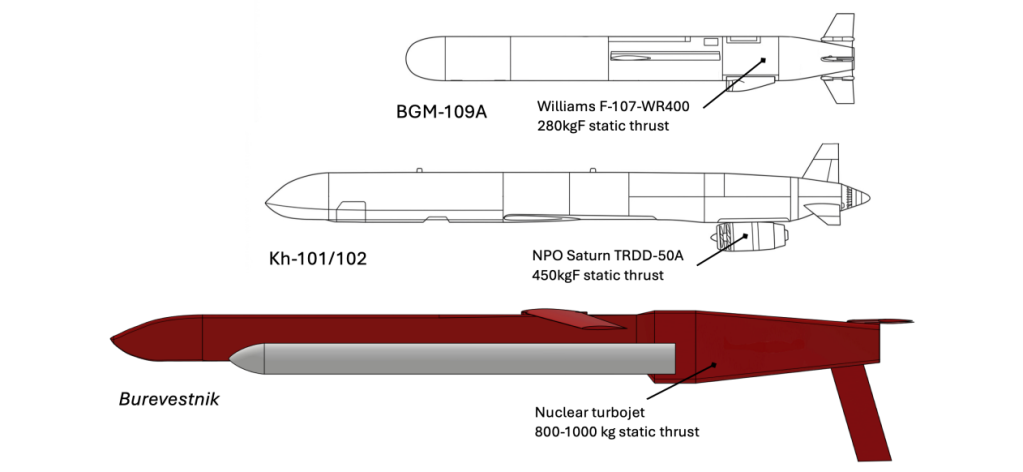
According to the researchers’ assessment, the 9M730 Burevestnik has a fuselage length of 9.5 meters and a wingspan of 5.6 meters. If this estimate is correct, russia’s Burevestnik is more compact than previously believed. It would also mean that the missile is only marginally larger in dimensions than the Kh-101/Kh-102 cruise missile family.
The propulsion system is believed to be a nuclear-powered air-breathing engine, in which air passes directly through the reactor core and is heated to generate thrust. This design carries the risk that the 9M730 Burevestnik could leave behind a radioactive plume during flight.
Put simply, the 9M730 Burevestnik has not been used in russia’s war against Ukraine. Moreover, the fact that its first reportedly successful test flight took place only in October 2025 indicates that the missile is unlikely to have reached operational readiness even for potential use against Western countries.
If this publication sparks further interest in the history of the 9M730 Burevestnik project, it is worth recalling that in October 2023 we explained what russia’s nuclear-powered 9M730 Burevestnik missile was and whether it could actually fly at all. In September 2024, we published another article dedicated to the missile, which had once again attracted attention from Western media, highlighting several unusual aspects of the project. Finally, in late October 2025, we returned to the topic of russia’s “unlimited-range” nuclear-powered cruise missile and the tests conducted by the Kremlin’s forces.
Ivan Kyrychevskiy, serviceman of the 413th Raid Regiment of the Unmanned Systems Forces of Ukraine and weapons expert at Defense Express.
Read more: Norway Confirms russia Tested Nuclear-Powered Burevestnik Cruise Missile That Flew "Much Further Than Before"