


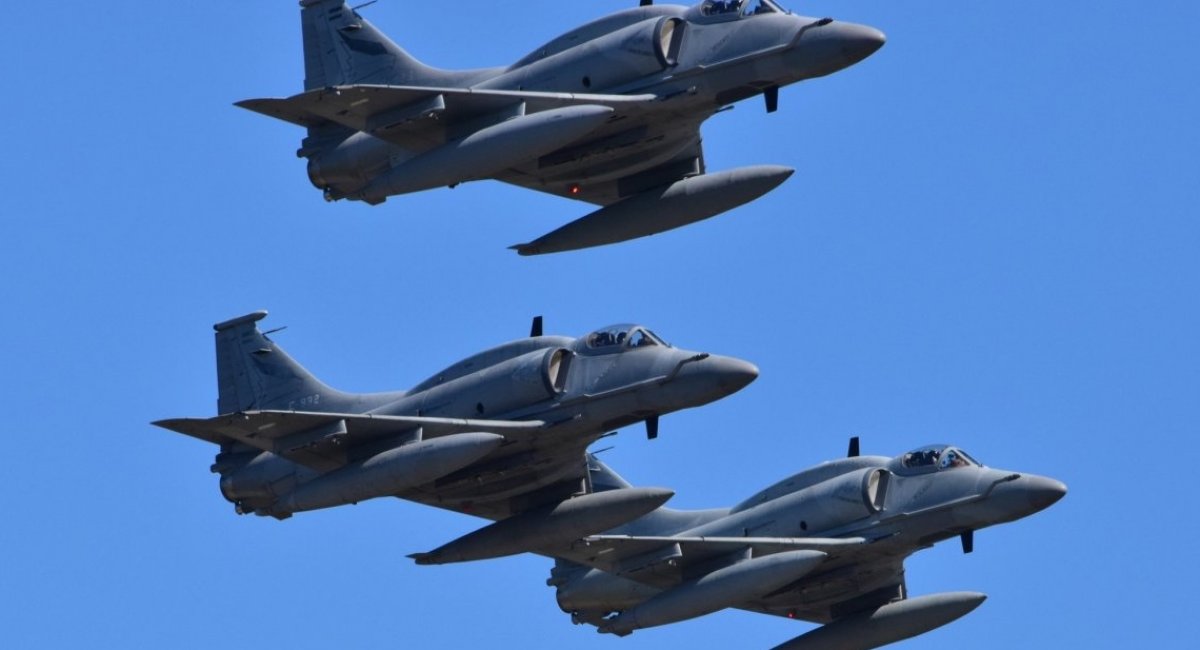
Argentina's Air Force this week bid farewell to legendary and historic attack aircraft for country, A-4 Skyhawk. On May 14, retirement of last aircraft remaining in 5th Aviation Brigade service was officially announced.
This means completing 60-year history of their without exaggeration legendary Argentina service, which began back in 1966. Specifically then Argentines became first foreign operators of these aircraft, which had been in U.S. service for about ten years already. Initially air forces armed with them, then they were purchased for ARA Veinticinco de Mayo aircraft carrier.
Read more: After Costly Losses Against iran, U.S. Air Force Is Moving to Replace the MQ-9 Reaper
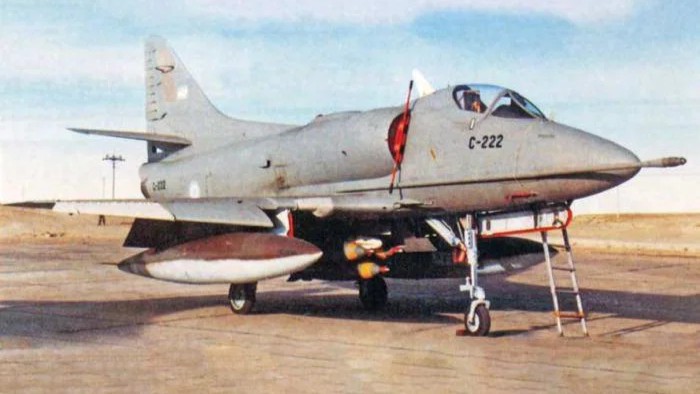
During Argentine junta rule in 1977, U.S. imposed ban on weapons and spare parts export. By Falklands War start in 1982, due to embargo action, from about 90 A-4s in all versions, up to 48 could be engaged in combat sorties. These were already morally obsolete subsonic aircraft without radars and EW systems, with expired or simply absent ejection seat cartridges.
However, specifically A-4 for Argentines became most effective. Although attacks on British ships and landing forces were on suicide edge: free-fall bombs that did not always explode, at ultra-low altitudes on combat radius edge.
Overall Argentine A-4s during six-week war conducted 231 combat sorties. Their pilots sank one destroyer (HMS Coventry), two frigates (HMS Ardent and HMS Antelope), landing ship and boat (RFA Sir Galahad and LCU F4), and also damaged six more ships, among which were three frigates. 22 aircraft were lost, 19 pilots killed.
After war, which ended not only with Argentina's defeat but also junta overthrow, all remaining A-4B, A-4C and A-4Q in service underwent modernization and served until 1999. They were replaced by 36 rebuilt, deeply modernized used A-4Ms (manufactured 1970-1976), which received separate A-4AR Fightinghawk name and had F-16's AN/APG-66(V)2 radar and EW suite.
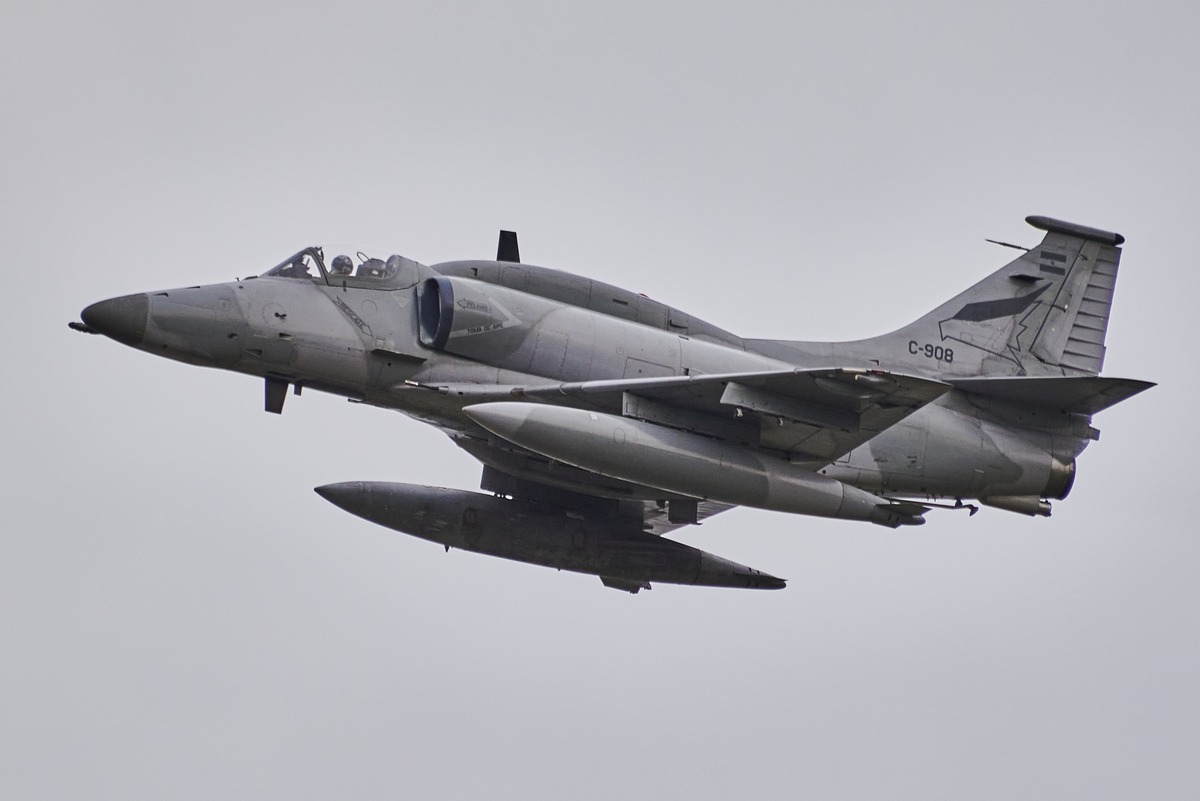
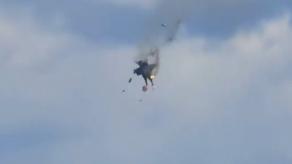
However, since that time real combat-capable aircraft quantity rapidly decreased, as these were although rebuilt but used aircraft. This was layered with country's armed forces financing decrease and again spare parts shortage, leading to forced cannibalization. Already by 2016 level, 4-5 aircraft remained in flight condition, with five A-4ARs lost in accidents and crashes during their operation.
Argentina could finally retire aircraft from service and not be left without jet combat aviation, as Uruguay did, thanks to F-16s from Denmark. Not without U.S. pressure on European countries, Danes sold 24 fighters for $941 million in 2024. Although previously they planned to transfer all their 44 F-16s to Ukraine.
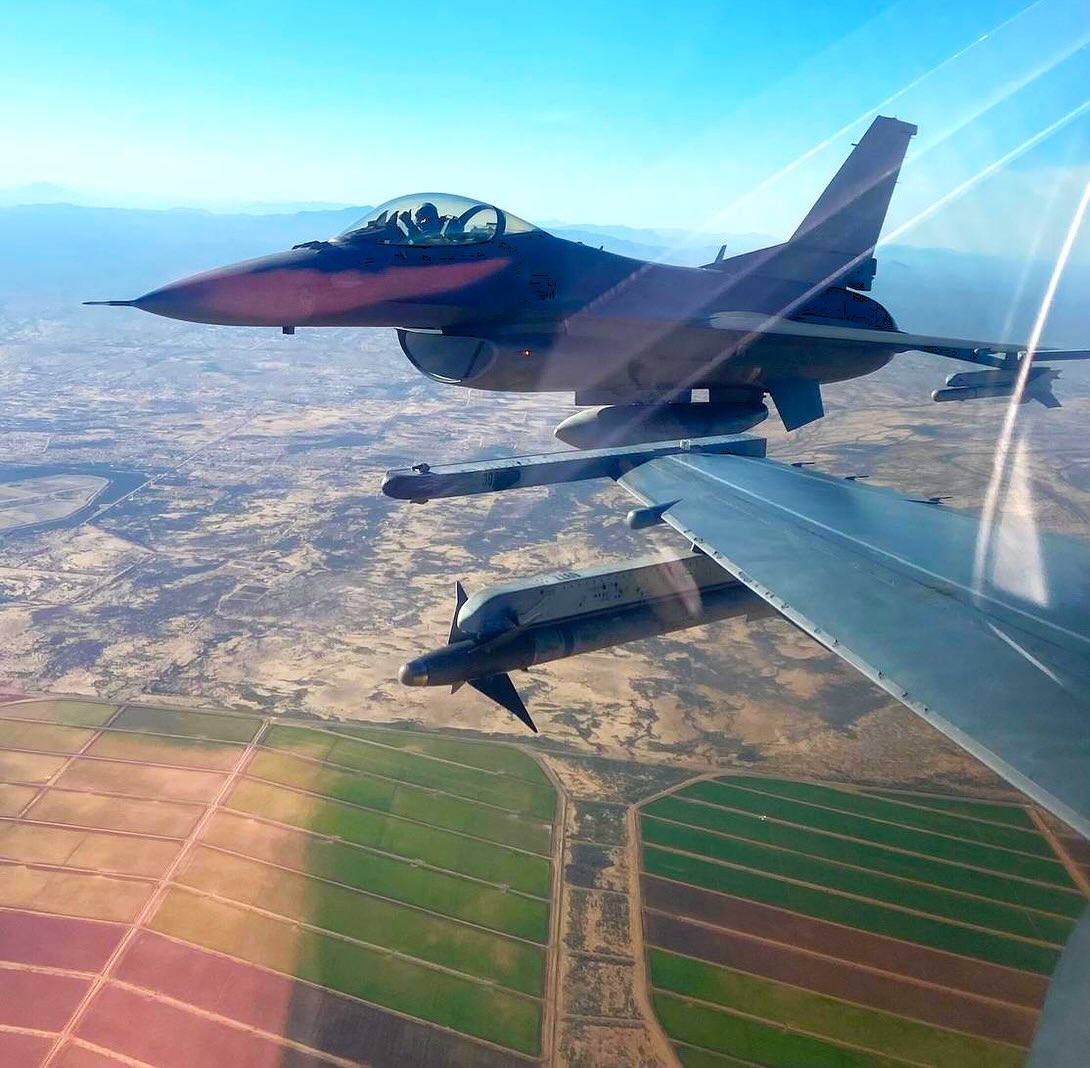
At the same time, they cost Argentines not $13 million per aircraft but significantly more, as U.S. set $941 million price tag for restoration, modernization, minimum weapons and other services.
Read more: Japan's Terra Drone Wins First FPV Contract for Self-Defense Forces Months After Investing in Two Ukrainian Drone Makers