


It has long been known that China is capable of mass-producing compact jet engines for cruise missiles and UAVs. All russian jet-powered Shaheds and the Geran-3, for example, rely on Chinese-made engines that are freely available on the civilian market.
Read more: China Increases Landing Barges Amid Taiwan Invasion Preparations: How Many Are Needed?
However, China is now moving further toward advanced manufacturing technologies. In November 2025, it announced the successful testing of a small turbojet engine produced using 3D-printing methods.
What is particularly noteworthy is that this work is being carried out by the state-owned Aero Engine Corporation of China (AECC), the country's leading aircraft engine manufacturer. AECC is responsible for producing the vast majority of engines installed on both Chinese military and civilian aircraft.
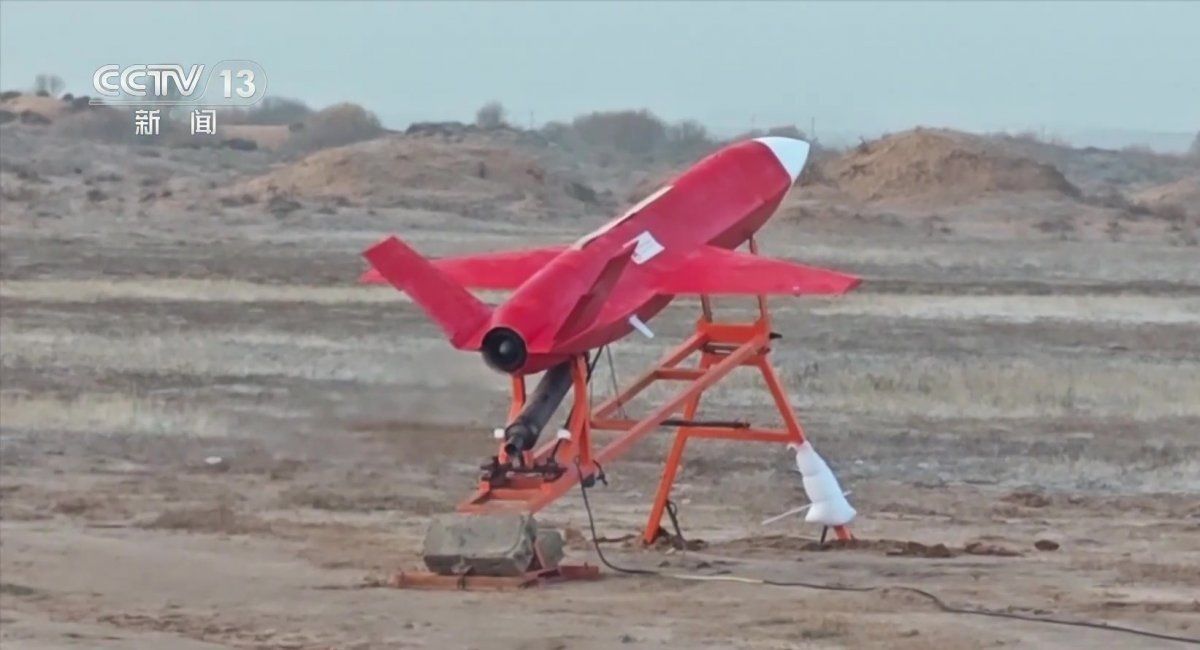
According to official reports, the 3D-printed turbojet engine was installed on the experimental Liuxing-260 UAV, which has a wingspan of 3.3 meters. During testing, the drone demonstrated stable operation for at least 30 minutes, the ability to fly at altitudes of no less than 6 km, and speeds of up to Mach 0.75 (approximately 700 km/h at that altitude).
It was also stated that around 60% of the engine's mass, with a total weight of 160 kg, was manufactured using additive technologies. This reportedly reduced production costs by a comparable margin while significantly improving the engine's reliability.
From the Defense Express perspective, China's progress in mastering these technologies is highly alarming. This is not a startup experiment, but a program led by the country's main aircraft engine manufacturer. China already holds a significant advantage in production volumes, output rates, and manufacturing costs, and additive manufacturing could multiply this edge even further.
This contrast becomes especially clear when compared with Western efforts. Although Western engine manufacturers began experimenting with 3D-printed small turbojet engines earlier, they have yet to achieve practical, scalable results. For instance, Pratt & Whitney announced work on the TJ150 back in 2021.
As of the summer of 2025, however, testing has been limited to individual 3D-printed components of this relatively widespread engine. The TJ150 is used in the MALD decoy and is intended for the British Spear-3 air-to-surface missile, a program that has effectively turned into a long-term development effort.
Meanwhile, most other U.S. and European projects involving additive manufacturing in engine production remain at the startup stage, which also implies unresolved challenges related to industrial-scale production.
In practical terms, if China succeeds in bringing these technologies into mass use, it will be able to further expand its production capacity for long-range strike systems. This could give Beijing a critical advantage by allowing it to produce far more offensive weapons than any potential adversary could field air-defense interceptors or other countermeasures.
Read more: China Officially Confirms Its J-10 Fighter Shot Down a Rafale During Pakistan–India Fighting