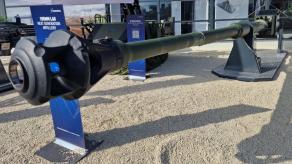



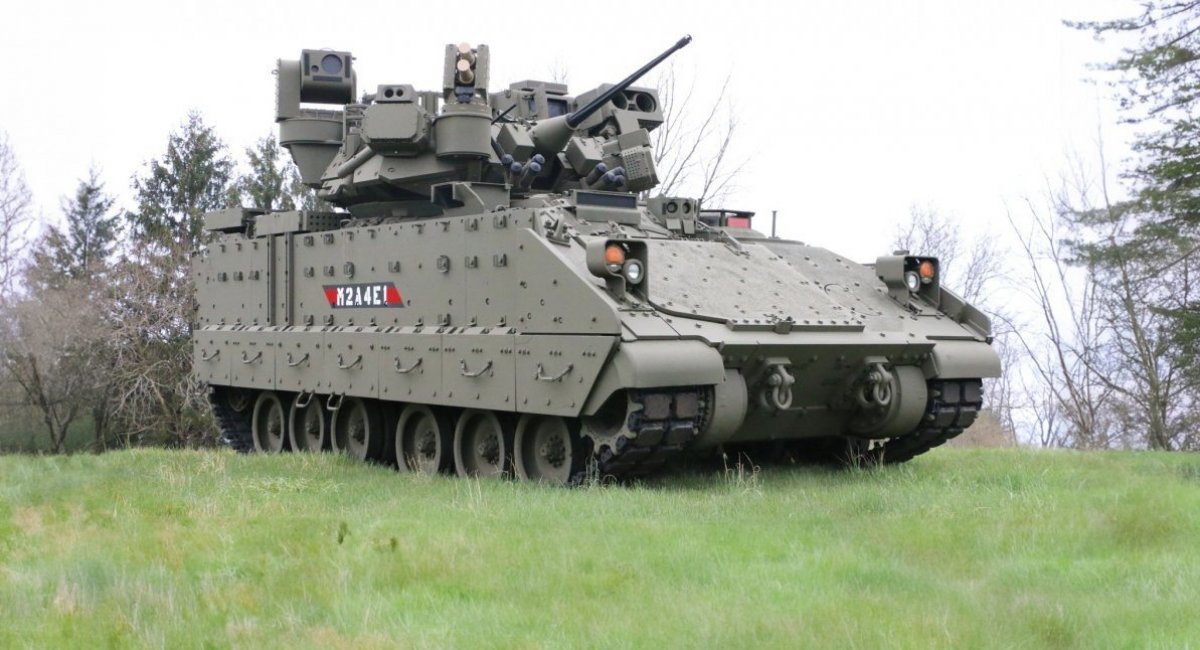
Modern infantry fighting vehicles are increasingly being equipped with active protection systems (APS) as a response to the growing threat posed by anti-tank weapons. Following the adoption of Israel's Iron Fist system on European CV90 platforms, the United States has now ordered the same APS for its M2A4 Bradley IFVs under a contract valued at approximately $228 million.
According to Elbit Systems, the new contract expands ongoing deliveries of Iron Fist system, which has become one of the defining features of the latest Bradley version. Integration of the APS onto the vehicles will be handled by General Dynamics Ordnance and Tactical Systems, reflecting the system's incorporation into the broader U.S. Army modernization framework.
Read more: Germany Needs Three Years to Fully Field Skyranger System That Is Already Fighting in Ukraine
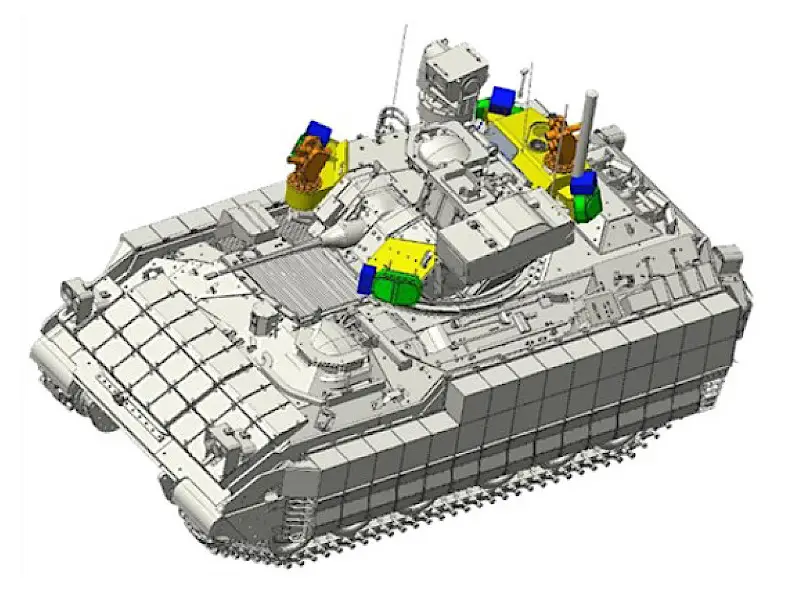
Elbit Systems claims that Iron Fist system provides full 360-degree protection against a wide range of modern threats. These reportedly include anti-tank guided missiles, kinetic projectiles, loitering munitions, and other aerial threats, with the system designed to operate both in open terrain and in dense urban environments.
Iron Fist system was previously selected for European CV90 infantry fighting vehicles under a separate contract worth around $150 million. During demonstrations, the system reportedly intercepted more than a dozen 120 mm tank rounds, a claim often cited as evidence of its high effectiveness against direct-fire threats.
However, the growing dominance of unmanned aerial systems raises questions about how active protection systems perform under saturation conditions. While Elbit Systems references protection against loitering munitions, detailed discussion of counter-drone performance remains limited, despite drones now being among the most widespread anti-armor threats on the modern battlefield.
This concern is reinforced by recent modeling conducted in Poland, which simulated drone attacks against a platoon of K2PL tanks. The study suggested that even advanced APS solutions can be overwhelmed by a large number of simultaneous targets, significantly reducing vehicle survivability. As a result, APS is increasingly viewed as only one layer within a broader survivability concept that also includes armor design and additional countermeasures.
The Iron Fist system is being installed on the latest M2A4 Bradley variant, which is both newly produced and upgraded from existing M2A2 ODS-SA and M2A3 vehicles. The U.S. Army signed its most recent Bradley modernization contract in November 2025, valued at $390 million, covering these upgrades.
Given this timeline, the latest Iron Fist procurement likely supports the implementation of improvements under that modernization agreement. While APS integration marks a significant step forward in protecting U.S. armored vehicles, its real-world effectiveness, particularly against massed drone attacks, remains a critical question for future armored warfare.
Read more: Rafale Shot Down At 200km: India Delays Own 350km Gandiva Missile To 2029, Blames No One