


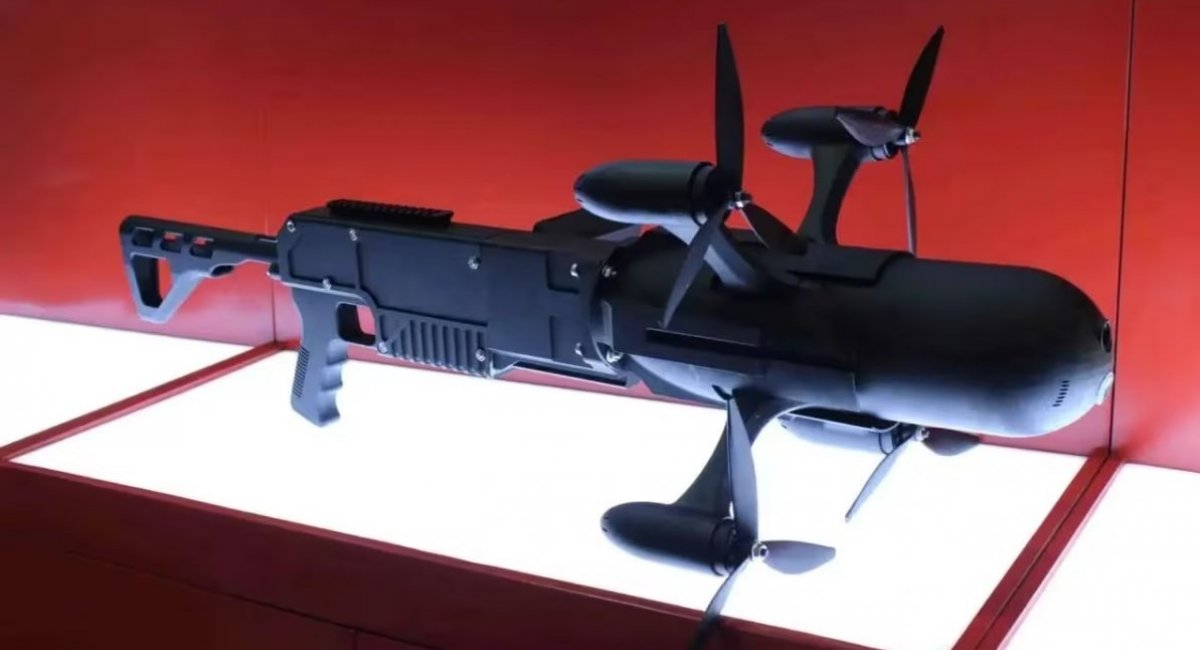
At the UMEX 2026 international defense exhibition in the United Arab Emirates, Minsk-based Scientific and Technical Center LEMT unveiled a new counter-UAS air defense system designed to intercept a wide range of unmanned aerial threats, from small quadcopters to larger strike UAVs. The system represents Belarus's latest attempt to enter the rapidly expanding market for low-cost anti-drone solutions.
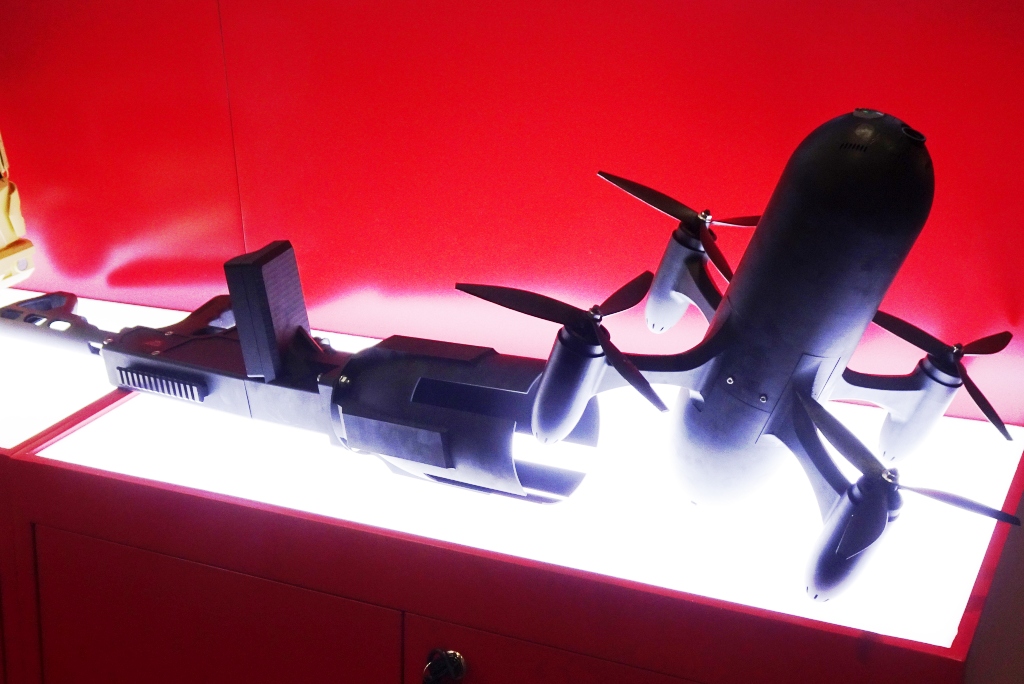
According to the developer, the system is currently undergoing testing, which began in 2025 and is expected to conclude in 2026. The system consists of a dedicated anti-aircraft FPV interceptor drone and a shoulder-fired launcher shaped like a rifle. The project was reported by European Defence Review, highlighting Belarus's growing focus on asymmetric air defense concepts.
Read more: As Europe Outpaces the U.S. in Artillery Shell Production, the U.S. Taps South Korea's Hanwha to Close the Gap
Any Belarusian military development carries inherent geopolitical risks. Given Minsk's deep military-industrial integration with Moscow, such systems could quickly end up in russian hands or undergo so-called russification. Moreover, Belarusian companies may serve as intermediaries for russian entities seeking to bypass international sanctions.
Conceptually, the system closely resembles russia's Yolka anti-aircraft FPV interceptor, which is also launched from a shoulder-fired platform. However, there are notable differences in guidance philosophy. The interceptor reportedly uses a visual homing system with both daytime and thermal cameras, with target lock achieved prior to launch. Once launched, the drone flies autonomously without further operator input.
By contrast, russian Yolka system requires the operator to manually guide the interceptor toward the target, with target acquisition occurring during the terminal phase. While LEMT claims a target acquisition range of 200 to 500 meters, the interceptor's overall flight range is stated to reach up to 6 kilometers, indicating a focus on short-range, point-defense engagements rather than area coverage.

In terms of performance, the interceptor is said to reach speeds of up to 200 km/h and carries a 500-gram warhead equipped with 400 pre-formed fragments. The total weight of the system is 6 kg, with the drone itself weighing 3 kg. The launcher also includes mounting points for optical sights, suggesting adaptability to different engagement conditions.
Beyond the man-portable configuration, LEMT is reportedly developing a mobile combat station mounted on a wheeled chassis. This variant appears to take the form of a box-type body with a remotely operated launcher carrying up to four interceptor drones, expanding the system's operational flexibility.
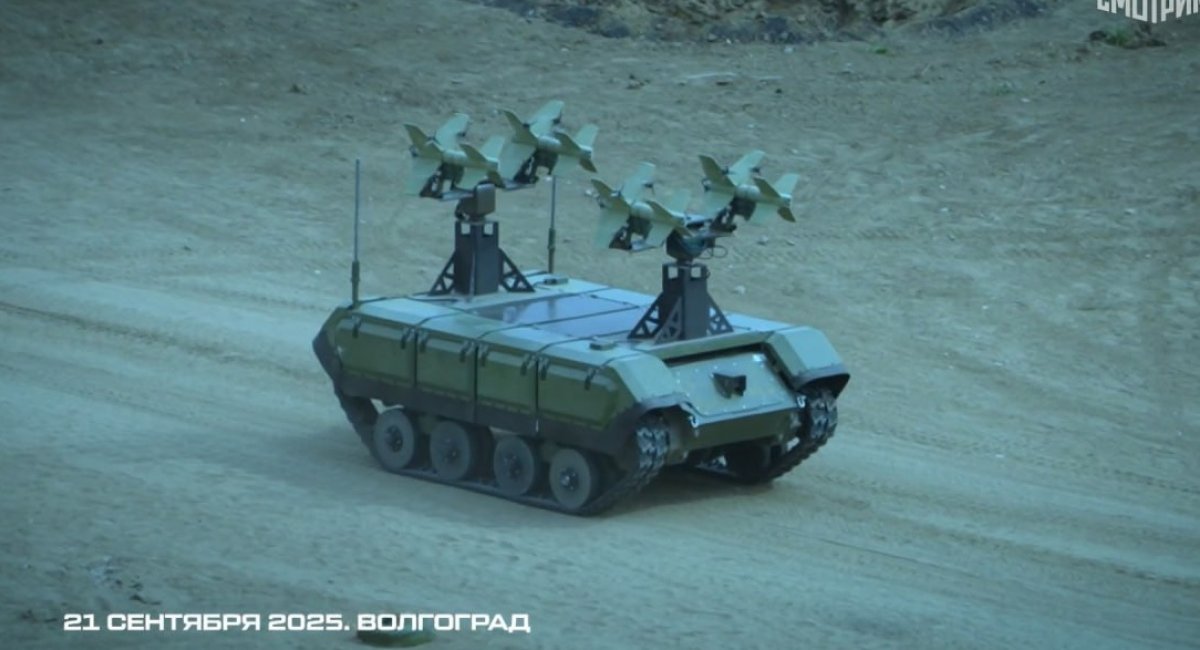
This vehicle-mounted version is also expected to feature a mast-mounted compact radar with an active electronically scanned array. Judging by the mock-up, a 4×4 truck chassis, potentially similar to GAZ-66 vehicle, could be used. Notably, russia's Yolka system has already spawned multiple launcher variants, including Impuls-PVO unmanned platform, suggesting that the system may be only the visible part of a broader, and potentially shared, development ecosystem.
Read more: France Trials Rafale Combat Performance with SCALP Missiles Amid russian Threats