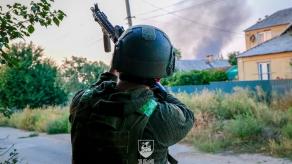
ISW notes that this is the first time since Ukraine's August 2024 Kursk offensive that Ukrainian forces have consistently contested russia's initiative. Since March 2026, russian forces have made near-zero net territorial gains, while Ukrainian forces have conducted successful counterattacks in the Kupyansk, Oleksandrivka, and Lyman directions.
One of the most important developments is the largely eliminated russian salient north of Lyman. According to ISW, Ukrainian counterattacks have disrupted russia's plans for a wide encirclement of the Ukrainian defensive belt in Donetsk Oblast. russian forces had been advancing toward Slovyansk, Kramatorsk, and Druzhkivka while attempting to develop the northern and southwestern parts of the planned encirclement. Ukrainian forces have largely eliminated the northern part of this salient, with fighting now mainly taking place around the Zherebets River, although the exact extent of the Ukrainian advance remains unclear.
Read more: First-Ever Naval Drone Battle: Ukrainian Sargan Destroys russian Unmanned Vessel (Video)
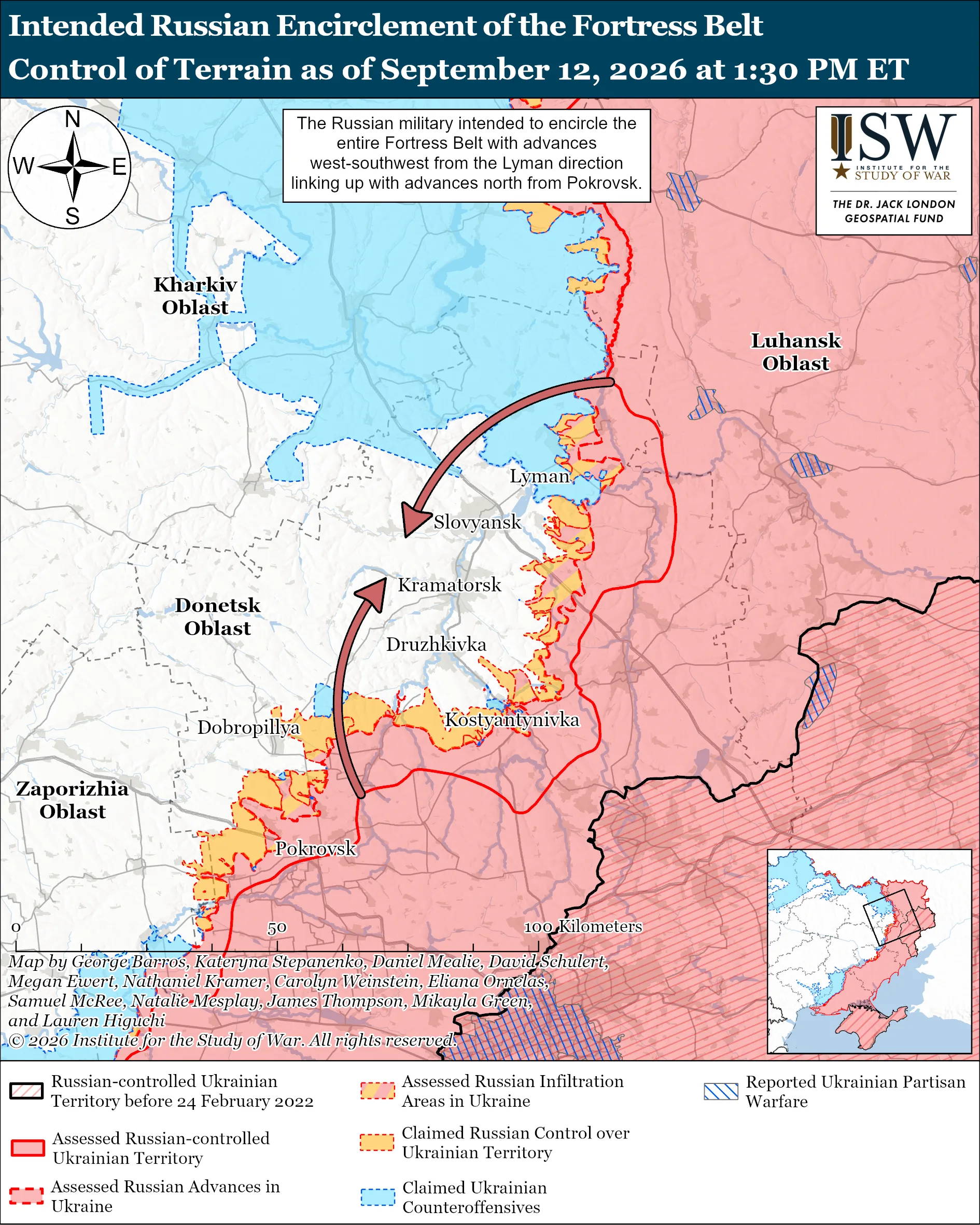
ISW assesses that the russian military command will likely have to reassess its plans for the northern and southern flanks of the Donetsk defensive belt. Moscow could redeploy surviving elements of the 20th and 25th Combined Arms Armies from the Lyman area or attempt to renew its offensive to seize Lyman and recreate the northern part of the planned encirclement.
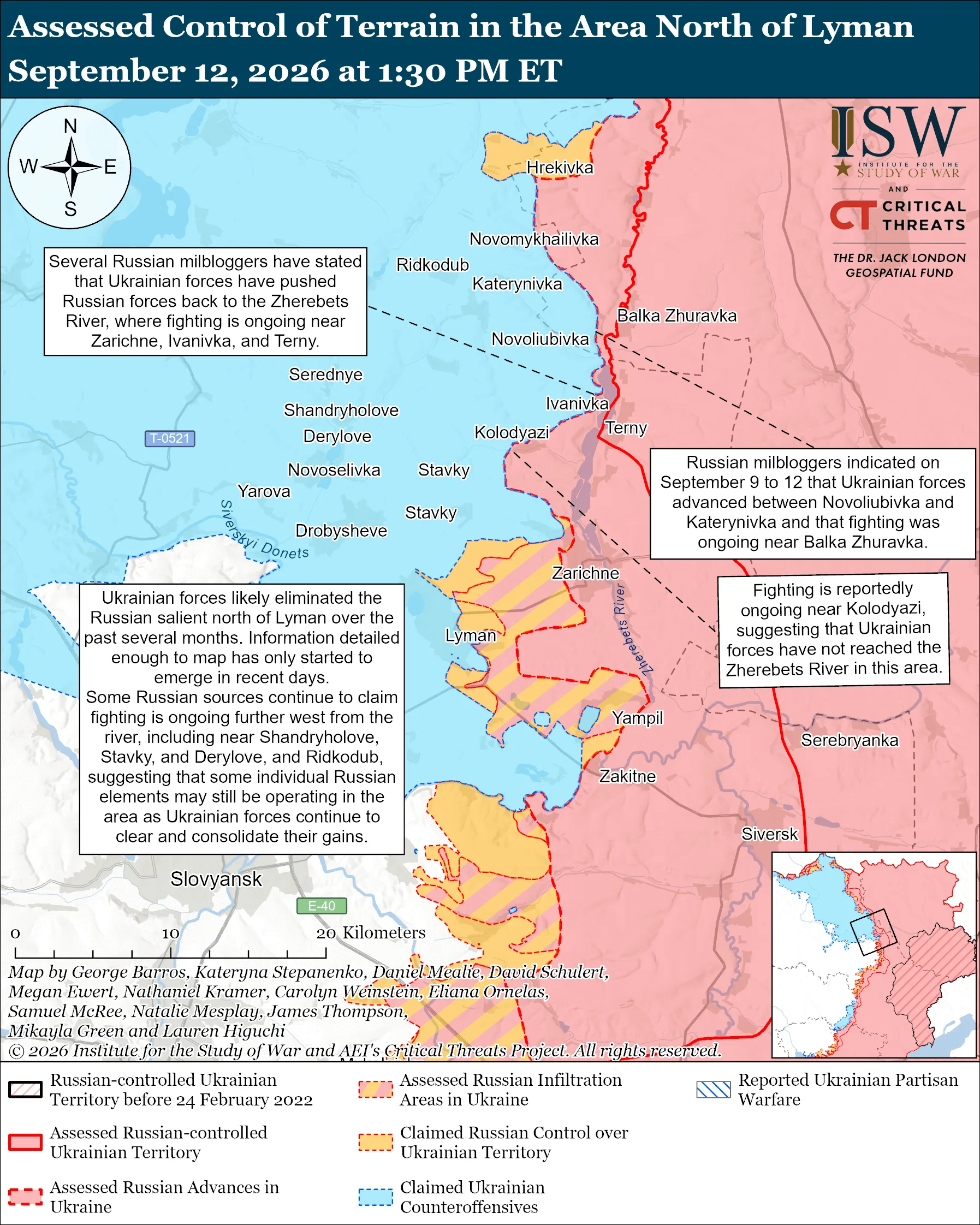
At the same time, russian forces continue to hold some advantages in other areas. ISW assesses that they have made limited but significant gains in and around Kostyantynivka and east of Slovyansk and Kramatorsk, although russian forces are struggling to maintain offensive momentum in these areas and elsewhere along the front. Neither russian nor Ukrainian forces made a confirmed advance on September 11.
The difficulties facing the russian military are also reflected in reports that russian generals have asked vladimir putin for an additional 800,000 troops. ISW cites Ukrainian intelligence chief Lieutenant General Oleh Ivashchenko, who said that russian generals were seeking the additional personnel after the September State Duma elections to sustain and expand offensive operations. ISW assesses that russia is unlikely to be able to absorb, train, and integrate 800,000 recruits at once and is more likely to rely on rolling mobilization.
Overall, ISW assesses that Ukrainian counterattacks have disrupted several russian operational plans, while russian forces are struggling to maintain the offensive momentum needed to seize and hold the initiative.
Read more: Why Was Volgogradpromproekt Hit With FP-5 Flamingo Missiles, What Does It Have to Do With Iskander and Zircon?