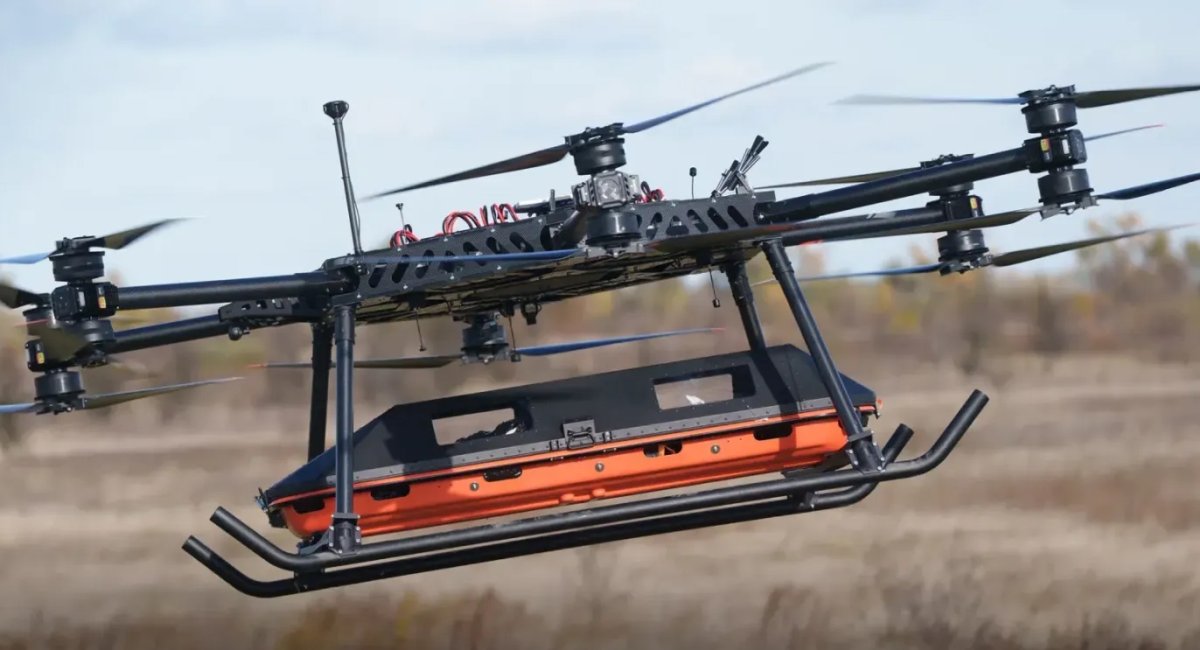
Ukraine is developing heavy evacuation drones capable of rescuing wounded soldiers from positions where ground evacuation is impossible, with the country's Brave1 defense innovation cluster supporting the development of the technology alongside the Ministry of Defense of Ukraine.
In October 2026, the Armed Forces of Ukraine conducted what the report describes as the world's first medical evacuation using a heavy drone. The operation rescued an infantryman from the 30th Brigade who was trapped at a position blocked by russian forces.
Read more: Ukraine's 77th Brigade Destroys russian Multiple-Launch Rocket System on the Kupiansk Axis (Video)
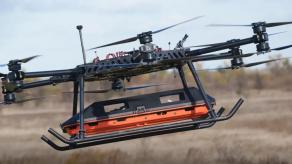
The evacuation was carried out using the Heavy Shot Ayudag-6 hexacopter developed by a Brave1 participant. The 98-kg drone has a payload capacity of 130 kg and flew more than 15 km one way during the mission. Preparation took several months and drew on the experience of the ground robotic systems company of the 92nd Brigade. The wounded soldier received evacuation equipment in advance and had to secure himself to the drone's winch, while other Ukrainian units deployed heavy bomber drones to divert enemy interceptor drones.
Brave1 began developing the evacuation drone capability in 2024, working with military personnel to establish requirements for manufacturers. The drones must be able to carry at least 130 kg over a distance of 15 km or more and feature integrated communications systems with at least three alternative communication types to improve resilience against electronic warfare. Optional equipment includes lidar, optical stabilization, and navigation systems that do not rely on GPS.
The initiative addresses a growing problem on the battlefield, where the widespread use of unmanned aerial vehicles makes conventional medical evacuation increasingly dangerous or impossible. Ground robotic systems can transport wounded personnel from exposed positions, but their speed may be insufficient when treating critically injured soldiers. Heavy aerial drones offer an alternative when routes are mined, blocked, or exposed to enemy fire.
Another development is Stargate system, recently presented by Ukrainian company participating in Brave1. Designed specifically for combat evacuation at the request of assault troops, the drone can be deployed in 10 minutes, carry up to 150 kg, and reach speeds of 105 km/h. It is also equipped with a medical module featuring a stretcher.
Stargate system uses artificial intelligence-based software to navigate and return to a safe area even when satellite navigation is completely jammed. According to the report, assault troops from the CODE 9.2 Regiment completed two successful aerial evacuations of severely wounded soldiers within one week using the system.
The soldiers were located in a gray zone approximately 5 km from the border, where difficult terrain, water obstacles, and the threat posed by FPV drones made ground evacuation impossible. The drone flew nearly 30 km one way and returned with the wounded despite russian electronic warfare interference, relying entirely on AI-based navigation. Heavy Ukrainian strike drones provided cover by suppressing enemy positions during the operation.
Read more: Ukrainian Fiber-Optic FPV Drones Strike russian Infantry, Artillery, Vehicles, and Tank (Video)