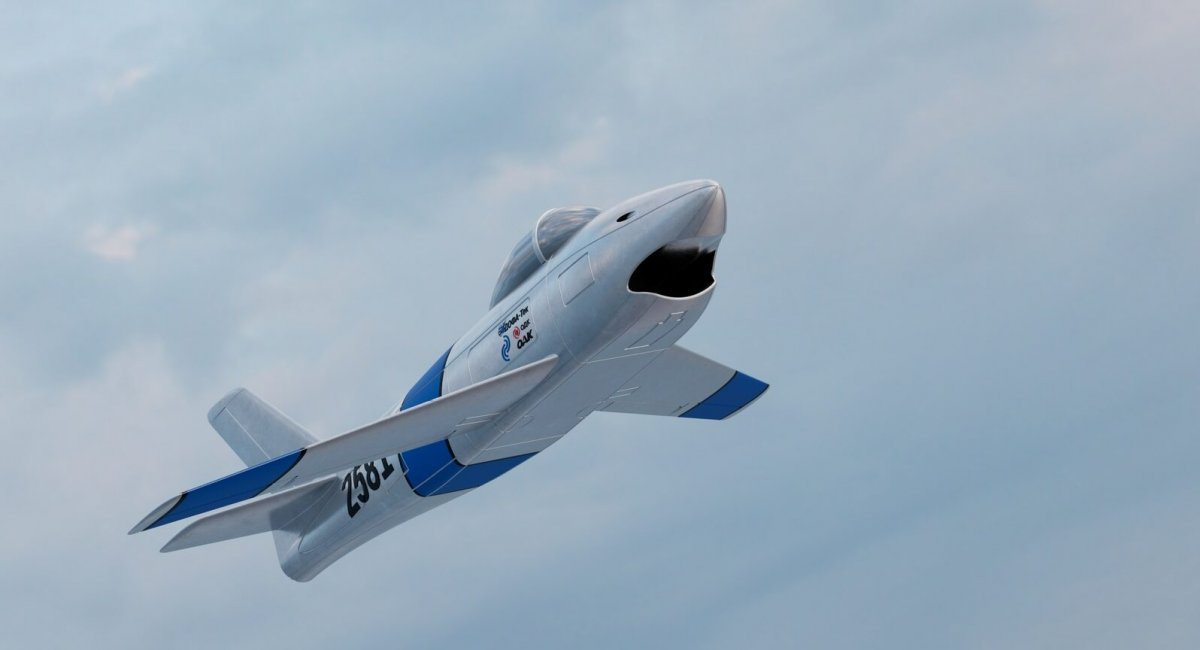
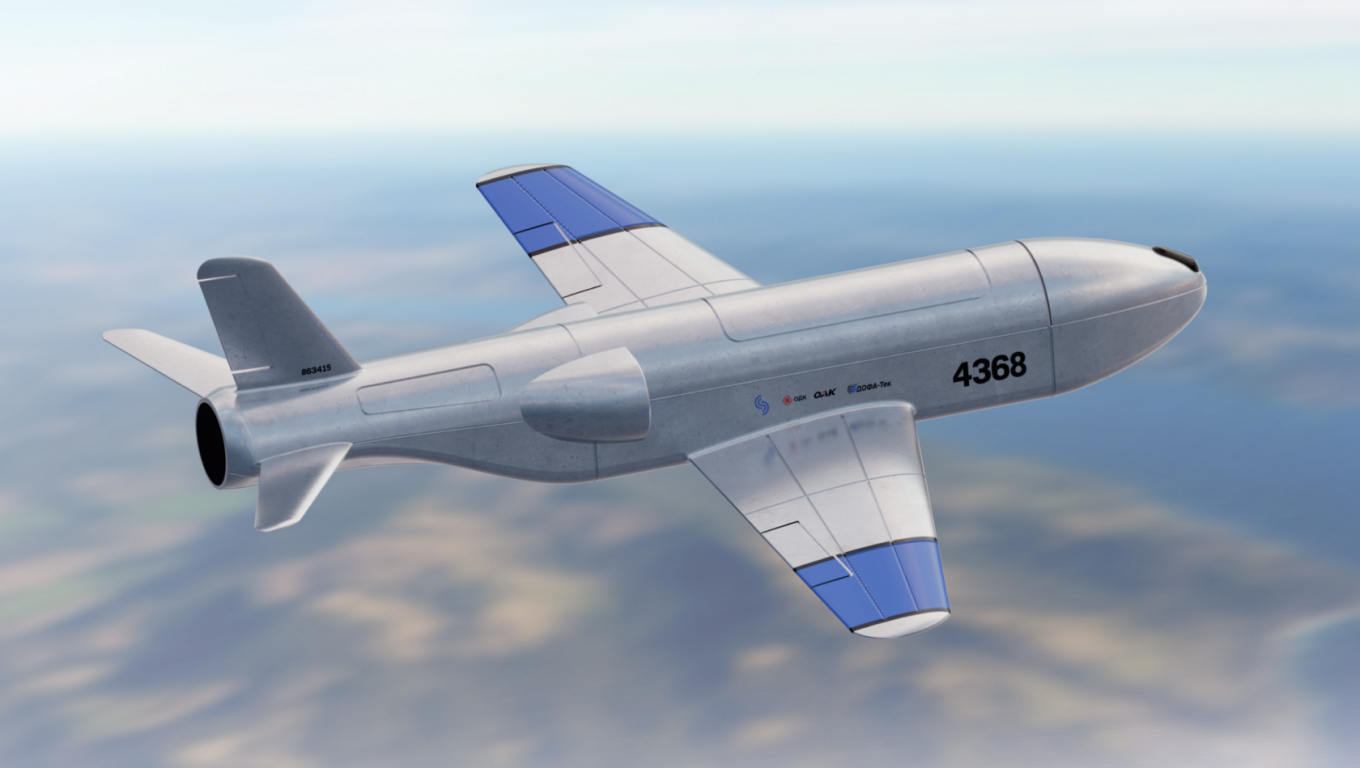
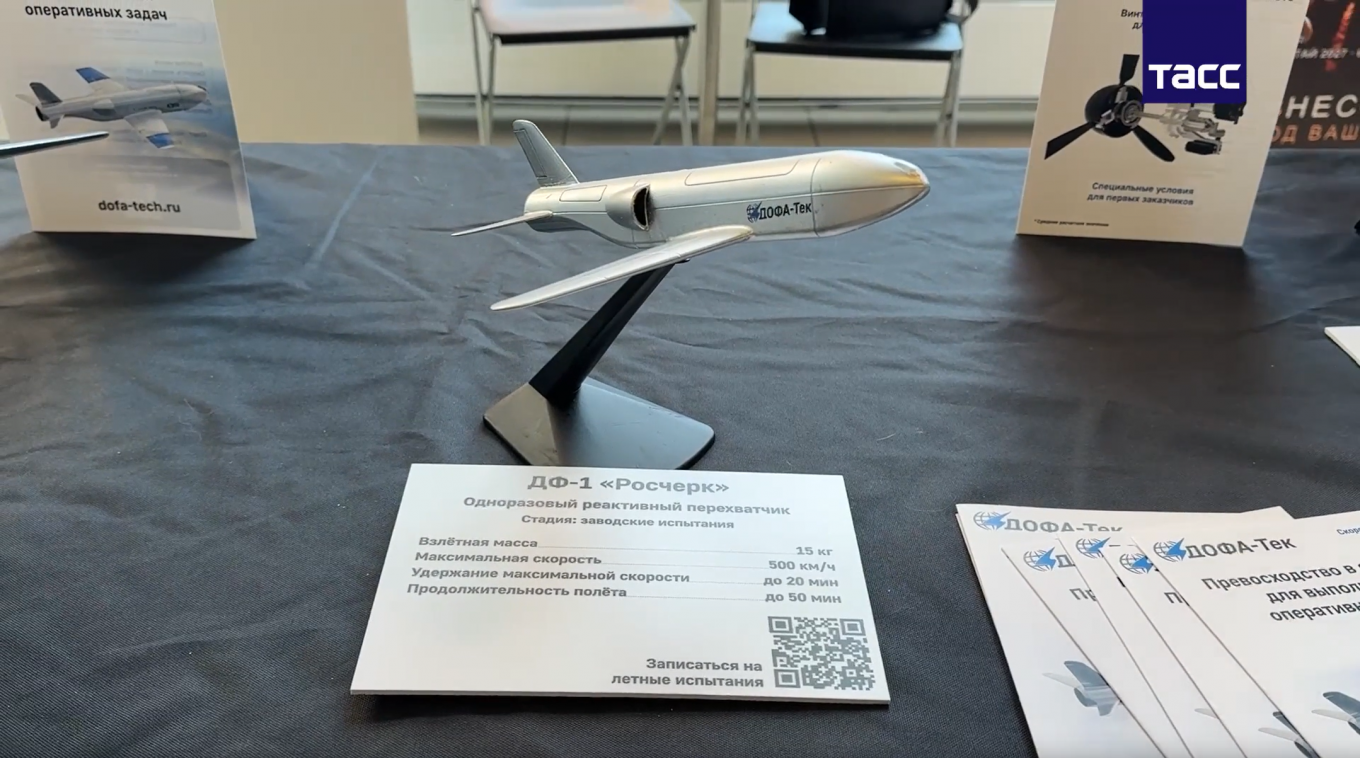
The russian company DOFA-Tek recently announced the development of its own jet-powered interceptor drones. One of the drones presented was the DF-1 Roscherk, with a substantial range of 250 km, a speed of up to 500 km/h, and a total mass of just 15 kg, including a 1.5 kg warhead. The company also presented a concept for a future the DF-3 Viper (Gadyuka) jet-powered interceptor drone, with a range of 800 km.
The DF-1 Roscherk’s range of 250 km can be explained by the need to intercept a target dozens of kilometres away from a protected site or to loiter in the air while waiting for a target to appear, then move in to intercept it. In the case of the DF-3 Viper (Gadyuka), however, the need for an 800 km range remains unclear.
Read more: russia Tests 15kg Jet Interceptor Drone DF-1 Roscherk at 500km/h While Developing 850km/h DF-3 Gadyuka Based on Italian Fighter Shape
The reason is simple: the longer a drone needs to remain airborne, the more fuel it must carry. This means the drone must either become larger or have sufficient lift to take off with the additional fuel. All of this would evidently lead to a significant increase in the system’s cost.
At some point, the cost of intercepting a UAV with such a drone could make the engagement economically unviable. For now, the future DF-3 Viper (Gadyuka) appears to present precisely this problem.
However, it is important to note that russia has disclosed very little information about the DF-3 Viper. Unlike its other drones, the company has not even specified the DF-3’s payload capacity or the type of payload it could carry.
One detail worth examining is the DF-3 Viper’s stated total mass of 240 kg. To put this figure into perspective, the DF-5 Iskra jet-powered strike drone has a range of 1,200 km, a speed of up to 850 km/h, and a 20 kg warhead, yet its total mass is only 120 kg.
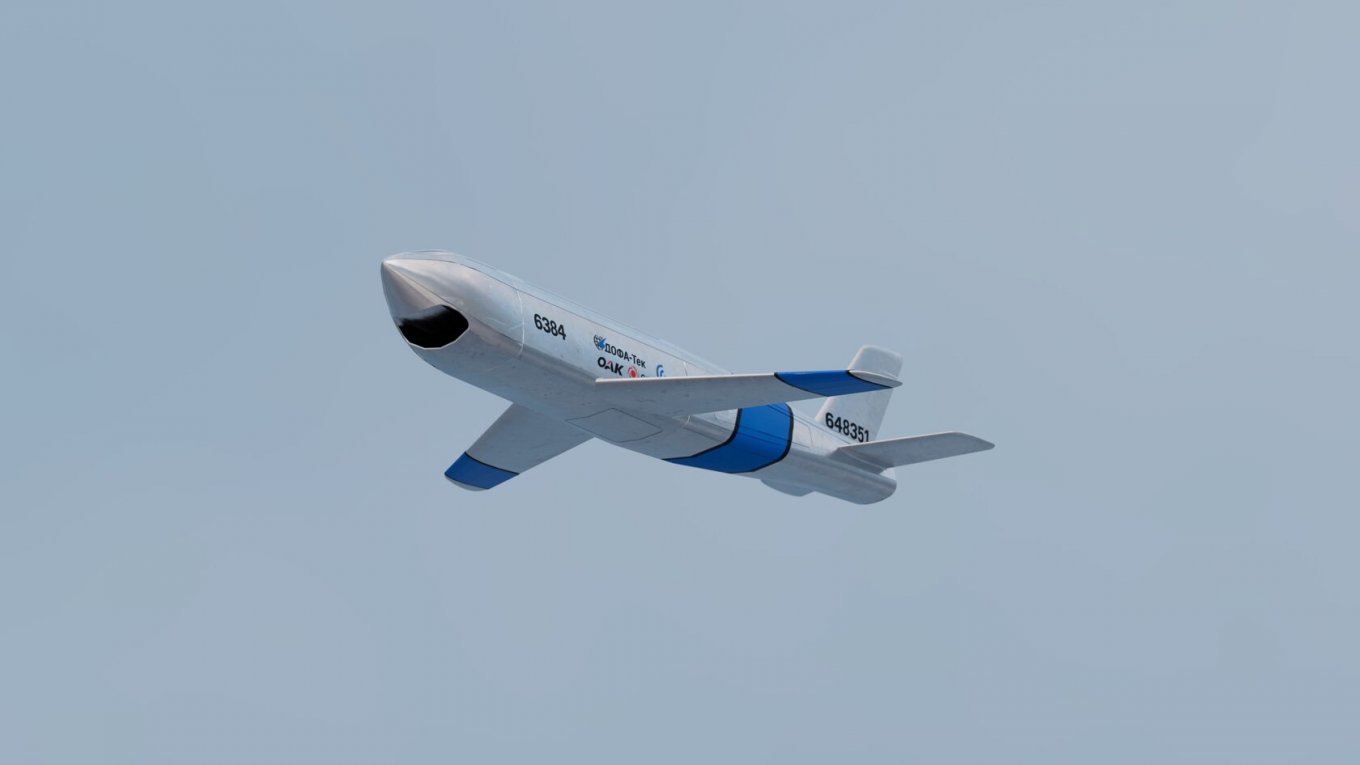
This raises the possibility that the DF-3 Viper (Gadyuka) could carry a very large payload. However, a warhead weighing tens of kilograms would be unnecessary and excessive for a conventional interceptor drone.
This leads to another possibility: the DF-3 Viper may not be intended as an interceptor in the conventional sense, but rather as a kind of unmanned fighter. It could potentially carry other, smaller interceptor drones, electronic warfare equipment, or even machine guns.
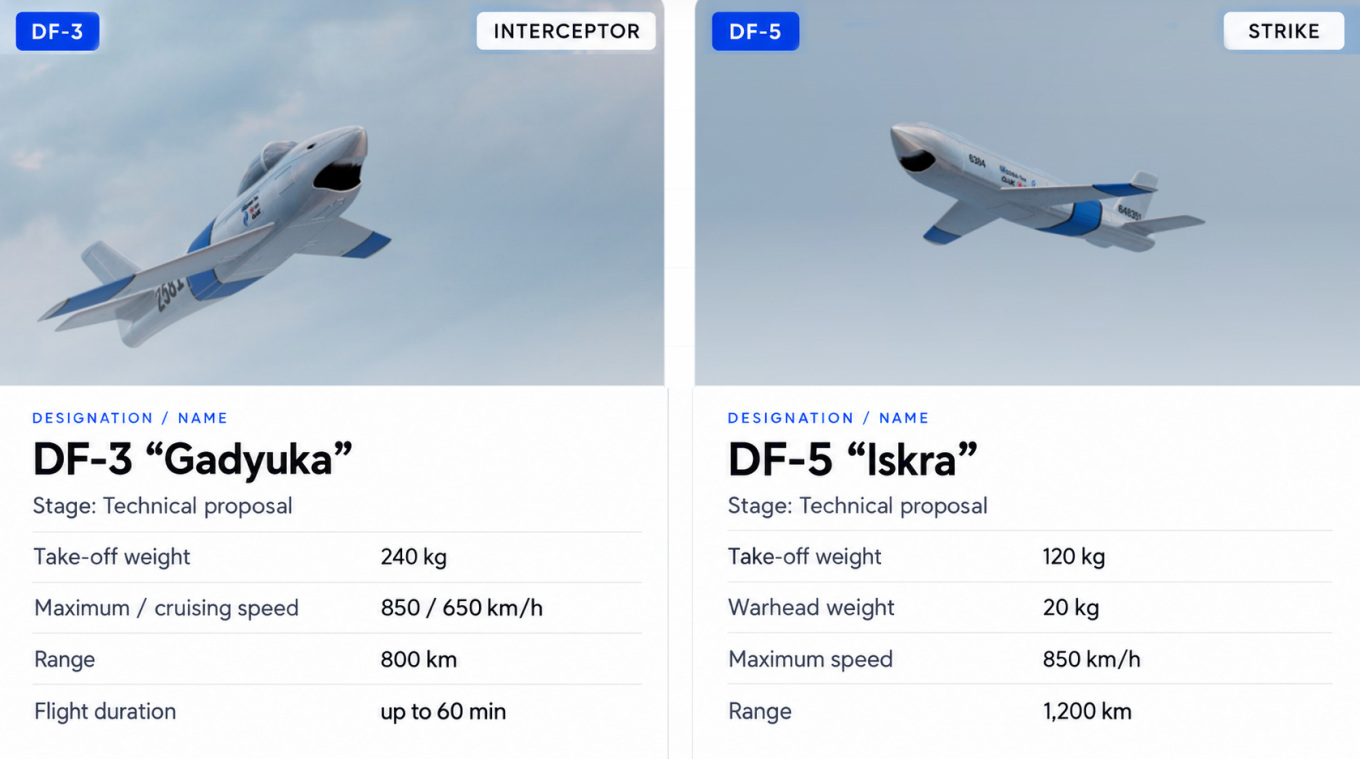
If the DF-3 Viper is indeed designed to carry additional payloads and operate as a reusable interceptor, its 800 km range would make considerably more sense. In this configuration, it could potentially engage several targets during a single sortie across an entire region before returning to its launch point.
Despite these possibilities, there is currently no way to confirm that the DF-3 Viper will have such capabilities. For now, these remain hypotheses, and further details about the project are needed.
On the company’s website, both the DF-3 Viper and the DF-5 Iskra are currently labelled as "technical proposals," suggesting that they are still at an early stage of development. By contrast, the DF-1 Roscherk has already entered factory testing, with the next round of tests scheduled for next month.
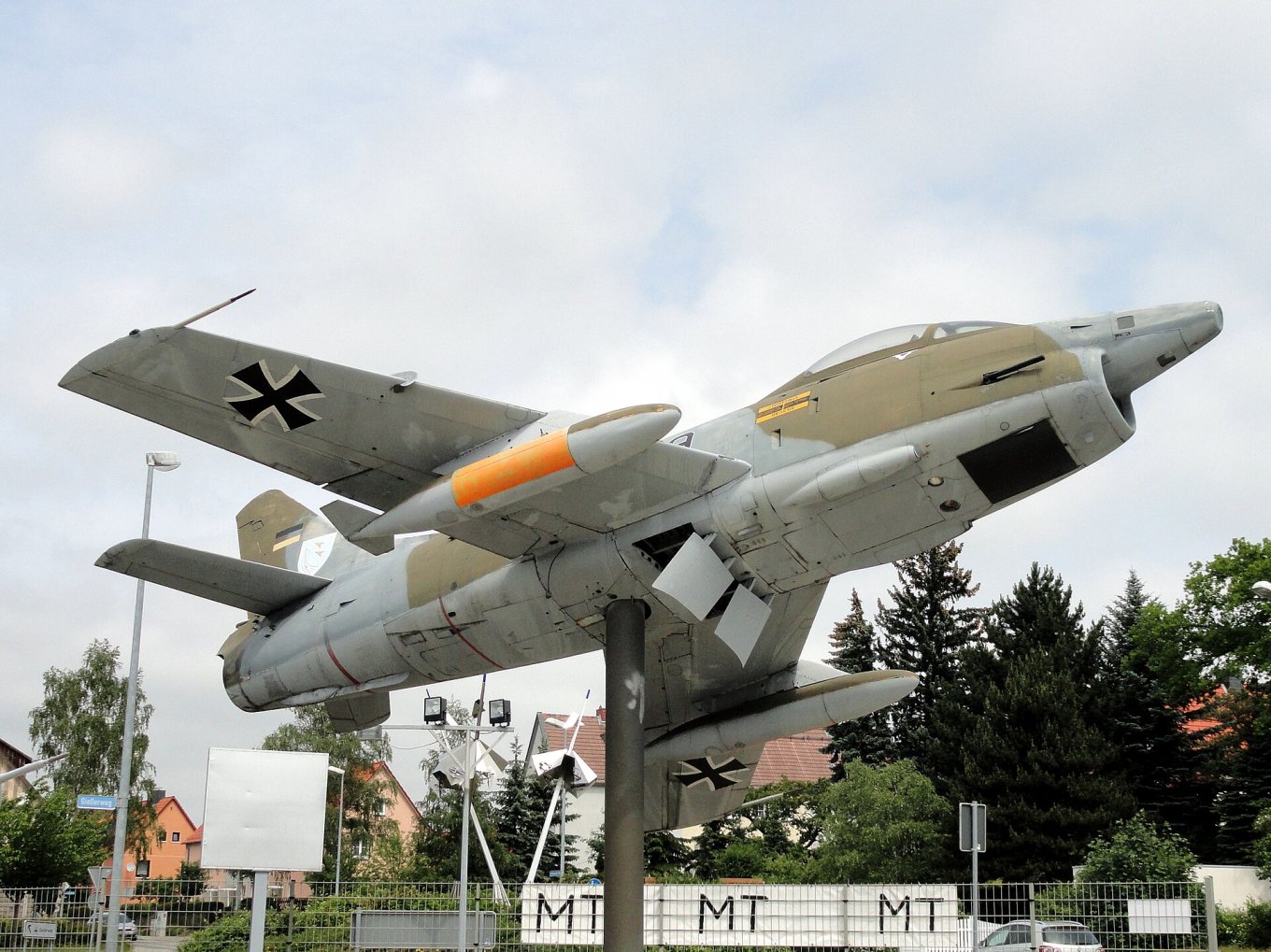
Interestingly, the only concept image published so far shows the DF-3 Viper with a design that bears a suspicious resemblance to the Italian Aeritalia G.91 light fighter-bomber. It is therefore possible that the russian developers used this aircraft’s aerodynamic design as the basis for their proposed interceptor.
From the Defense Express side, we urge readers to join a fundraiser for a solution that is already proving effective: the One United Fundraiser, organized by the Serhiy Prytula Charity Foundation to support interceptor drones.

Read more: Moscow Likely Needs M-17 Stratosphera Aircraft to Shoot Down Balloons Over City, But It Is Currently In Museum